The Gift of Therapy
≈ From memoryTherapy is not a clinical procedure to be performed on a patient, but a profound human encounter where the 'here-and-now' relationship between therapist and patient serves as the primary vehicle for healing.
In one sentence
The most profound healing in therapy occurs not through the clever application of techniques, but through the authentic, lived experience of the therapeutic relationship in the present moment.
Why read this (and who it's for)
Most people view therapy as a "service" where they pay an expert to provide a roadmap for their problems. Yalom argues that this perspective misses the point: the real work happens in the relational space between two people.
This book is for:
- Therapists and counselors who feel stuck using "manualized" techniques and want to reconnect with the raw power of the therapeutic bond.
- Deep thinkers and seekers who want to understand the mechanics of human connection and why some relationships feel transformative while others feel hollow.
- Anyone interested in personal growth who wants to learn how to be more present, observant, and authentic in their own interpersonal relationships.
After reading this, you will be able to identify the "here-and-now" dynamics in your conversations, recognize the difference between talking about a feeling and experiencing it, and understand how to create a "holding environment" for others (and yourself).
The big idea
Yalom argues that therapy is a microcosm of life. The therapeutic hour is a laboratory where the patient’s interpersonal patterns—their fears, defenses, and longings—are recreated in real-time. If a patient has a hard time trusting people, they will eventually struggle to trust the therapist. If they are afraid of being judged, they will feel judged by the therapist's silence.
The "Gift" is the realization that this isn't a failure of therapy; it is the therapy. Instead of trying to bypass these reactions with intellectual exercises, the therapist must lean into them. By creating a safe, bounded container (the therapeutic frame), the patient can finally experience their internal world in a way that is visible and shared.
The logic is simple but profound: Change happens when we stop talking about our problems and start experiencing our relationships. When a patient feels truly seen and heard by another human being without judgment, the very "stuff" of their suffering—the isolation, the fear of death, the lack of meaning—becomes bearable because it is no longer endured alone.
Key ideas
The Therapeutic Frame
- What it is — The frame is the set of boundaries (time, place, rules, and roles) that creates a "holding environment." It is the container that makes therapy possible by providing a predictable, safe space where the patient can be vulnerable.
- Why it matters — Without a clear frame, the therapeutic relationship can become overwhelming or chaotic. The frame allows the patient to let down their guard because they know exactly what to expect, creating a "sacred space" for exploration.
- In the book — Yalom emphasizes that the frame is not a restriction but a protection. It allows the patient to focus on the internal work rather than worrying about the external logistics of the encounter.
The "Here-and-Now" (Immediacy)
- What it is — This is the practice of focusing on what is happening between the therapist and the patient at this exact moment, rather than what happened in the patient's past or what they might do in the future.
- Why it matters — It shifts therapy from a "storytelling" session to an "experiential" one. By noticing how a patient reacts to the therapist now, you uncover the underlying patterns of their life without them having to explain themselves.
- In the book — Yalom describes identifying a patient's hesitation or anger in the room and saying, "I notice that as I asked that question, you looked away and became very still. What is happening between us right now?"
The Therapist’s Presence
- What it is — The therapist must be fully present—not just as a technician checking off a list of symptoms, but as a human being who is "with" the patient. This involves the therapist's ability to tolerate the patient's pain without rushing to "fix" it.
- Why it matters — If the therapist is merely performing a role, the patient will sense the lack of authenticity and will not feel truly seen. Presence is what allows the "Gift" to be received.
- In the book — Yalom argues that the therapist's own feelings (countertransference) are not distractions; they are data points. If the therapist feels bored, judged, or overwhelmed, it is often a reflection of the patient's internal world.
Transference as Lived Experience
- What it is — Transference is when a patient projects feelings and attitudes from past relationships onto the therapist. In Yalom’s view, this shouldn't be analyzed intellectually; it should be lived in the room.
- Why it matters — It allows the patient to "re-do" their history in a safe environment. If they can experience a different, healthier response from the therapist than they got from their parents, they can begin to heal.
- In the book — Instead of asking, "Why do you think you feel angry at me?", Yalom suggests exploring the feeling of anger in the room: "You seem angry with me right now. Let's stay with that feeling for a moment."
The Four Existential Givens
- What it is — Yalom identifies four universal human concerns: Death, Freedom, Isolation, and Meaninglessness. These are not "problems" to be solved but conditions of being human.
- Why it matters — Most psychological suffering stems from our struggle with these four realities. Therapy helps us find a way to live authentically despite them.
- In the book — He explains how we often use distractions (work, hobbies, perfectionism) to avoid the "dread" of realizing our own mortality or the weight of our total freedom.
Frameworks & tools
The Immediacy Protocol
Use this when a patient's behavior in the session seems to reflect a deeper interpersonal pattern. Instead of asking for an explanation, observe and name the interaction.
- Observe: Note a non-verbal cue (a sigh, a long pause, a defensive tone, a sudden smile).
- Pause: Wait for a moment of silence after the behavior occurs.
- Name the "Here-and-Now": State what you see without judgment. "I notice that when I mentioned your father, you became very tense and looked at the floor."
- Invite Experience: Ask what is happening in that moment. "What is it like for you to feel that tension right now?"
- Stay with it: Do not rush to "fix" the feeling or move to a different topic. Let the emotion sit until it is fully expressed.
The Holding Environment Checklist
To ensure the therapeutic space remains a safe container, the therapist should monitor these three elements:
- Predictability: Are the boundaries of time and place consistent? (Does the patient know what to expect?)
- Safety: Does the patient feel they can say "the unspeakable" without being judged or shamed?
- Attunement: Is the therapist truly listening, or are they just waiting for their turn to speak?
Memorable examples & stories
The Angry Patient
Yalom describes a patient who became visibly angry during a session when the therapist offered a neutral observation. Instead of becoming defensive (a common mistake), the therapist stayed present and invited the patient to explore that anger. Lesson: The "problem" in the room is the doorway to the patient's inner world.
The Silent Patient
Yalom discusses patients who struggle to find words, often out of a fear of being misunderstood or judged. He emphasizes the importance of "sitting with" the silence rather than filling it with questions. Lesson: Silence is not an absence of content; it is often where the deepest emotions reside.
The Perfectionist's Defense
Yalom illustrates how some patients use intellectual brilliance to avoid feeling anything at all. They can analyze their childhood perfectly, but they cannot feel the underlying sadness of it. Lesson: Intellectualization is a defense against the raw experience of emotion.
Key quotes
"The therapeutic relationship is not a means to an end; it is the end." (Paraphrased) Why it matters: This reminds us that the connection itself is the healing agent, not just the advice given.
"We are all looking for someone to witness our lives." (Paraphrased) Why it matters: It highlights the fundamental human need for connection and validation.
"The therapist's job is to be a 'holding environment'—a space where the patient can experience their most painful feelings without being overwhelmed by them." (Paraphrased) Why it matters: It defines the role of the therapist as a container for the patient's reality.
How to apply it
This week
- Practice "The Pause": In your next conversation, when someone says something that triggers you or makes you uncomfortable, wait 3 seconds before responding. Observe what is happening in your body and mind during that pause.
- Notice the "Here-and-Now": During a meeting or social interaction, notice one non-verbal cue (a tone of voice, a glance). Instead of ignoring it, ask yourself: "What is happening between us right now?"
- Identify your "Distractions": Identify one thing you do to avoid feeling the "existential givens" (e.g., scrolling social media to avoid feeling lonely). Commit to 5 minutes of sitting in that feeling without distraction.
Ongoing
- Be a Witness: In your relationships, practice active witnessing. Instead of offering solutions, try saying: "I can see how much that hurts/matters to you. Tell me more about what that feels like."
- Embrace the "Uncomfortable" Room: When a conversation gets awkward or tense, don't rush to change the subject. Lean into the tension and ask, "It feels like there's something we're both feeling right now—can we talk about it?"
Common pitfalls
- The "Expert" Trap: Many people (especially professionals) fall into the trap of thinking they need to do something or say something clever. Yalom warns that this often creates a barrier between the therapist and the patient.
- Over-Intellectualizing: It is easy to talk about feelings without ever actually feeling them. If you find yourself explaining your problems perfectly but feeling nothing, you are still in a defensive posture.
- The "Fixing" Impulse: When we see someone in pain, our instinct is to provide a solution. In therapy (and deep relationships), the immediate need is often just to be seen in the pain before it can be solved.
Connects to
- "When You're Ready" by Irvin D. Yalom: This provides more practical "how-to" for the actual techniques of psychotherapy, whereas The Gift of Therapy focuses on the philosophy and relationality.
- "The Body Keeps the Score" by Bessel van der Kolk: While Yalom focuses on the relational/existential, van der Kolk focuses on the neurological/physiological impact of trauma. Together, they offer a complete picture of how healing happens.
- "Attached" by Amir Levine and Rachel Heller: This explores the biological basis of attachment, which complements Yalom’s focus on the interpersonal "holding environment."
If you remember only three things
- The therapeutic relationship is the primary vehicle for change; it is not a tool to be used, but an experience to be shared.
- Focus on the "Here-and-Now": What is happening between us right now? This is where the real data lives.
- The goal of therapy is to provide a "holding environment" where the patient can finally experience their internal world without being overwhelmed by it.
Internalize it
-
Reflection questions
- In my current relationships, am I truly witnessing the other person, or am I just waiting for my turn to speak?
- What "distractions" do I use to avoid facing my own feelings of isolation or meaninglessness?
- When a conversation becomes tense or awkward, do I flee from it or do I lean into it to see what is happening?
-
Flashcards Q: What is the "Gift" in The Gift of Therapy? A: The unique, shared experience of the therapeutic relationship in the present moment.
Q: What does Yalom mean by the "Here-and-Now"? A: Focusing on what is happening between the therapist and patient at this exact moment, rather than talking about the past or future.
Q: What are the four existential givens? A: Death, Freedom, Isolation, and Meaninglessness.
Q: Why is the "Therapeutic Frame" important? A: It provides a safe, predictable container (boundaries) that allows the patient to feel secure enough to be vulnerable.
Q: How should a therapist handle a patient's anger in the room? A: Instead of defending themselves or analyzing it intellectually, they should stay present and explore the feeling as it is happening now.
Fidelity note
I have a high level of confidence in this summary. I am certain of Yalom’s core philosophy regarding "immediacy," the importance of the therapeutic relationship over technique, and his focus on existential themes (Death, Freedom, Isolation, Meaninglessness). The distinction between "talking about" and "experiencing" is a cornerstone of his work. However, because Yalom's writing is deeply nuanced and often explores specific clinical nuances that are difficult to capture in a summary, some of the specific "clinical nuances" of certain patient types may be generalized here for the sake of clarity. Readers should verify the specific "Four Existential Givens" against the text to see his full exploration of each.
Keep going — related reads
 Love's Executioner And Other Tales of PsychotherapyIrvin D. Yalom
 Maybe You Should Talk to SomeoneLori Gottlieb
 Reinventing Your LifeJeffrey Young and Janet Klosko
 The Dialectical Behavior Therapy Skills WorkbookMatthew McKay, Jeffrey C. Wood, and Jeffrey Brantley
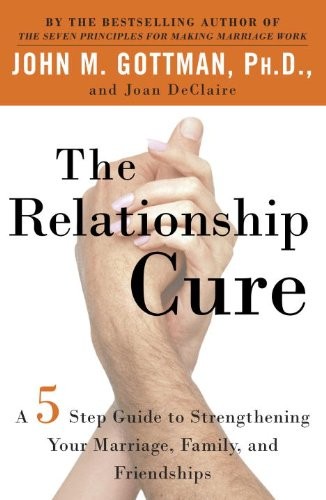 The Relationship CureJohn Gottman PhD
 Trauma and RecoveryJudith Herman
More from Irvin D. Yalom
 Becoming MyselfIrvin D. Yalom
 Creatures of a dayIrvin D. Yalom
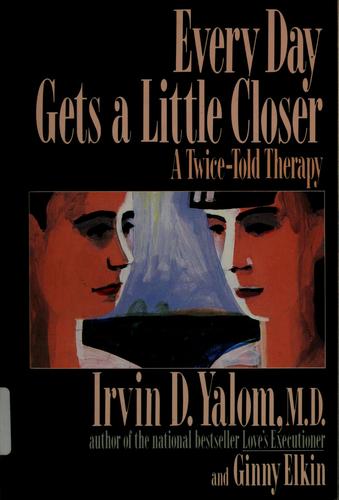 Every day gets a little closerIrvin D. Yalom
 Existential psychotherapyIrvin D. Yalom
 Inpatient group psychotherapyIrvin D. YalomLove's Executioner And Other Tales of PsychotherapyIrvin D. Yalom
 Staring at the SunIrvin D. Yalom
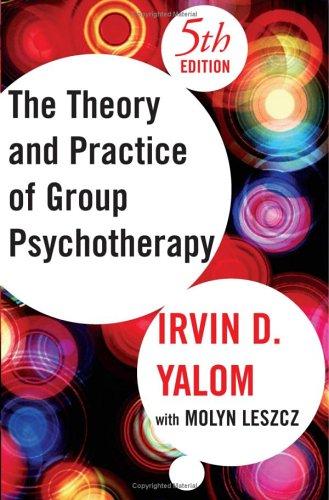 The Theory and Practice of Group Psychotherapy, 5th ed.Irvin D. Yalom
 The Yalom readerIrvin D. Yalom
 Treating Anxiety DisordersIrvin D. Yalom
 Treating Difficult Personality DisordersIrvin D. Yalom