Creatures of a day
≈ From memoryTherapy is not a clinical procedure but a profound, lived encounter between two human beings, where the 'here-and-now' relationship serves as the primary vehicle for healing.
In one sentence
The healing power of psychotherapy lies not in the clever application of techniques, but in the authentic, lived experience of the therapeutic relationship—a "here-and-now" encounter where the patient and therapist meet as two human beings.
Why read this (and who it's for)
This book is for the "technique-obsessed" practitioner or the student of psychology who feels lost in a sea of diagnostic labels and manualized interventions. It addresses the problem of depersonalization in therapy—the tendency to treat the patient as a "case" rather than a person. After reading, you will be able to shift your focus from "What should I do for this patient?" to "What is happening between us right now?" and how that shift creates the actual space for change.
The big idea
Yalom argues that the most profound therapeutic work happens in the "here-and-now." While techniques (like cognitive restructuring or behavioral activation) are useful tools, they are secondary to the relational experience. He posits that a patient’s growth is inextricably tied to their experience of being seen, heard, and understood by another human being in the present moment.
The logic is simple but profound: humans are social creatures who find meaning through connection. Therefore, the "cure" must be relational. If a patient feels lonely, misunderstood, or judged in their daily life, they will feel those same things in the therapy room. The therapist’s job is to provide a unique, safe container where those feelings can be explored, named, and transformed. By being fully present, the therapist allows the patient to experience a "corrective emotional experience"—a shift in how they perceive themselves and their relationships with others.
Key ideas
The "Here-and-Now"
- What it is — The focus on what is happening in the room at this very moment between the therapist and the patient.
- Why it matters — It moves therapy from a "history lesson" (talking about the past) to a "living laboratory" where the patient's patterns of relating can be observed and worked through in real-time.
- In the book — Yalom emphasizes that when a patient feels a shift in the room—perhaps a sudden silence or a tension—the therapist should point it out rather than ignoring it to stick to the "agenda."
The Therapeutic Frame
- What it is — The unique, bounded environment of the therapy session, including the physical space, the time limit, and the specific roles of the participants.
- Why it matters — The frame provides the safety necessary for the patient to take risks. Without a clear "container," the patient may feel overwhelmed or unsafe enough to share their deepest vulnerabilities.
- In the book — Yalom describes the frame as a "sacred space" where the usual rules of social interaction are suspended, allowing for a deeper, more focused exploration of the inner life.
The Therapist as a "Human Instrument"
- What it is — The idea that the therapist's own personality, presence, and genuine reactions are the primary tools of healing.
- Why it matters — It shifts the burden away from "knowing the right thing to say" to "being the right person to be with." It demands that the therapist be authentic rather than a perfect, detached observer.
- In the book — Yalom argues that the therapist's ability to offer a "holding environment" depends on their own self-awareness and their willingness to be present with the patient's pain.
The Importance of the Counter-transference
- What it is — The therapist's internal emotional response to the patient, which serves as a roadmap for understanding the patient's inner world.
- Why it matters — Instead of seeing their feelings as a distraction, the therapist uses their own feelings as data to understand how the patient affects others and how the patient perceives the world.
- In the book — Yalom explores how a therapist's feelings of boredom, irritation, or warmth are actually "signals" about the patient's relational patterns.
The Relational Core
- What it is — The belief that psychological suffering is often rooted in relational wounds—feelings of being unloved, unseen, or rejected.
- Why it matters — If the wound is relational, the healing must be relational. The therapist provides a "corrective experience" by relating to the patient in a way that is different from the hurtful relationships of the past.
- In the book — Yalom highlights how the therapist's genuine empathy and "attunement" can repair the patient's shattered sense of self-worth.
Frameworks & tools
The "Here-and-Now" Awareness Checklist
Use this to pivot from "talking about" to "experiencing" during a session:
- Identify the Shift: Notice a change in the patient's tone, a long pause, or a sudden shift in body language.
- Pause the Agenda: Stop the planned topic of conversation.
- Name the Experience: Verbally acknowledge what is happening now (e.g., "I notice you've gone quiet. What's happening for you in this moment?").
- Explore the Relational Dynamic: Ask how this feeling relates to their outside life (e.g., "Does this silence feel like something you experience with your spouse?").
The Holding Environment Framework
To create a safe space for the patient, ensure the following three pillars are present:
- Predictability: Consistent time, place, and professional boundaries.
- Attunement: The therapist’s ability to mirror the patient's emotions without judgment.
- Presence: The therapist’s commitment to being "there" mentally and emotionally, not just waiting for the patient to speak.
Memorable examples & stories
The "Silent" Patient
Yalom describes a patient who struggled to find words, often falling into long silences. Instead of filling the silence with questions, the therapist sat with them, allowing the silence to become a shared experience. Lesson: Silence is not a void to be filled; it is a space where the patient's internal experience can emerge.
The "Difficult" Patient
Yalom recounts a patient who was constantly challenging the therapist, testing the boundaries of the relationship. Rather than becoming defensive, the therapist viewed this as an invitation to explore the patient's fear of intimacy. Lesson: Resistance is often a cry for connection and a test of whether the therapist can handle the patient's "true" self.
The Corrective Experience
Yalom illustrates a moment where a patient, who had always been criticized by parents, felt a genuine sense of "being seen" when the therapist validated their unique perspective. Lesson: The most powerful "technique" is the therapist's ability to provide a unique, validating response to a patient's unique experience.
Key quotes
"The therapeutic relationship is the primary vehicle for change." (Paraphrased) Why it matters: It reminds us that the 'how' of therapy is more important than the 'what.'
"The therapist's task is to be a 'holding environment' for the patient's experience." (Paraphrased) Why it matters: It defines the therapist's role as a container for emotion, not just a source of information.
"We are all creatures of a day, seeking to be seen and understood." (Paraphrased) Why it matters: It humanizes the patient, reminding the therapist that the patient's struggle is a universal human experience.
How to apply it
This week
- Practice "Active Presence": In your next conversation (even non-therapeutic), notice when you are "waiting to speak" rather than truly listening. Practice staying in the silence for three seconds longer than usual.
- Identify your "Internal Weather": At the start of your next session or meeting, take 30 seconds to check in with your own feelings. How do you feel in the room right now?
Ongoing
- The "Here-and-Now" Pivot: Whenever you find yourself asking "Why did that happen in the past?", try to pivot to "What is happening between us right now?"
- Relational Awareness: Regularly reflect on the "vibe" of your sessions. Was there a moment of connection? A moment of tension? What did that tell you about the patient's relational style?
Common pitfalls
- The "Technique Trap": Relying too heavily on worksheets, scales, and "homework" as a way to avoid the raw, sometimes uncomfortable, emotional work of the therapeutic encounter.
- Over-Intellectualizing: Treating the patient's story as a puzzle to be solved rather than a life to be experienced.
- The "Expert" Fallacy: Believing that the therapist must have all the answers. Yalom argues that the therapist's greatest gift is their presence, not their omniscience.
Connects to
- "The Gift of Therapy" by Irvin Yalom: This is the spiritual successor, focusing more on the existential dimensions of the therapeutic encounter.
- "The Practice of Emotional Intelligence" by Daniel Goleman: Complements Yalom’s focus on the "relational" by providing the psychological framework for understanding the emotions involved in these interactions.
- "The Recognition Project" (Relational Psychoanalysis): Extends the idea that the "relational" is the primary site of change.
If you remember only three things
- Therapy is a relational encounter, not a mechanical process.
- The "here-and-now" is the most fertile ground for psychological growth.
- The therapist's presence is the primary tool for creating a "holding environment."
Internalize it
-
Reflection questions
- When I feel "stuck" in a session, is it because I lack a technique, or because I am avoiding the tension in the room?
- How much of my "professional" persona is a defense against being truly seen by the patient?
- In what ways can I make the "here-and-now" a more prominent feature of my practice?
-
Flashcards Q: What is the "here-and-now" in Yalom's view? A: The focus on what is happening in the immediate moment between the therapist and patient.
Q: What is a "holding environment"? A: A safe, predictable, and attentive space where a patient feels secure enough to explore their inner life.
Q: Why is the therapist's personality important? A: Because the therapist is the "human instrument"; their authentic presence is the vehicle for the patient's healing.
Q: How should a therapist view "resistance"? A: As a communication of the patient's fears and a test of the therapeutic relationship.
Q: What is the "relational" core of therapy? A: The belief that psychological suffering often stems from relational wounds and can be healed through a corrective relational experience.
Fidelity note
I am highly confident in the core themes of this summary, specifically Yalom's insistence on the "here-and-now" and the relational nature of therapy. These are the hallmarks of his entire body of work. However, because Yalom's writing is often poetic and nuanced, some of the specific "feeling" of his prose may be compressed in this summary. Readers should verify the specific "relational" nuances in the text to capture his unique literary style.
More from Irvin D. Yalom
 Becoming MyselfIrvin D. Yalom
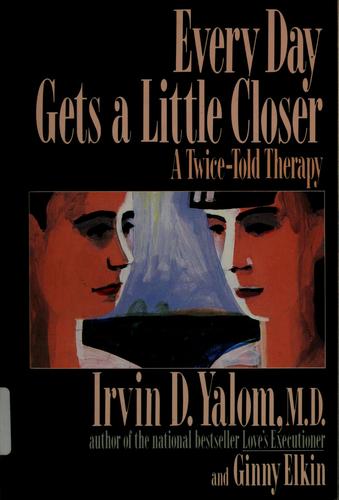 Every day gets a little closerIrvin D. Yalom
 Existential psychotherapyIrvin D. Yalom
 Inpatient group psychotherapyIrvin D. Yalom
 Love's Executioner And Other Tales of PsychotherapyIrvin D. Yalom
 Staring at the SunIrvin D. Yalom
 The Gift of TherapyIrvin D. Yalom
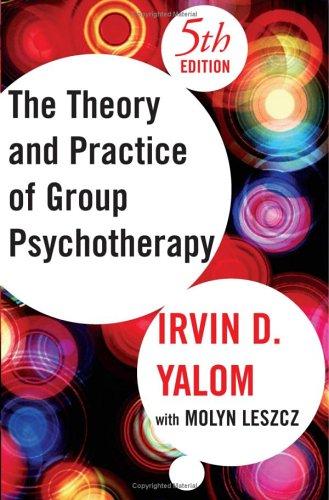 The Theory and Practice of Group Psychotherapy, 5th ed.Irvin D. Yalom
 The Yalom readerIrvin D. Yalom
 Treating Anxiety DisordersIrvin D. Yalom
 Treating Difficult Personality DisordersIrvin D. Yalom