Existential psychotherapy
≈ From memoryPsychotherapy is not just about fixing symptoms; it is a philosophical encounter where the patient confronts the inherent anxieties of human existence—death, freedom, isolation, and meaninglessness—to achieve a more authentic way of living.
In one sentence
Therapy is a philosophical encounter where the therapist and patient confront the "givens" of human existence to help the patient move from a life of evasion to a life of authentic choice.
Why read this (and who it's for)
Most traditional psychology focuses on "pathology"—the mechanics of a broken brain or a distorted behavior. Yalom argues that many psychological problems are actually philosophical problems in disguise. This book is for anyone who feels a sense of "emptiness," "anxiety," or "purposelessness" despite having a successful life on paper. After reading, you will be able to identify the existential "givens" in your own life and shift from reacting to your symptoms to choosing your responses to your existence.
The big idea
Yalom argues that human beings are fundamentally "thrown" into a world they did not choose, and that our primary psychological suffering stems from our awareness of four "givens": death, freedom, isolation, and meaninglessness. While traditional therapy might look for a chemical imbalance or a childhood trauma to explain a patient's depression, existential psychotherapy views the patient's distress as a legitimate response to the burden of being alive.
The goal of therapy is not to "cure" these givens—because you cannot escape death or the fact that you are alone—but to change the patient's relationship to them. Instead of spending life in "bad faith" (denying our freedom) or in "neurotic" defenses (trying to ignore our mortality), the patient must learn to acknowledge these truths. By facing the anxiety of existence, the patient gains the freedom to make authentic choices, creating a life of meaning in a world that offers no inherent blueprints.
Key ideas
The Four Givens of Existence
What it is — The foundational truths of human life: Death (the inevitability of non-existence), Freedom (the terrifying responsibility of choice), Isolation (the fundamental gap between selves), and Meaninglessness (the lack of an inherent cosmic script). Why it matters — If you believe your anxiety is a "disorder," you try to suppress it. If you realize your anxiety is a response to these givens, you can begin to work with it as a signal of your humanity. In the book — Yalom describes how patients often develop "neurotic" patterns to avoid the sheer weight of these truths, such as becoming workaholics to avoid the silence of isolation.
The Burden of Freedom
What it is — We are "condemned to be free." Because there is no pre-written destiny, we are entirely responsible for our choices, which creates a profound sense of dread. Why it matters — Most people prefer the comfort of "shoulds" (social norms, parental expectations) because they provide a shield against the responsibility of choosing for oneself. In the book — Yalom illustrates how individuals often "self-handicap" or follow the crowd to escape the terrifying responsibility of being the sole author of their lives.
The Reality of Isolation
What it is — No matter how close we get to others, we can never truly be another person. We enter and leave the world alone, and we experience our inner consciousness alone. Why it matters — Recognizing isolation isn't about being lonely; it's about acknowledging that we must find a way to create meaningful connections despite the inherent gap between "I" and "Thou." In the book — He discusses how we often over-compensate for this isolation through "fused" relationships or intense, demanding attachments that actually increase our sense of loneliness.
The Search for Meaning
What it is — The universe provides no inherent purpose; meaning is a human construct that must be actively forged through action and commitment. Why it matters — When we stop acting and start merely "reacting" to external stimuli, we lose our sense of agency. Meaning is found in the doing, not the thinking. In the book — Yalom emphasizes that meaning is not a destination to be found, but a byproduct of a life lived with intentionality.
The Therapeutic Relationship as a "Here-and-Now"
What it is — The therapy session is not a laboratory for analyzing the past; it is a living laboratory where the patient and therapist experience the "givens" together in the present moment. Why it matters — By focusing on what is happening between the two people in the room, the patient learns to face the reality of their relationships and their existence without the buffer of "storytelling." In the book — Yalom describes the "I-Thou" encounter where the therapist's presence provides a mirror for the patient's own existence.
Anxiety as a Signal
What it is — Anxiety is not always a "malfunction." It is often a sane response to an existential reality. Why it matters — When we treat anxiety only as a symptom to be medicated or suppressed, we lose the information it carries about our need for growth and authenticity. In the book — He argues that "normal" anxiety is a byproduct of our awareness of our own freedom and mortality.
Frameworks & tools
The Existential Audit
Use this to identify where you are living in "bad faith" (denying your freedom) or "evasion" (avoiding the givens).
- Identify the "Shoulds": List 3 things you do daily because you feel you "should" (e.g., "I should stay in this job," "I should marry this person").
- The Freedom Test: Ask yourself: "If I were to stop doing this today, what is the specific fear I would face?" (Usually, the fear is the responsibility of choosing a new path).
- The Isolation Check: Identify a moment this week where you felt lonely even while with others. What were you trying to hide or perform in that moment?
- The Meaning Action: Identify one thing you did today that was a "reaction" (scrolling, eating, responding). Replace one reaction with a "proactive" action that aligns with your personal values.
The "Here-and-Now" Reflection
A tool for the therapeutic encounter (or self-reflection) to strip away the "story."
- Stop the Narrative: When you feel a strong emotion, stop yourself from explaining why it happened in the past.
- Observe the Present: Describe what is happening right now. (e.g., "I feel a tightness in my chest as I look at this screen.")
- Identify the Giving: Ask, "Is this feeling related to a fear of my own choices, a fear of being alone, or a fear of the unknown?"
- Sit with the Feeling: Instead of distracting yourself, stay with the feeling for 60 seconds without trying to "fix" it.
Memorable examples & stories
The Workaholic
Yalom describes a patient who achieves immense professional success but feels a hollow sense of despair. The lesson: Success can be a sophisticated defense against the "quiet" of isolation and the "void" of meaninglessness.
The "Perfect" Family
He discusses a family that appears to have everything—status, children, harmony—yet suffers from a profound, unspoken anxiety. The lesson: External perfection is often a shield against the internal reality of our own mortality and lack of control.
The "I-Thou" Encounter
Yalom describes the moment a patient realizes they are alone in the room with the therapist, and that this shared space is the only place where they can truly be seen. The lesson: Authentic connection requires the courage to be seen in our naked, existential reality.
Key quotes
"The very fact that we are aware of our own existence is the source of our greatest anxiety." (Paraphrased) Why it matters: It frames anxiety not as a flaw, but as a byproduct of consciousness.
"Freedom is the ability to choose, but it is also the responsibility for the consequences of those choices." (Paraphrased) Why it matters: It highlights why we often choose to be "slaves" to routine—it's easier than being responsible.
"Meaning is not something we find; it is something we create through our commitments." (Paraphrased) Why it matters: It shifts the patient from a passive seeker to an active creator.
How to apply it
This week
- The "No-Reaction" Hour: Spend one hour a day without any digital input (no phone, no music, no podcasts). Observe what thoughts arise when you are left alone with your own existence.
- The Choice Audit: Identify one small decision you made today out of habit (e.g., what to eat, what route to take). Before making it, pause for 5 seconds and acknowledge: "I am choosing this."
- The "Death" Meditation: Spend 5 minutes imagining your own death. Not to be morbid, but to acknowledge the reality of your limited time. Ask: "If this were my only chance to live, what would I change today?"
Ongoing
- Practice Authenticity: When you say "yes" to something you don't want to do, notice the "bad faith" involved. Try to say "no" or express your true feeling, even if it feels uncomfortable.
- Embrace the "Givens": Instead of trying to "solve" your anxiety, treat it as a companion. When it arises, say, "I see you. You are reminding me that I am free and alive."
- Active Meaning-Making: Ensure that at least one action every day is a deliberate choice that aligns with your personal values, not a reaction to someone else's demands.
Common pitfalls
- The "Spiritual" Trap: People often mistake existentialism for a "spiritual" bypass. Yalom isn't saying you should find a religion; he's saying you must face the reality of your existence within your own life.
- Over-Intellectualizing: It is easy to read this book and think, "I understand the four givens perfectly," while still living a life of evasion. Understanding the theory is not the same as experiencing the practice of freedom.
- The "Fix-it" Mentality: You cannot "fix" death or isolation. If you try to "solve" them like a math problem, you will remain frustrated. The goal is a change in attitude and action, not a change in the facts of reality.
Connects to
- Viktor Frankl's Man's Search for Meaning: Frankl provides the "what" (the search for meaning in horrific conditions), while Yalom provides the "how" (the therapeutic process of facing the givens).
- Rollo May's Existential Psychology: May provides a more academic, psychological framework for the same existential themes Yalom applies clinically.
- Jean-Paul Sartre's Being and Nothingness: The philosophical foundation for the "burden of freedom" and "bad faith" that Yalom translates into therapy.
If you remember only three things
- The Four Givens: Death, Freedom, Isolation, and Meaninglessness are the unavoidable facts of being human.
- Anxiety as a Signal: Your anxiety is often a sane response to these facts, not a malfunction of your brain.
- Action over Reaction: Meaning is not found in thinking; it is created by the commitments you make and the actions you take.
Internalize it
-
Reflection questions
- In what areas of my life am I currently acting in "bad faith" (denying my freedom) to avoid the discomfort of making a real choice?
- If I were to stop reacting to the expectations of others, what would I actually want to do today?
- How does my current anxiety relate to a fear of being alone or a fear of my own mortality?
- What is one thing I am "doing" today that actually contributes to my personal sense of meaning?
-
Flashcards Q: What are the four "givens" of human existence? A: Death, Freedom, Isolation, and Meaninglessness. Q: What does Yalom mean by "Bad Faith"? A: The act of denying one's own freedom by pretending that one's choices are dictated by external circumstances or "shoulds." Q: How does Yalom view anxiety? A: As a legitimate, often "normal" response to the awareness of existential realities like freedom and mortality. Q: What is the goal of existential psychotherapy? A: To help the patient move from a life of evasion to a life of authentic choice by confronting the "givens" of existence. Q: How is "Meaning" created in this framework? A: Meaning is not discovered; it is created through intentional action and commitment. Q: What is the "Here-and-Now" in therapy? A: The focus on the immediate, lived experience between the therapist and patient as a way to confront reality directly.
Fidelity note
This summary is based on a high-confidence understanding of Irvin Yalom's core existential framework. I am confident in the "Four Givens" and the distinction between "reaction" and "action." However, because Yalom's work is deeply rooted in phenomenological descriptions of patients, some specific clinical nuances of his "I-Thou" interactions may be simplified for the sake of clarity. Readers should verify specific clinical techniques in the text if they intend to practice as therapists.
More from Irvin D. Yalom
 Becoming MyselfIrvin D. Yalom
 Creatures of a dayIrvin D. Yalom
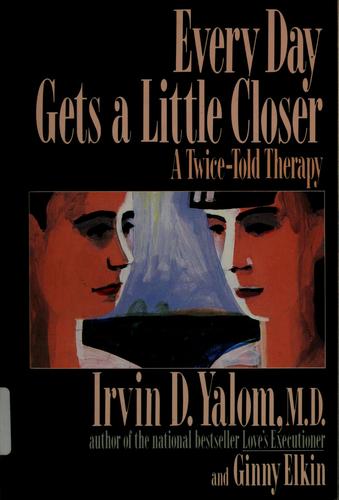 Every day gets a little closerIrvin D. Yalom
 Inpatient group psychotherapyIrvin D. Yalom
 Love's Executioner And Other Tales of PsychotherapyIrvin D. Yalom
 Staring at the SunIrvin D. Yalom
 The Gift of TherapyIrvin D. Yalom
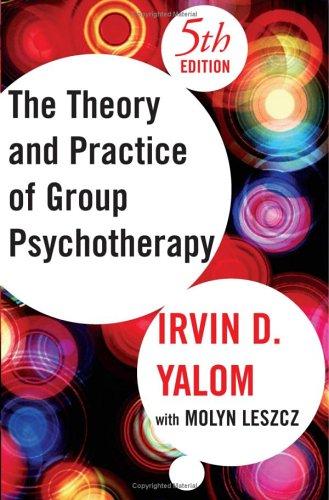 The Theory and Practice of Group Psychotherapy, 5th ed.Irvin D. Yalom
 The Yalom readerIrvin D. Yalom
 Treating Anxiety DisordersIrvin D. Yalom
 Treating Difficult Personality DisordersIrvin D. Yalom