Inpatient group psychotherapy
≈ From memoryGroup psychotherapy is a unique laboratory of human interaction where the 'here-and-now' interpersonal dynamics serve as the primary vehicle for healing and insight.
In one sentence
The healing power of group psychotherapy lies not just in the content of what is said, but in the immediate, lived experience of interpersonal relationships within the "here-and-now" of the group session.
Why read this (and who it's for)
This book is a foundational text for clinicians, students of psychology, and anyone interested in the mechanics of human connection. It solves the problem of "intellectualized" therapy—where patients talk about their problems without actually experiencing change. After reading, you will be able to identify the specific interpersonal dynamics (the "here-and-now") that occur in a group setting and understand how to use those dynamics as a therapeutic tool rather than just a byproduct of conversation.
The big idea
Yalom argues that group psychotherapy is a unique medium because it provides a microcosm of the social world. Unlike individual therapy, where the patient-therapist dyad is the sole focus, the group offers a "social laboratory" where patients can test behaviors, receive immediate feedback, and observe their own patterns of relating to others in real-time.
The core thesis is that the process of the group is as important as the content. While content refers to the stories, histories, and problems patients share, process refers to what is happening between people in the room at that very moment. Yalom posits that when a patient experiences a genuine interpersonal encounter—such as feeling truly seen, judged, or rejected by a peer—it creates a "corrective emotional experience" that cannot be replicated through mere talk.
Ultimately, the group serves as a vehicle for interpersonal learning. By observing how they affect others and how others affect them, patients gain a map of their own relational style, allowing them to develop a more authentic sense of self and a more effective way of relating to the world outside the group room.
Key ideas
The "Here-and-Now"
- What it is — The focus on what is happening in the room at this very moment, rather than what happened in the past or what might happen in the future.
- Why it matters — It shifts the therapy from a "reporting" model (where the patient tells a story) to an "experiential" model (where the patient feels a sensation).
- In the book — Yalom emphasizes that if a patient says, "I feel lonely," the therapist should ask, "Who in this room are you feeling lonely from right now?" to bring the feeling into the immediate interpersonal space.
The Group as a Social Microcosm
- What it is — The idea that the group functions as a miniature version of the patient's outside world, including their family, workplace, and friendships.
- Why it matters — It allows for "safe" experimentation. A patient can practice setting a boundary or expressing anger in a controlled environment where the consequences are manageable.
- In the book — Yalom describes how a patient who is habitually passive in their marriage might finally speak up in the group, providing a "rehearsal" for real-life change.
Therapeutic Factors: Universality
- What it is — The realization that one is not alone in their suffering or "weirdness."
- Why it matters — It breaks the isolation of shame. For many patients, the primary pathology is a sense of being uniquely broken; seeing others share similar struggles is a profound relief.
- In the book — Yalom highlights how a patient's anxiety often drops the moment they realize three other people in the room are also struggling with the same specific fear.
Therapeutic Factors: Instillation of Hope
- What it is — The observation of other group members making progress.
- Why it matters — It provides a visual roadmap for recovery. When a patient sees a peer who was once as paralyzed as they are now participating actively, it validates the possibility of change.
- In the book — Yalom notes that the group provides a "living laboratory" of success stories that are more credible than a therapist's promises.
Therapeutic Factors: Imitative Behavior
- What it is — The process of patients modeling the behaviors of others in the group.
- Why it matters — It provides a "how-to" guide for social interaction. Patients learn how to listen, how to express needs, and how to handle conflict by watching others do it successfully.
- In the book — Yalom explains how a patient might "borrow" a way of speaking from a more assertive group member to help them find their own voice.
The Role of the Therapist as a "Catalyst"
- What it is — The therapist's role is not to be a "fixer" but to facilitate the group's internal dynamics.
- Why it matters — It ensures the group remains a self-sustaining community rather than a group that is entirely dependent on the therapist's expertise.
- In the book — Yalom describes the therapist's role in identifying "process" moments—pointing out when two people are having a silent disagreement or when a group member is withdrawing.
Frameworks & tools
The Process-Content Distinction
To move from "talking" to "experiencing," use this framework to analyze group interactions:
- Identify the Content: What is the person saying? (e.g., "I'm always ignored by my boss.")
- Identify the Process: What is happening now? (e.g., "Is this person currently ignoring you as they speak?")
- The Pivot: Gently point out the process. "I notice you're telling me about being ignored, but I'm also noticing that you're looking at the floor and not at me. What is happening between us right now?"
The 5 Therapeutic Factors of Group Therapy
When evaluating the success of a group, look for these five elements:
- Universality: "I am not alone."
- Imitative Behavior: "I can learn how to be like them."
- Social Reinforcement: "I am valued by this group."
- Development of Socializing Techniques: "I can interact with others more effectively."
- Instillation of Hope: "Others have changed, so I can too."
Memorable examples & stories
The "Silent" Conflict
Yalom describes a situation where two members were clearly annoyed with each other but were both pretending to be polite. By pointing out the tension in the room (the process), the therapist allowed them to finally address the conflict. Lesson: The most important work happens in the "unsaid" space between people.
The "Safe" Aggression
A patient who was terrified of confrontation in their personal life finally snapped at a group member during a session. Instead of being punished, the patient was met with a supportive, clarifying response from the group. Lesson: The group provides a "holding environment" where risky behaviors can be safely explored.
The Reluctant Participant
A patient who sat in the back, barely speaking, eventually began to participate not because they were "cured," but because they felt a sense of belonging to the group's collective identity. Lesson: Belonging is a prerequisite for, and a byproduct of, therapeutic change.
Key quotes
- "The group is a laboratory for interpersonal experience." (Paraphrased) Why it matters: It shifts the focus from 'learning about' people to 'experiencing' people.
- "The most important thing that happens in a group is what happens between the members." (Paraphrased) Why it matters: It validates the group as a self-regulating system of healing.
- "The group provides a sense of universality that is often missing in individual therapy." (Paraphrased) Why it matters: It addresses the profound isolation of mental illness.
How to apply it
This week
- Practice "Process" Awareness: In your next conversation with a friend or colleague, instead of just listening to what they say, notice how they are saying it. Are they seeking validation? Are they avoiding eye contact? Are they trying to please you?
- Identify your "Social Lab": Think of a recurring social interaction (e.g., a weekly meeting). Identify one "process" you want to change (e.g., "I want to be more assertive"). How would you "rehearse" that in a safe environment?
- The "Not Alone" Exercise: If you are feeling a sense of inadequacy or "weirdness" regarding a personal trait, actively seek out a community (online or in-person) where people share that trait. Observe the "universality" of the experience.
Ongoing
- The "Here-and-Now" Rule: When you feel a strong emotion in a social setting, try to identify where that emotion is coming from in the immediate moment. Ask yourself: "What is happening between us right now?"
- Active Observation: When in a group setting (a team, a club, a family dinner), observe the dynamics of the group as a whole. Who is the "connector"? Who is the "distractor"? How do people react to one another?
Common pitfalls
- Over-intellectualizing: A common mistake is thinking that "understanding" a dynamic is the same as "experiencing" it. You can understand why you push people away without actually feeling the shift in your behavior when you stop.
- The "Expert" Trap: Beginners often try to "fix" the group by giving advice. Yalom warns that this kills the group's organic process. The goal is to facilitate, not to direct.
- Ignoring the "Here-and-Now": Focusing too much on the patients' past traumas can lead to a "storytelling" session that avoids the actual interpersonal friction occurring in the room.
Connects to
- "The Gift of psychotherapy" by Irvin Yalom: Expands on the specific therapeutic factors (Universality, etc.) in a more theoretical framework.
- "Group psychotherapy" by Morris Ackerman: Offers a more structured, perhaps more clinical/technical approach to group management.
- "The Practice of Emotional Intelligence" by Daniel Goleman: Complements Yalom's work by providing the internal tools for understanding the emotions that surface in group dynamics.
If you remember only three things
- Process over Content: What is happening between people right now is the primary vehicle for change.
- The Social Laboratory: The group is a safe space to rehearse, fail, and succeed in social interactions.
- Universality: One of the most healing forces in therapy is the realization that "I am not alone in my struggle."
Internalize it
- Reflection questions
- In my current relationships, what "processes" (patterns of interaction) do I repeat without realizing it?
- If I were in a group setting right now, what would I be afraid to say? Why?
- How can I create "safe" spaces in my life to practice the behaviors I want to adopt?
- Flashcards Q: What is the difference between "Content" and "Process" in group therapy? A: Content is what is said (stories, history); Process is what is happening in the here-and-now (dynamics, feelings, interactions). Q: What is the "Social Laboratory" concept? A: The idea that a group acts as a microcosm of the outside world, allowing patients to test behaviors and receive feedback. Q: What is "Universality"? A: The therapeutic factor where a patient realizes they are not alone in their experiences or struggles. Q: What is the therapist's primary role in a group? A: To act as a catalyst who identifies and highlights the "here-and-now" processes to facilitate interpersonal learning. Q: Why is "Imitative Behavior" important? A: It allows patients to model the successful social behaviors of other group members.
Fidelity note
I have a high level of confidence in the core concepts of this summary (Process vs. Content, the 5 Therapeutic Factors, and the Social Laboratory). These are the "hallmarks" of Yalom's work. However, because this is a summary of a specific clinical text, some of the specific nuances of how a therapist manages a group of 10 people with varying pathologies may be simplified. Readers should verify the specific "Group Management" techniques (how to handle a hostile member, etc.) in the original text if they intend to practice as a clinician.
More from Irvin D. Yalom
 Becoming MyselfIrvin D. Yalom
 Creatures of a dayIrvin D. Yalom
 Every day gets a little closerIrvin D. Yalom
 Existential psychotherapyIrvin D. Yalom
 Love's Executioner And Other Tales of PsychotherapyIrvin D. Yalom
 Staring at the SunIrvin D. Yalom
 The Gift of TherapyIrvin D. Yalom
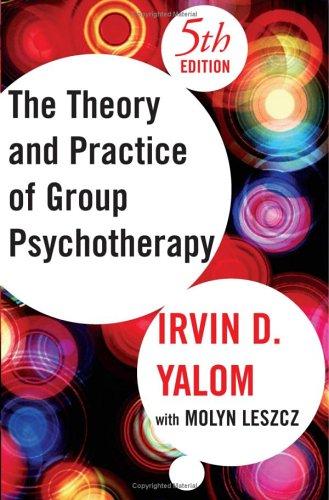 The Theory and Practice of Group Psychotherapy, 5th ed.Irvin D. Yalom
 The Yalom readerIrvin D. Yalom
 Treating Anxiety DisordersIrvin D. Yalom
 Treating Difficult Personality DisordersIrvin D. Yalom