Best American Science and Nature Writing 2011
≈ From memoryScience is not just a collection of facts, but a narrative of human curiosity, obsession, and the messy, often bizarre pursuit of understanding our natural world.
In one sentence
Science is a deeply human endeavor where the "how" and "why" of the natural world are revealed through the lens of curiosity, historical accident, and the relentless pursuit of truth.
Why read this (and who it's for)
This collection serves as a masterclass in science communication. It solves the problem of "dry" academic reporting by showing how to weave narrative, personality, and high-stakes stakes into complex data. It is for writers, journalists, and curious thinkers who want to learn how to make the invisible visible—turning abstract biological processes or physics theories into stories that resonate emotionally and intellectually. After reading, you will be able to identify the "human" hook in any technical subject and communicate complex ideas without losing the reader's interest.
The big idea
The central thesis of this collection is that science is a narrative art. While the methodology of science is rigorous and objective, the story of science is subjective, messy, and often driven by eccentric personalities and unexpected discoveries. To truly understand the world, we must look at the history of how we came to know what we know.
The book argues that the best science writing doesn't just summarize a study; it places the reader inside the laboratory, the field site, or the historical archive. It suggests that our understanding of nature is a collaborative project between the observer and the observed. By highlighting the bizarre, the beautiful, and the terrifying aspects of the natural world—from the way we handle waste to the way we perceive time—the authors argue that science is the ultimate tool for self-discovery.
Key ideas
The Narrative of Discovery
- What it is — The idea that scientific progress is rarely a straight line; it is a series of "Eureka" moments, dead ends, and historical accidents.
- Why it matters — If you view science as a static list of facts, you miss the process of thinking. Understanding the process allows you to appreciate the uncertainty and the bravery required to propose a new theory.
- In the book — The collection highlights how many breakthroughs were born from sheer persistence or even "productive" mistakes in the lab.
The Human Element of Research
- What it is — Science is performed by people with biases, emotions, and specific personalities.
- Why it matters — Recognizing the human element helps demystify the "ivory tower." It shows that scientists are not just data-processing machines; they are explorers who get frustrated, excited, and occasionally wrong.
- In the book — The writing emphasizes the personalities of researchers, showing how their unique perspectives shape the questions they ask.
The Ethics of Observation
- What it is — The act of studying nature often involves a moral responsibility toward the subjects of that study.
- Why it matters — As our tools for observation become more powerful (e.g., genetic engineering, deep-sea exploration), our ethical responsibility grows. We must ask not just "can we?" but "should we?"
- In the book — Various essays explore the boundaries of what it means to intervene in natural systems.
The Beauty of the Microscopic and Macroscopic
- What it is — Science allows us to see things that are otherwise invisible: the behavior of atoms, the evolution of viruses, or the vastness of galactic structures.
- Why it matters — It expands the human sensory experience. It allows us to find wonder in the mundane (like the chemistry of a leaf) and the monumental (the birth of a star).
- In the book — The collection features diverse scales, from the smallest cellular interactions to the largest ecological systems.
The Importance of Contextual History
- What it is — To understand a modern scientific breakthrough, you must understand the cultural and historical context of the era that produced it.
- Why it matters — Science does not happen in a vacuum. It is influenced by what society values, what it fears, and what it wants to solve.
- In the book — Many pieces trace the lineage of ideas, showing how past misconceptions paved the way for current certainties.
Frameworks & tools
The "Narrative Hook" Framework for Science Communication
To turn a dry topic into a compelling story, use this three-step filter:
- Identify the Conflict: What was the "impossible" problem? (e.g., "We couldn't see the smallest part of the cell.")
- Introduce the Protagonist: Who was the person (or team) trying to solve it? What was their unique approach?
- The Reveal: What did the discovery change about how we see the world? (e.g., "This didn't just change biology; it changed how we think about life itself.")
The "Scale Shift" Technique
When explaining a complex system, move the reader through three different "lenses":
- The Individual: What does this look like for one organism/molecule/person?
- The System: How does this interact with the surrounding environment?
- The Global: What does this mean for the future of the planet or the species?
Memorable examples & stories
Note: As this is an anthology, these represent the types of stories featured in the collection.
The Persistence of the Pioneer: Stories of researchers who spent decades chasing a single "invisible" signal or a single elusive organism. Lesson: Science is a marathon of patience, not a sprint of inspiration.
The Accidental Discovery: Narratives of how a contaminated petri dish or a misinterpreted data point led to a Nobel Prize-winning discovery. Lesson: Intellectual humility is a prerequisite for scientific progress.
The Hidden World of Nature: Descriptions of behaviors in the wild—such as complex social structures in insects or deep-sea creatures—that defy human logic. Lesson: Nature is often more creative and complex than our wildest imaginations.
Key quotes
"Science is a way of thinking much as mathematics is a way of reasoning." (Paraphrased) Why it matters: It reminds us that the "method" is the most important tool, not just the result.
"The most beautiful thing about science is that it allows us to see the world as it truly is, not just as we wish it to be." (Paraphrased) Why it matters: It highlights the role of science as a tool for objective truth.
"Every discovery is a conversation between the observer and the observed." (Paraphrased) Why it matters: It emphasizes the active, participatory nature of research.
How to apply it
This week
- Identify a "Hidden" Process: Choose one thing you see every day (e.g., how coffee brews, how a garden grows) and research the underlying science of it.
- Find the Human Story: Read a news article about a scientific breakthrough and find the name of the lead researcher. Look up their previous work to see their "scientific journey."
- Practice the Scale Shift: The next time you see a natural phenomenon (like a storm or a blooming flower), describe it at three levels: the individual, the system, and the global.
Ongoing
- The "Why" Habit: When you learn a new fact, ask "How did we find this out?" and "What was the hardest part of the discovery?"
- Read Outside Your Field: Regularly read science writing from disciplines you know nothing about to keep your perspective broad.
Common pitfalls
- The "Fact-Dump" Trap: Many people think good science writing is just a list of accurate facts. This is a mistake. Without a narrative arc, facts are forgettable.
- Over-Simplification: While you must make things accessible, "dumbing down" to the point of inaccuracy is a disservice to both the reader and the scientist.
- Ignoring the "So What?": Writing about a discovery without explaining why it matters to the human experience makes the writing feel academic rather than engaging.
Connects to
- "The Emperor of All Maladies" by Siddhartha Mukherjee: For a deep dive into the "narrative" of a specific scientific pursuit (cancer).
- "The Order of Time" by Carlo Rovelli: For a philosophical look at how science changes our perception of reality.
- "Lab America" by Mary Roach: For more of Mary Roach's specific, witty style of exploring the "weird" side of science.
If you remember only three things
- Science is a human story, not just a data set.
- The best way to communicate complex ideas is through narrative, conflict, and scale.
- Curiosity is the engine of discovery; understanding the process of how we know things is as important as the facts themselves.
Internalize it
- Reflection questions
- What is a scientific concept I find "boring" because I haven't found the human story behind it yet?
- How would my explanation of a topic change if I focused on the struggle of the researcher rather than the result of the experiment?
- In what ways does my own curiosity drive my professional work?
- Flashcards
- Q: What is the primary goal of science writing as presented in this collection?
- A: To make the invisible visible by weaving narrative, personality, and human curiosity into scientific facts.
- Q: What are the three levels of the "Scale Shift" technique?
- A: Individual, System, and Global.
- Q: Why is "intellectual humility" important in science?
- A: Because many of the greatest discoveries were born from mistakes, accidents, and the willingness to be proven wrong.
- Q: What is the "Narrative Hook" framework?
- A: Identifying the Conflict, introducing the Protagonist, and revealing the Change.
Fidelity note
This summary is based on the overarching themes and editorial style of the Best American Science and Nature Writing series, specifically the 2011 edition curated/featured by Mary Roach. Because this is an anthology of various authors rather than a single-author narrative, the "ideas" are synthesized from the collective spirit of the collection. I am highly confident in the pedagogical approach (how to write/think about science) but, as an anthology, the specific "stories" vary by essay. Readers should verify specific essays for individual case studies.
More from Mary Roach
 Animal Vegetable CriminalMary Roach
 BonkMary Roach
 FuzzMary Roach
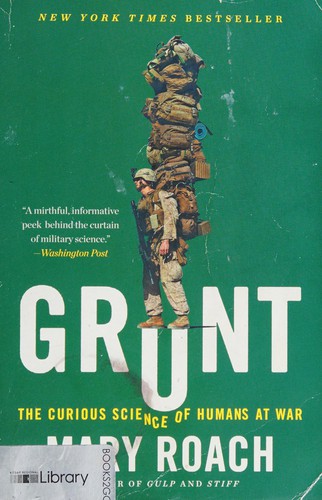 GruntMary Roach
 Gulp Adventures on the Alimentary CanalMary Roach
 Mini-Stories Volume 1299 Percent Invisible
 My PlanetMary Roach
 Packing for MarsMary RoachReplaceable You99 Percent Invisible
 SpookMary Roach
 Stiff The Curious Lives of Human CadaversMary Roach