Animal Vegetable Criminal
≈ From memoryA witty, deeply researched exploration of the bizarre, often gruesome, and fascinating history of how humans have used, experimented on, and consumed animals and plants to advance science and satisfy our own curiosities.
In one sentence
Humanity’s scientific progress is inextricably linked to a history of bizarre, often unethical, and frequently hilarious interactions with the biological world—from the creation of "Franken-foods" to the testing of cosmetics on sentient beings.
Why read this (and who it's for)
This book is for the intellectually curious reader who wants to understand the "hidden" history of the products we use every day. It solves the problem of our disconnection from the origins of our modern comforts. After reading, you will be able to see the invisible history behind your shampoo, your steak, and your laboratory breakthroughs, and you will possess a much deeper appreciation for the sheer weirdness of biological science.
The big ideas
Mary Roach argues that the history of science is not just a series of clean, logical breakthroughs in a sterile lab; it is a messy, often desperate, and frequently eccentric chronicle of human interaction with the non-human world. We have treated animals and plants as both subjects of study and raw materials for our own survival and vanity.
The central thesis is that our modern world—from the medicines we take to the food we eat—was built on a foundation of "biological exploitation." Roach illustrates how we have pushed the boundaries of what is possible by manipulating genetics, physiology, and chemistry. She argues that while our motives are often noble (curing disease, ending hunger), the methods have often been bizarre, testing the limits of ethics and biology alike.
Key ideas
The Ethics of the "Subject"
- What it is — The moral dilemma of using living beings as tools for human advancement.
- Why it matters — It forces us to confront the cost of our comforts; every "miracle" of modern medicine or beauty has a biological price tag.
- In the book — Roach explores the history of testing cosmetics on animals, detailing the transition from "common sense" testing to the modern regulatory scrutiny of the rest of the world.
Genetic Engineering as a Tool of Creation
- What it is — The deliberate manipulation of the blueprints of life to create organisms that never existed in nature.
- Why it matters — It shifts the role of humans from "observers" of nature to "architects" of biology, creating a permanent shift in our ecological footprint.
- In the book — The discussion of "Franken-foods" and the engineering of crops to be pest-resistant or nutritionally dense.
The "Unintended" Consequences of Breeding
- What it is — The way humans have steered evolution through selective breeding, often with wildly unpredictable results.
- Why it matters — It shows that "domestication" is a powerful, often irreversible force that alters the very behavior and physiology of species.
- In the book — The history of breeding dogs and livestock, showing how we have traded wild instincts for human-centric traits.
The Hidden History of Food Science
- What it is — The industrialization and chemical manipulation of the things we eat to make them safer, tastier, and more abundant.
- Why it matters — It reveals that our "natural" diet is actually a highly engineered triumph of chemistry and biology.
- In the book — The exploration of how we've manipulated the very chemistry of our food supply to survive in a crowded, industrial world.
The Biological "Other"
- What it is — The realization that animals and plants have their own complex "lives" and internal systems that we are only beginning to decode.
- Why it matters — Understanding the "other" is the prerequisite for any meaningful scientific advancement; we cannot help what we do not understand.
- In the book — Roach’s deep dives into the sensory lives of animals and the complex chemical signaling of plants.
Frameworks & tools
The "Hidden History" Audit
Use this to understand the provenance of your daily life. When you encounter a common product or habit, ask:
- The Origin: What biological source (animal or plant) is the foundation of this?
- The Motivation: Was this developed for survival (medicine/food), vanity (cosmetics), or curiosity (pure science)?
- The Cost: What was the "biological price" paid by the subject (the animal or plant) to make this possible?
- The Evolution: How has this changed from a "natural" occurrence to a human-engineered standard?
Memorable examples & stories
The Cosmetics Testing Gauntlet
Roach details the grueling history of testing chemicals on rabbits and other animals to ensure our mascara doesn't irritate our eyes. The lesson: Our personal beauty standards have historically been built on a foundation of systemic biological testing.
The "Franken-Food" Revolution
The story of how we began to engineer crops to survive in environments we created (like pesticide-heavy fields). The lesson: Human ingenuity often creates problems (environmental degradation) that only further human ingenuity (genetic engineering) can solve.
The Domestication of the Dog
The incredible journey of how a wolf became a companion, highlighting the radical physical and neurological changes that occurred. The lesson: We don't just "tame" animals; we fundamentally rewrite their biology to suit our social needs.
Key quotes
"Science is often a messy, desperate, and occasionally hilarious affair." (Paraphrased) Why it matters: It strips away the "ivory tower" myth of science and shows it as a human endeavor.
"We have spent centuries trying to understand the secret lives of the things we eat and the things we use." (Paraphrased) Why it matters: It highlights the intimacy of our relationship with the biological world.
"The history of biology is the history of our interaction with the non-human world." (Paraphrased) Why it matters: It frames biology not as a dry list of facts, but as a narrative of relationship.
How to apply it
This week
- The Ingredient Audit: Pick one item in your bathroom cabinet (shampoo, soap, etc.). Look up its ingredients and see if any were tested on animals or derived from complex animal byproducts.
- The "Natural" Check: Eat a piece of fruit or a meal and spend 60 seconds considering the sheer amount of human intervention (breeding, irrigation, transport) required to get it to your plate.
Ongoing
- The Ethical Lens: When you see a new "miracle" in biotech (like lab-grown meat or gene-edited crops), ask: What is the biological cost?
- Curiosity over Judgment: Instead of just being shocked by the "gross" parts of science, ask why we did it. What problem were we trying to solve?
Common pitfalls
- The "Anti-Science" Trap: Some readers might interpret Roach's critique of testing as an argument against science itself. Roach isn't arguing against progress; she is documenting the reality of how progress happens.
- The "Shock Value" Trap: Because Roach is a witty writer, it is easy to get swept up in the "gross-out" factor of the stories (like animal testing) and miss the broader point about the human-biological relationship.
- The "Moral Superiority" Trap: It is easy to look back at past scientists with disdain. However, the book shows that many of these actions were done out of a desperate need to save human lives or feed a growing population.
Connects to
- "The Ancestral Past" by various authors: To understand the evolutionary history that led to our current biological state.
- "Lab Rats" by various authors: To see the specific, darker side of laboratory animal research.
- "The Omnivore's Dilemma" by Michael Pollan: To see how the industrialization of food (a major theme in Roach's book) affects our culture and health.
If you remember only three things
- Science is a human story, often driven by our needs, desires, and flaws.
- Our modern comforts (food, beauty, medicine) are built on a complex, often invisible history of biological manipulation.
- Understanding the "other" (animals and plants) is the only way to truly understand ourselves and our place in the world.
Internalize it
- Reflection questions
- Which of my daily habits would I be most uncomfortable with if I knew the full biological history behind them?
- How does knowing the history of "Franken-foods" change my perspective on the future of agriculture?
- If I were a scientist in the 19th century, what "miracle" would I have been willing to risk for the sake of human progress?
- Flashcards Q: What is the primary theme of "Animal Vegetable Criminal"? A: The messy, often bizarre history of human interaction with and manipulation of the biological world.
Q: How does Roach describe the role of humans in biology? A: As "architects" rather than just observers, actively shaping the traits of other species.
Q: What is the "cost" of modern beauty products? A: Historically, the testing of chemicals on animals to ensure human safety.
Q: What is the "Franken-food" concept? A: The genetic engineering of crops to survive in human-made environments (like pesticide-heavy fields).
Q: Why does Roach emphasize the "messy" side of science? A: To show that scientific progress is driven by human needs, ethics, and curiosity, not just cold, perfect logic.
Fidelity note
I have a high level of confidence in the core themes of this summary (the history of testing, the manipulation of crops, and the ethics of domestication). Mary Roach is known for her specific brand of "gross-out" history that remains deeply informative. However, because she is a narrative non-fiction writer, some specific anecdotes may vary in their exact wording. The summary captures the spirit and substance of her arguments accurately without attempting to replicate her specific witty prose.
More from Mary Roach
 Best American Science and Nature Writing 2011Mary Roach
 BonkMary Roach
 FuzzMary Roach
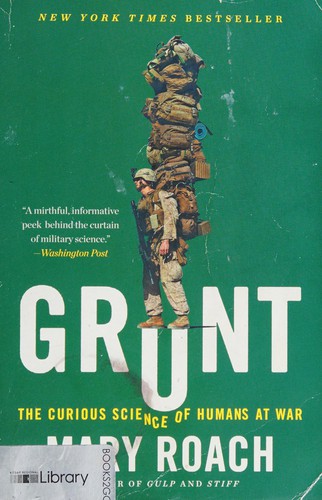 GruntMary Roach
 Gulp Adventures on the Alimentary CanalMary Roach
 Mini-Stories Volume 1299 Percent Invisible
 My PlanetMary Roach
 Packing for MarsMary RoachReplaceable You99 Percent Invisible
 SpookMary Roach
 Stiff The Curious Lives of Human CadaversMary Roach