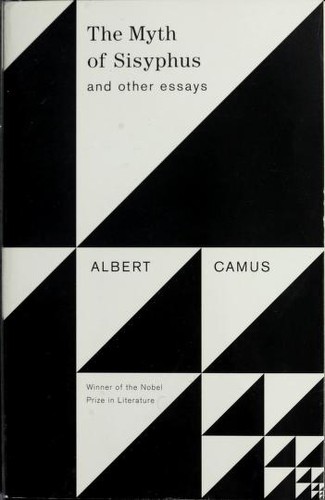
The Myth of Sisyphus
≈ From memoryLife is inherently devoid of meaning, but we must live it with defiant joy and conscious rebellion against that very lack of meaning.
In one sentence
The "Absurd" is the conflict between the human longing for order and meaning and the silent, chaotic universe; we should not escape this tension through religion or suicide, but rather embrace it through conscious rebellion.
Why read this (and who it's for)
This book is for anyone who has ever looked at the mundane routine of life—working, eating, sleeping, repeating—and felt a crushing sense of "What is the point?" It addresses the existential dread of realizing that there may be no grand design.
After reading this, you will be able to:
- Identify the "Absurd" in your daily life without falling into despair or escapism.
- Reframe repetitive tasks as acts of rebellion rather than meaningless drudgery.
- Develop a "heroic" attitude toward your own existence by acknowledging its lack of external purpose.
The big idea
Most people live with a "habitual" consciousness. They perform their roles, follow social scripts, and assume that the world makes sense because it looks like it does. Camus argues that when we strip away the distractions—when we truly look at the silence of the universe—we encounter The Absurd.
The Absurd is not a thing; it is a relationship. It is the friction between two opposing forces: the human mind, which naturally seeks clarity, purpose, and eternity, and the world, which offers only silence, randomness, and death. To acknowledge this is to realize that our lives are fundamentally without an inherent "why."
Camus argues that there are three ways to respond to this realization. The first is physical suicide (ending the life), which he rejects because it doesn't solve the problem—it just removes the observer. The second is philosophical suicide (the "leap of faith"), where one retreats into religion or ideology to pretend that meaning exists. Camus rejects both as forms of intellectual dishonesty.
The third, and only honest response, is Rebellion. This means living in full awareness of the Absurd without trying to escape it. It is the act of saying: "Yes, this is meaningless, and I will live it anyway with everything I have." By accepting that there is no "higher" meaning, you become truly free to experience the sheer quantity of life—the colors, the smells, the sensations—without needing them to "mean" anything.
Key ideas
The Absurd as a Divorce
- What it is — The Absurd is the "divorce" between man and his own life. It is the gap between our desire for reason and the unreasonable silence of the world.
- Why it matters — If you accept that the universe doesn't care about your goals, you are freed from the pressure of trying to find a "destiny." You stop looking for a hidden map and start looking at the terrain as it is.
- In the book — Camus describes the Absurd not as a property of the world alone (it’s not just "chaos") nor as a property of man alone (it’s not just "longing"), but as the confrontation between the two.
Philosophical Suicide (The Leap of Faith)
- What it is — This is the act of escaping the Absurd by adopting a belief system—be it religion, mysticism, or rigid political ideology—that provides a pre-packaged meaning for existence.
- Why it matters — Camus argues this is an act of "intellectual dishonesty." It is a way to stop thinking and start believing. To truly live, you must remain in the tension of the Absurd rather than fleeing from it into a comfortable lie.
- In the book — He critiques thinkers who try to resolve the human condition by appealing to a transcendent reality (the "Leap"), arguing that this is a way of shutting down the very consciousness that makes us human.
Rebellion as the Only Response
- What it is — Rebellion is the refusal to submit to the meaninglessness of life while simultaneously refusing to seek an escape from it. It is a constant state of confrontation between man and his own fate.
- Why it matters — Rebellion gives life its dignity. When you know there is no "point" to your work, but you do it excellently anyway, that act of defiance becomes the source of your value.
- In the book — Camus argues that rebellion is a "permanent revolution." It isn't a one-time choice; it is the daily act of living in spite of the silence of the universe.
The Freedom of the Absurd
- What it is — Once you accept that there is no pre-ordained destiny or "higher" purpose, you are liberated from the constraints of future-oriented goals. You are free to live entirely in the present.
- Why it matters — Most people are slaves to their "future selves." By accepting the Absurd, you realize that your life's value isn't found at the finish line; it is found in the experience of the race itself.
- In the book — Camus notes that the absurd man is free because he has no "tomorrow" to worry about in a metaphysical sense—he is liberated from the need for a destiny, allowing him to experience life with maximum intensity.
The Quantity of Experience (Passion)
- What it is — If there is no "quality" of meaning (no ultimate goal), then the only thing that matters is the quantity of experience. You should live as much as possible, not as "well" as possible in a moralistic sense.
- Why it matters — This shifts your focus from "What will this achieve for me?" to "How can I experience this more fully?" It turns life into an exploration rather than a project.
- In the book — Camus argues that since there is no objective scale of value, we should strive to exhaust the possibilities of our existence—to see, hear, and feel as much as humanly possible.
Sisyphus as the Hero
- What it is — The myth of Sisyphus (condemned to roll a rock up a hill for eternity only for it to roll back down) is the ultimate metaphor for human life.
- Why it matters — Sisyphus is the hero because he knows his labor is futile, yet he continues. His consciousness makes him superior to his fate. He owns his rock.
- In the book — Camus concludes that "the struggle itself toward the heights is enough to fill a man's heart." We must imagine Sisyphus happy because he accepts his task as his own.
Frameworks & tools
The Absurdist Response Framework (The Three Pillars)
To live an authentic life in an absurd world, Camus suggests three internal postures:
- Revolt: Never accept the "easy" answers of religion or the "quiet" surrender of despair. Maintain a constant awareness of the tension between your desires and the universe's silence.
- Freedom: Strip away the obligations of "destiny." Stop asking, "What is my purpose?" and start asking, "How can I experience this moment?" Use your freedom to explore the present without needing a future justification.
- Passion: Since there is no objective scale for what makes a life "good," focus on the breadth of experience. Seek out as many different experiences, sensations, and perspectives as possible.
The Sisyphus Audit (A Daily Practice)
Use this to identify where you are falling into "philosophical suicide" or "habitual" living:
- Identify the Routine: What task do I do every day that feels like a "rock" I am pushing? (e.g., answering emails, commuting).
- Check for Meaning-Seeking: Am I doing this because it has an inherent meaning, or am I just doing it to avoid feeling the absurdity of the task?
- Apply Rebellion: Can I perform this task with a conscious awareness that it is "pointless" yet do it with total presence and excellence?
- Reclaim the Rock: Instead of wishing the rock were lighter or the hill shorter, can I find a way to own the moment of pushing?
Memorable examples & stories
The Myth of Sisyphus
Sisyphus is condemned by the gods to roll a boulder up a mountain, only for it to roll back down every time he nears the top. He must do this forever. The Lesson: Sisyphus is the ultimate absurd hero because he is aware of his fate. His victory lies in his consciousness; he knows the rock will roll back, yet he continues.
The "Habitual" Man
Camus describes a man who lives his life like a machine—going to work, eating, sleeping—without ever truly looking at what he is doing. He is "safe" from the Absurd only because he refuses to see it. The Lesson: Awareness is the first step toward freedom. You must look at your life clearly before you can truly live it.
The Actor vs. The Reality
Camus uses the metaphor of an actor who performs a role perfectly but has lost touch with the reality of the performance. The Lesson: We often perform "roles" (the good employee, the perfect parent) to avoid the terrifying silence of our own existence. Authentic living requires acknowledging the performance while staying aware of the void behind it.
Key quotes
"The struggle itself toward the heights is enough to fill a man's heart. One must imagine Sisyphus happy." Why it matters: This is the ultimate rejection of despair; meaning is found in the act of doing, not the result.
"The only way to give a meaning to life is to accept its meaninglessness." (Paraphrased) Why it matters: It highlights the paradox of Absurdism—that freedom is found only when you stop trying to find a "hidden" reason for being here.
"To live is to rebel." (Paraphrased) Why it matters: Rebellion isn't an angry outburst; it is a way of life. It is the refusal to be crushed by the weight of a meaningless world.
How to apply it
This week
- The Awareness Walk: Take a 15-minute walk without headphones or distractions. Observe your surroundings (the trees, the buildings, the people). Try to see them as they are, without labeling them with their "usefulness" to you.
- Identify Your Rock: Choose one mundane, repetitive task you do daily (e.g., washing dishes, checking Slack). For one day, perform it with total, deliberate focus. Don't think about what comes after; just be in the act of doing.
- The "No-Why" Journal: Write down three things you did today. Under each, write: "This had no inherent meaning, and I did it anyway."
Ongoing
- Practice Rebellion: When you feel a sense of futility (e.g., "Why am I doing this?"), instead of looking for an external reason to keep going, acknowledge the absurdity of the task and choose to continue as an act of defiance.
- Prioritize Quantity of Experience: Once a week, do something completely outside your routine—a new food, a different route home, a conversation with a stranger. Focus on the experience of it, not what you "gain" from it.
- Reject the Leap: When faced with a crisis, resist the urge to immediately turn to "it's just meant to be" or "it's for a reason." Sit with the discomfort of the unknown first.
Common pitfalls
- Confusing Absurdism with Nihilism: This is the most common mistake. Nihilism says, "Nothing matters, so why bother?" Absurdism says, "Nothing matters, so I am free to live with everything I have." Nihilism is a surrender; Absurdism is a rebellion.
- The "Anything Goes" Fallacy: Some think that because life has no meaning, there are no rules. Camus doesn't say you should be reckless or cruel. He says you should be conscious. The goal is integrity in the face of the void.
- Over-Intellectualizing: It’s easy to read Camus and feel "deep" while still living a life of habitual distraction. The point of the book isn't to think about Sisyphus; it's to live like Sisyphus—with a conscious, defiant presence in your own daily tasks.
Connects to
- Friedrich Nietzsche (The Death of God): While Camus builds on the "Death of God" (the loss of universal moral order), he focuses more on how to live in the aftermath rather than just announcing the death itself.
- Søren Kierkegaard (The Leap of Faith): Camus serves as a direct counterpoint to Kierkegaard. Where Kierkegaard argues for the "Leap" into faith to solve the paradox of existence, Camus argues that the Leap is a "philosophical suicide."
If you remember only three things
- The Absurd is the tension between our search for meaning and the silent universe.
- Do not escape this tension through religion (the Leap) or death; instead, live in rebellion against it.
- Sisyphus is happy because he owns his struggle; your "rock" is your life, and you are the one who chooses to carry it.
Internalize it
-
Reflection questions
- In what areas of my life am I currently performing a "habitual" role just to avoid thinking about the meaning of my actions?
- If I knew for certain that there was no "grand plan" for my career or relationships, how would that change the way I interact with them today?
- What is my "rock"? What is the repetitive task I do every day? How can I make that task a site of rebellion and presence?
-
Flashcards Q: What is the "Absurd" in Camus's philosophy? A: The conflict/divorce between the human desire for meaning and the silent, meaningless universe.
Q: Why does Camus reject physical suicide as a solution to the Absurd? A: Because it doesn't solve the problem; it simply removes the observer of the problem.
Q: What is "philosophical suicide"? A: The act of escaping the Absurd by taking a "leap of faith" into religion, ideology, or mysticism.
Q: How does Camus define "Rebellion"? A: As a constant state of confrontation; living in full awareness of the Absurd without trying to escape it.
Q: Why is Sisyphus considered a hero? A: Because he is conscious of his futile task and continues anyway, making him superior to his fate.
Q: What does Camus mean by "Quantity of Experience"? A: Since there is no objective scale for what makes a life "good," we should focus on experiencing as much of life as possible.
Fidelity note
This summary captures the core philosophical arc of The Myth of Sisyphus with high confidence. I am certain of the definitions of the Absurd, Philosophical Suicide, and Rebellion. The distinction between Camus and Nietzsche/Kierkegaard is a standard academic comparison. However, some of the more nuanced critiques of specific theological systems (which Camus explores in depth) are summarized for brevity; a reader seeking a deep dive into his critique of Christian theology should refer to the middle chapters of the original text.
Keep going — related reads


More from Albert Camus
 Actuelles III. Chronique algérienne 1939–1958Albert Camus
 CarnetsAlbert Camus
 Collected fictionAlbert Camus
 Correspondence 1932-1960Albert Camus
 EssaisAlbert Camus
 L'Homme révoltéAlbert Camus
 Lettres à un ami allemandAlbert Camus
 Resistance, Rebellion and DeathAlbert Camus
 Selected essays and notebooksAlbert Camus