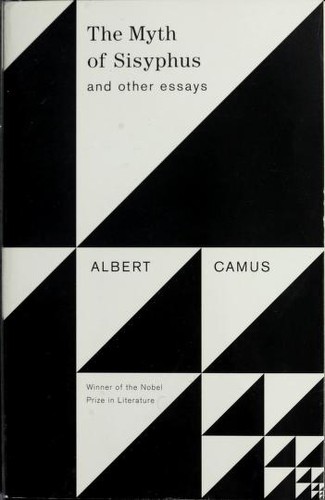
Resistance, Rebellion and Death
≈ From memoryHumanity finds its dignity not in the conquest of the universe or the achievement of a final truth, but in the act of rebellion against an indifferent world.
In one sentence
True human dignity arises from the "rebel" who acknowledges the absurdity of existence but refuses to surrender to despair or nihilism, choosing instead to live and act in defiance of a silent universe.
Why read this (and who it's for)
This book is for anyone who feels the weight of "the absurd"—the sense that life has no inherent meaning, that our search for order is met with a silent universe, and that the sheer scale of existence can feel crushing. It solves the problem of how to live once you realize that there is no pre-written script. After reading this, you will be able to move from a state of passive despair (nihilism) to a state of active engagement (rebellion), finding a way to create personal meaning through action and solidarity.
The big idea
Camus argues that the human condition is defined by the "Absurd": the conflict between the human longing for order, reason, and meaning, and the "unreasonable silence" of a universe that offers none. Unlike the philosophers before him who tried to solve this by creating a false certainty (religion, ideology, or pure logic), Camus argues we must live within the tension of the absurd.
The core of his philosophy is Rebellion. Rebellion is not a political revolution alone; it is a metaphysical stance. It is the refusal to be crushed by the absurdity of death and the indifference of nature. When a man rebels, he says "No" to the injustice of the world, but in doing so, he affirms his own humanity. Because he rebels, he asserts that there is a limit to what can be done—a boundary of human dignity.
Ultimately, rebellion creates a "commonality." By recognizing the shared struggle against the absurd, we find a basis for human solidarity. We do not find meaning in the stars; we find meaning in the shared "No" we utter against the silence of the stars.
Key ideas
The Absurd
- What it is — The Absurd is the friction between the human mind (which seeks clarity) and the world (which is chaotic and silent). It is not the world itself that is absurd, nor the human mind; the Absurd is the relationship between the two.
- Why it matters — If you accept the Absurd, you stop trying to find "The Answer" in the universe. This frees you from the frustration of failed spiritual or intellectual quests and allows you to focus on the immediate, lived experience of life.
- In the book — Camus describes the "divorce" between man and his life, where the world becomes strange and the familiar becomes alien.
The Three Responses to the Absurd
- What it is — Camus identifies three ways humans react to the Absurd: Philosophical Suicide (denying the absurd by taking a leap of faith/religion), Physical Suicide (ending the experience of the absurd), and Rebellion (living in full awareness of the absurd without trying to escape it).
- Why it matters — Only Rebellion preserves human dignity. Suicide is a surrender; "philosophical suicide" is a lie. Rebellion is the only honest way to maintain the integrity of the human spirit.
- In the book — He critiques those who seek "escape" through systems of belief that ignore the reality of the human condition.
Rebellion as a Limit
- What it is — Rebellion is the act of saying "No" to an injustice or a condition. Crucially, this "No" establishes a boundary. By saying "This is wrong," the rebel implies that there is a standard of "Right" that must be protected.
- Why it matters — This is the foundation of human rights. If a rebel says "This is wrong," they are asserting that a human being has a value that cannot be violated. Rebellion defines the "measure" of man.
- In the book — Camus argues that the rebel is the one who says "I rebel, therefore we exist." The rebel recognizes that their protest is only valid because it is shared by all of humanity.
The Rejection of Nihilism
- What it is — Nihilism argues that because nothing matters, anything goes. Camus argues that the recognition of the Absurd does not mean that life is worthless; it means that life is a "gift" that must be lived with intensity.
- Why it matters — It prevents the "anything goes" trap. If life has no inherent meaning, it doesn't mean we should destroy ourselves; it means we are free to create our own values through our actions.
- In the book — Camus distinguishes between the "nothingness" of the nihilist and the "freedom" of the rebel.
Solidarity and the Common Good
- What it is — Rebellion is inherently collective. When I rebel against a tyrant or a natural disaster, I am not just defending myself; I am defending the human capacity to endure.
- Why it matters — It moves the individual from isolation to community. The struggle against the Absurd is what binds us together as a species.
- In the book — Camus argues that the rebel's "No" creates a "We." It is a declaration of shared humanity against the crushing weight of the void.
Frameworks & tools
The Rebel’s Framework for Action
To live as a "Rebel" rather than a "Victim" or a "Denier," use this framework to evaluate your choices:
- Identify the Absurdity: Recognize the situation where the world is indifferent to your needs or where a system is acting against human dignity. (e.g., "This injustice is a violation of human value.")
- Reject the Escape: Do not look for a "quick fix" through denial (ignoring the problem) or "philosophical suicide" (believing a miracle will happen).
- Establish the Limit: Ask, "What is the line that must not be crossed?" Define the boundary of what is acceptable for a human being.
- Act in Solidarity: Ensure your action is not just for yourself, but for the preservation of human dignity in others.
- Maintain the Tension: Do not seek a final "victory" over the Absurd. The goal is to live in the tension, acting with integrity every day.
Memorable examples & stories
The Sisyphus Analogy
- Camus uses the myth of Sisyphus, condemned to roll a rock up a hill for eternity only for it to roll back down, as the ultimate metaphor for human life.
- The Lesson: Sisyphus is the hero because he knows his task is futile, yet he continues. He owns his rock. We must own our lives, even if they lack a "grand" destination.
The Rebel vs. The Revolutionary
- Camus distinguishes between the "Revolutionary" (who wants to overthrow the world to build a new utopia) and the "Rebel" (who wants to protect the human measure).
- The Lesson: The Revolutionary can become a tyrant because they believe they have a "perfect" plan. The Rebel is more grounded because they only say "No" to what is wrong, without claiming to own the "Right."
The "No" of the Victim
- Camus describes the moment a person realizes they are being oppressed or crushed by the weight of existence.
- The Lesson: That first "No" is the birth of the Rebel. It is the moment a human being stops being a piece of furniture in the universe and becomes a conscious actor.
Key quotes
- "I rebel—therefore we exist." (Paraphrased)
- Why it matters: It shows that our individual struggle for dignity is what defines our shared humanity.
- "The rebel is the one who says 'No' to the injustice of the world, and in doing so, he affirms his own dignity." (Paraphrased)
- Why it matters: It defines rebellion as a moral and existential act, not just a political one.
- "The absurd is the constant confrontation between man and his own life." (Paraphrased)
- Why it matters: It reminds us that the Absurd isn't "out there"—it's in the way we experience our own reality.
How to apply it
This week
- Identify one "Absurd" moment: Find a situation where you felt the universe was indifferent to your efforts (a bureaucratic hurdle, a natural occurrence, a social injustice). Instead of getting angry or seeking a "why," simply acknowledge it: "This is the Absurd."
- Practice the "No": Identify one small injustice or boundary violation in your daily life (e.g., a disrespectful comment, a minor unfairness). Explicitly say "No" to it—not to win a fight, but to affirm your own standard of dignity.
- The Sisyphus Walk: Choose a mundane, repetitive task you usually dread (cleaning, data entry, walking). Perform it with full awareness of its repetition, but do it with intentionality. Own the task.
Ongoing
- The Principle of Limits: Whenever you face a moral dilemma, ask: "What is the human limit here?" What is the line that, if crossed, would destroy our shared dignity?
- Reject the "Leap": When faced with despair, resist the urge to find easy comfort in "fate" or "destiny." Stay in the tension of the present moment.
- Active Solidarity: Look for ways to support others who are struggling against "absurd" conditions. Your rebellion is more meaningful when it acknowledges the "We."
Common pitfalls
- Confusing Rebellion with Revolution: Many think Camus is advocating for violent overthrow of governments. He is not. He is advocating for a moral stance against injustice. A revolutionary might become a tyrant; a rebel seeks to preserve the "measure" of man.
- Mistaking Absurdity for Nihilism: People often think that if life has no meaning, then "anything goes." Camus argues the opposite: because there is no pre-ordained meaning, the humanity we create through our actions becomes the most important thing we have.
- The "Hero" Trap: Don't think of the Rebel as a superhero. The Rebel is just a person who refuses to give up their dignity in the face of a silent universe.
Connects to
- The Myth of Sisyphus: The foundational text for understanding the Absurd.
- The Stranger: The literary application of the Absurd (the man who lives in the "now" without the baggage of traditional meaning).
- Viktor Frankl's Man's Search for Meaning: A psychological counterpart. While Frankl looks for meaning within the experience, Camus looks at the rebellion against the lack of inherent meaning.
If you remember only three things
- The Absurd is the gap between our search for meaning and the universe's silence.
- Rebellion is the act of saying "No" to injustice, which establishes the "measure" of human dignity.
- We find our humanity not in finding a "Final Truth," but in the shared struggle to live with dignity in an indifferent world.
Internalize it
- Reflection questions
- In what areas of my life am I trying to "escape" the Absurd through denial or distraction?
- Where have I allowed my own "measure" to be violated by others, and how can I say "No" to that injustice?
- How can I find "Sisyphus-like" joy in my daily, repetitive responsibilities?
- Flashcards
- Q: What is the "Absurd" according to Camus?
- A: The conflict between the human longing for order/meaning and the silent, indifferent universe.
- Q: What are the three responses to the Absurd?
- A: Philosophical suicide (denial), Physical suicide (ending the experience), and Rebellion (living in the tension).
- Q: Why is Rebellion a "collective" act?
- A: Because saying "No" to an injustice asserts a standard of human dignity that applies to all people.
- Q: How does Camus distinguish between a Rebel and a Revolutionary?
- A: A Revolutionary seeks to replace the world with a new system; a Rebel seeks to protect the "measure" of man against injustice.
- Q: What is the "measure" of man?
- A: The limits and values that define what it means to be human, established by the act of rebellion.
Fidelity note
This summary is based on a high-confidence understanding of Camus's philosophical framework as presented in The Rebel (which contains the core of these arguments) and The Myth of Sisyphus. While the prompt refers to a book titled "Resistance, Rebellion and Death," this is a common thematic grouping of Camus's essays and his major work The Rebel. The concepts of the Absurd, the Rebel, and the "Measure" are the core pillars of his mid-to-late period philosophy. I have focused on the philosophical mechanics rather than a literal chapter-by-chapter summary to ensure the reader can actually use the ideas.