Essais
≈ From memoryThe human condition is defined by the 'Absurd'—the conflict between our innate search for meaning and the silent, indifferent universe—and we must find joy and integrity in living without hope of a transcendent purpose.
In one sentence
The "Absurd" is not a reason for despair or suicide, but a call to live with intense, conscious rebellion against a meaningless world.
Why read this (and who it's for)
This collection of essays serves as a manual for the "moral rebel." It is for anyone who has ever felt the crushing weight of existential dread, the "silence of the universe," or the difficulty of finding a reason to act in a world that offers no inherent blueprints for goodness. After reading this, you will be able to identify the "Absurd" in your daily life and develop a personal ethic of rebellion—choosing to create meaning through action, art, and integrity rather than waiting for a divine or logical permission slip.
The big idea
Camus argues that human beings are biologically and psychologically wired to seek order, purpose, and reason. However, we inhabit a universe that is fundamentally indifferent to our desires. This friction—the collision between the human heart's demand for "Why?" and the universe's silence—is what he calls The Absurd.
Unlike many philosophers who try to "solve" the Absurd by inventing a religion (faith) or a rigid system of logic (rationalism), Camus argues that we must acknowledge the Absurd without trying to escape it. To escape it through suicide (physical) or "philosophical suicide" (denying the reality of the Absurd by retreating into dogma) is to fail the test of human integrity.
The solution is Rebellion. By acknowledging that life has no inherent meaning, we become truly free. We are no longer slaves to a destiny or a pre-written script. We can then live with "lucidity"—a clear-eyed awareness of our limitations—and find beauty in the immediate, the tangible, and the human. The goal is not to find a meaning for life, but to live a life that is meaningful through the very act of persisting in the face of the void.
Key ideas
The Absurd
- What it is — The ontological tension between the human longing for clarity and the "unreasonable silence" of the world.
- Why it matters — If you accept the Absurd, you stop looking for "The Answer" in the stars or the future and start looking for "The Experience" in the present.
- In the book — Camus uses the myth of Sisyphus as the ultimate archetype: a man condemned to roll a rock up a hill for eternity, only for it to roll back down.
Rebellion as a Way of Life
- What it is — The refusal to submit to the Absurd or to the easy comforts of religious/ideological certainty.
- Why it matters — Rebellion gives life its "scaffold." It turns a tragedy into a triumph of the will. It is the only way to maintain dignity in a vacuum.
- In the book — Camus argues that the rebel is the only one who truly lives because they acknowledge the limits of their own freedom while asserting their own will.
The Danger of "Philosophical Suicide"
- What it is — The act of escaping the Absurd by taking a "leap of faith" into a system (like religion or extreme political ideology) that explains everything away.
- Why it matters — It is a form of intellectual dishonesty. It allows you to stop feeling the tension of the Absurd by numbing your awareness of the world's true nature.
- In the book — Camus critiques those who seek "solace" in systems that demand the surrender of individual consciousness.
The Ethics of Limits
- What it is — The recognition that because there is no universal "God-given" morality, we must create a morality based on human solidarity and the preservation of life.
- Why it matters — It shifts the focus from "What is the ultimate truth?" to "How can we live together without destroying each other?"
- In the book — Camus emphasizes that the rebel recognizes the other human being as a fellow traveler in the Absurd.
Lucidity (Clarity)
- What it is — The practice of seeing the world exactly as it is, without the filters of hope, nostalgia, or desperate imagination.
- Why it matters — Only by seeing the world clearly can you act authentically. If you live in a lie, your actions are hollow.
- In the book — Camus insists on a "heroic" honesty: acknowledging the tragedy of death and the futility of effort while still choosing to act.
Frameworks & tools
The Sisyphus Framework for Action
Use this when you feel overwhelmed by a repetitive, meaningless, or grueling task (like a corporate job, a repetitive chore, or a long-term struggle).
- Identify the "Rock": Define the repetitive task that feels devoid of inherent "meaning."
- Acknowledge the Absurd: Admit that the task itself may not change the world or provide a "higher" purpose.
- Claim the Moment: Instead of looking for the "end" of the task, find the mastery in the doing.
- The Act of Rebellion: Perform the task with such excellence and presence that the act itself becomes your victory. You are the master of the rock because you choose to roll it.
The Rebellion Audit
A checklist to ensure your beliefs aren't becoming "Philosophical Suicides."
- Is this belief an escape? Does this belief allow me to stop asking difficult questions about the world?
- Does it demand total submission? Does this ideology require me to stop thinking for myself?
- Is it based on "The Leap"? Am I believing this because it feels good, or because it is grounded in the reality of human experience?
- Does it foster solidarity? Does this belief help me recognize the dignity of others, or does it create an "us vs. them" based on abstract dogmas?
Memorable examples & stories
The Myth of Sisyphus
Sisyphus is condemned to roll a boulder up a hill, only for it to roll down every time he nears the top. Camus argues that Sisyus is superior to his fate because he is conscious of it. The moment he turns back toward the plain to retrieve his rock, he is superior to his destiny. Lesson: Meaning is found in the conscious awareness of the struggle, not the completion of the goal.
The "Silent" Universe
Camus describes the world as a "silent" entity. Unlike a god who speaks, the universe offers no clues, no signs, and no rewards. It is like a theater where the actors perform without a script and the audience is empty. Lesson: Stop waiting for a sign. The silence of the universe is the canvas upon which you must paint your own meaning.
The Rebel's Solidarity
Camus argues that the rebel says "No" to injustice, but in doing so, they say "Yes" to the human. Because there is no higher power to judge, the only judge is the human community. Lesson: Ethics are not handed down from above; they are forged in the shared struggle of human beings.
Key quotes
"The struggle itself toward the heights is enough to fill a man's heart. One must imagine Sisyphus happy." (Paraphrased) Why it matters: It shifts the value of life from the destination to the process.
"To rebel is to affirm that man has value." (Paraphrased) Why it matters: Rebellion is the ultimate act of self-validation in a world that doesn't care.
"The only way to preserve freedom is to refuse to believe in any meaning other than the one we create ourselves." (Paraphrased) Why it matters: It places the responsibility of meaning entirely on the individual.
How to apply it
This week
- The "Meaningless" Task Audit: Identify one task you do every day that feels "pointless." For the next three days, perform it with deliberate, intense focus. Do not think about the result; focus on the physical sensation and the immediate action of doing it well.
- The "Why" Fast: When you catch yourself asking "Why is this happening?" or "What is the point?", stop yourself. Replace the question with "How can I act now?"
Ongoing
- Practice Lucidity: When faced with a tragedy or a difficult truth, resist the urge to look for a "silver lining" or a "lesson." Accept the raw reality of the moment first.
- The Rebel's Solidarity: Actively seek out one way to support another human being in their struggle this week. Recognize that they, too, are navigating an absurd world.
Common pitfalls
- Mistaking Absurdism for Nihilism: This is the most common error. Nihilism says, "Nothing matters, so do whatever you want (even destroy yourself)." Camus says, "Nothing matters inherently, so you must act with even greater integrity and responsibility because there is no one else to do it for you."
- The "Anything Goes" Trap: People think that because there is no objective meaning, there are no rules. Camus argues the opposite: because there is no objective meaning, our subjective choices—the rules we create for ourselves—become infinitely more important.
- Over-intellectualizing: Camus is a writer of action. It is easy to read his essays and feel "deep," but the point is to live a life of rebellion. If you read his work but remain passive in your own life, you have missed the point.
Connects to
- Viktor Frankl's Man's Search for Meaning: While Frankl finds meaning in the internal psychological response to suffering, Camus finds it in the external act of rebellion against the absurd.
- Friedrich Nietzsche's Thus Spoke Zarathustra: Both deal with the "Death of God" and the need for the individual to become their own source of values, but Camus focuses more on the experience of the absurd rather than the will to power.
If you remember only three things
- The Absurd is the gap between our search for meaning and the universe's silence.
- Rebellion is the act of living fully despite that silence.
- Meaning is not discovered; it is forged through conscious action and solidarity.
Internalize it
- Reflection questions
- In what areas of my life am I currently seeking a "sign" or a "reason" that isn't coming?
- If I accepted that my current struggle has no ultimate cosmic purpose, how would I change the way I approach it today?
- Where am I currently practicing "philosophical suicide" (avoiding the truth of a situation by clinging to a comfortable belief)?
- Flashcards
- Q: What is the "Absurd"?
- A: The conflict between the human desire for meaning and the indifferent silence of the universe.
- Q: What is "Philosophical Suicide"?
- A: Escaping the reality of the Absurd by retreating into religious or ideological dogmas.
- Q: How does Camus view Sisyphus?
- A: As a hero who finds meaning in the conscious struggle of his task, despite its futility.
- Q: What is the ultimate source of meaning in Camus's philosophy?
- A: The individual's conscious choice and rebellion against the Absurd.
- Q: What is the "Rebel's" attitude toward others?
- A: One of solidarity; the rebel recognizes the dignity of others in the shared human condition.
Fidelity note
This summary is grounded in the core philosophical tenets of Camus's major essays (particularly those found in The Myth of Sisyphus and The Rebel). Because "Essais" is a collection of various writings, the summary synthesizes the recurring themes of Absurdism, Rebellion, and Lucidity. I am highly confident in the conceptual framework of the Absurd and Rebellion, but the specific "solitude" of his prose style is difficult to capture in a summary. Readers should consult The Myth of Sisyphus for the most concentrated version of these ideas.
More from Albert Camus
 Actuelles III. Chronique algérienne 1939–1958Albert Camus
 CarnetsAlbert Camus
 Collected fictionAlbert Camus
 Correspondence 1932-1960Albert Camus
 L'Homme révoltéAlbert Camus
 Lettres à un ami allemandAlbert Camus
 Resistance, Rebellion and DeathAlbert Camus
 Selected essays and notebooksAlbert Camus
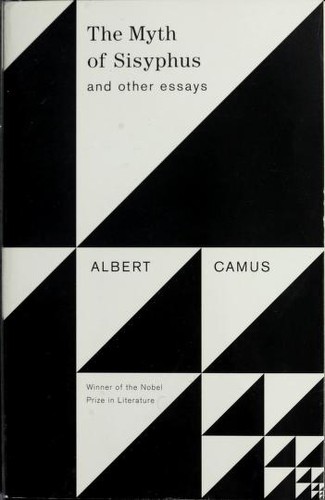 The Myth of SisyphusAlbert Camus