L'Homme révolté
≈ From memoryRebellion is the only honest response to the absurdity of existence, but it must be tempered by a refusal to become a tyrant in the name of a higher ideal.
In one sentence
True rebellion is the act of saying "no" to an injustice while simultaneously saying "yes" to the human dignity that makes that injustice intolerable, without ever sacrificing the individual to a collective ideology.
Why read this (and who it's for)
This book is for the person who feels a deep, visceral sense of injustice in the world but is terrified of the "ends justify the means" logic that often follows radical activism. It solves the problem of moral exhaustion: how do we stand up against oppression without becoming the very thing we hate? After reading this, you will be able to identify the "logic of the executioner" in political movements and maintain a personal ethics of rebellion that preserves human life and individual freedom.
The big ideas
Camus argues that human existence is fundamentally absurd—we seek meaning in a universe that offers none. However, unlike The Myth of Sisyphus, where the response to absurdity is personal, The Rebel argues that when we encounter injustice, we find a "limit" in the other. This limit is the realization that there is a point where a human being must not be crossed. This is the birth of rebellion.
The central thesis is that rebellion is a preservation of the human. When we rebel, we are not just protesting a law; we are asserting that a certain boundary of human dignity must be respected. However, Camus warns that rebellion is constantly in danger of being swallowed by revolution. While rebellion says "no" to a specific injustice, revolution often says "yes" to a totalizing system (a religion, a perfect state, a scientific utopia). The danger is that the revolutionary seeks to create a perfect world, and in doing so, they often destroy the very humans they intended to save.
Key ideas
The Birth of Rebellion
- What it is — Rebellion is the instinctive reaction of a human being who recognizes a boundary. It is the moment we say, "This is too far," and thereby establish a value for what is "just."
- Why it matters — It shifts the focus from why we rebel (theology or ideology) to what we rebel for (the preservation of human dignity).
- In the book — Camus describes the "No" of the rebel as a way of saying "Yes" to the human. It is a protective gesture that preserves the dignity of the individual against the encroachment of the collective.
The Limit of Rebellion
- What it is — Rebellion is defined by its limits. To rebel is to say "this is the limit of what can be tolerated." It is a defensive act, not an expansive one.
- Why it matters — If rebellion has no limit, it becomes a license for anything. If you can justify any action to achieve a "greater good," you have lost the very thing rebellion was meant to protect.
- In the book — Camus argues that the rebel is the one who says "No" to the executioner, but the rebel must be careful not to become the executioner themselves by claiming a "higher" truth.
The Trap of Revolution
- What it is — Revolution is the attempt to create a new world, often by erasing the current one entirely. It seeks a "final" solution to human problems.
- Why it matters — Revolution often demands the sacrifice of the present human for a future ideal. It replaces the "No" of rebellion with a "Yes" to a totalizing ideology.
- In the book — Camus contrasts the rebel (who preserves) with the revolutionary (who transforms). The revolutionary seeks to abolish the human condition to reach a "perfect" state, which inevitably leads to tyranny.
The Logic of the Executioner
- What it is — This is the seductive logic where a "good" cause justifies "evil" means. It is the belief that because the goal is noble, any method is permissible.
- Why it matters — This is how most modern atrocities are justified. Once you accept that the "End" justifies the "Means," you have surrendered your humanity to a system.
- In the book — Camus explores how revolutionary movements often adopt the very methods of the oppressors they seek to overthrow because they believe their cause is "just."
The Danger of Abstract Ideals
- What it is — The belief that a perfect system (a perfect state, a perfect religion, a perfect science) can solve the human condition.
- Why it matters — Abstract ideals are dangerous because they are not grounded in the lived experience of the individual. They allow for the dehumanization of people who do not fit the "ideal."
- In the book — Camus critiques the "totalitarian" nature of any system that claims to have the absolute truth, as these systems eventually require the suppression of the individual.
Frameworks & tools
The Rebel’s Boundary Test
Use this to evaluate whether a political or social movement is acting as a Rebel or a Revolutionary.
- Identify the "No": What specific injustice is this movement protesting? (e.g., "No to inequality.")
- Identify the "Yes": What human value is being protected by this protest? (e.g., "Yes to the dignity of the worker.")
- Identify the "Solution": Does the movement seek to preserve the human within the current system, or does it seek to replace the human with a new ideological system?
- The Executioner Check: Does the movement justify violence or the removal of rights for a "future" goal? If yes, it has crossed from rebellion into revolution.
The Principle of the "Limit"
A personal ethical framework for decision-making in high-pressure environments.
- Define the Line: Before engaging in any collective action, identify the "line" that must not be crossed (e.g., "We will never use violence against a non-combatant").
- Monitor the Means: During the action, constantly check if the means are becoming more important than the ends.
- Maintain the Individual: Ask: "Does this action respect the dignity of the person standing in front of me, or am I treating them as a means to an end?"
Memorable examples & stories
The History of Religious Violence
- Camus traces how religious "truths" have been used to justify the most horrific acts of violence throughout history.
- The Lesson: Any "absolute" truth that claims to transcend the human experience is a danger to human life.
The Revolutionary "New Man"
- Camus discusses the concept of the "New Man" created by revolutionary ideologies—a human who is stripped of their individuality to serve the state.
- The Lesson: When we try to "engineer" a perfect human, we end up destroying what makes us human.
The Executioner's Logic
- Camus describes the chilling ease with which "good" people can justify terrible acts when they believe they are acting on behalf of a "greater good."
- The Lesson: The most dangerous lies are the ones we tell ourselves to make our actions feel noble.
Key quotes
"I rebel—therefore we exist." (Paraphrased)
- Why it matters: Rebellion is the moment we realize we share a common humanity with others.
"The rebel is the one who says 'No' to the executioner." (Paraphrased)
- Why it matters: Rebellion is fundamentally a protective act against the destruction of the human.
"The revolutionary... seeks to create a new world... but in doing so, he often destroys the human." (Paraphrased)
- Why it matters: It warns against the seductive trap of utopian thinking.
How to apply it
This week
- The "No" Audit: Identify one injustice in your workplace or community. Write down exactly what "No" you are saying (e.g., "No to the unfair distribution of labor").
- The "Means" Check: Look at a news story about a protest or movement. Ask: "Is this movement trying to preserve a human right, or is it trying to impose a new ideology?"
- The Individual Focus: In your next heated debate, consciously try to see the person as a human being with a life, rather than a representative of a "side."
Ongoing
- Practice the "Limit": Whenever you join a group or cause, establish a "hard limit" on what you will not do, even if the group thinks it is necessary for the "greater good."
- Resist the "Final Solution": Whenever you hear someone say "We can finally solve [X] forever if we just do [Y]," be wary. Recognize that the human condition is inherently messy and cannot be "solved" by a single policy or ideology.
Common pitfalls
- Confusing Rebellion with Rebellion-lite: People often think "rebellion" just means "being a rebel" (like a punk rocker). Camus means a philosophical stance against the violation of human dignity.
- The "Anything Goes" Fallacy: Some think Camus is saying "anything is allowed" as long as you call it rebellion. Camus is actually the opposite: he is arguing for a very strict, disciplined "No" to the violation of limits.
- The "Apolitical" Misunderstanding: Critics say Camus is "apolitical" because he warns against revolution. Camus argues he is deeply political because he is trying to save the human from the very political systems that seek to consume them.
Connects to
- The Myth of Sisyphus (Camus): While Sisyphus deals with the individual's response to the absurdity of life, The Rebel deals with the collective response to the injustice of the world.
- Theodicy (Leibniz/Hume): Camus's critique of "Absolute Truth" relates to theodicy—the attempt to justify God/the Universe—by arguing that such justifications often lead to the erasure of human experience.
- The Ones Who Walk Away from Omelas (Ursula K. Le Guin): A fictional exploration of the "Revolutionary" logic—the idea that a perfect society requires the suffering of an individual.
If you remember only three things
- Rebellion is a "No" that protects a "Yes": We say no to injustice to say yes to human dignity.
- Revolution is the danger of the "Perfect World": Trying to create a perfect system usually requires destroying the human.
- The Limit is everything: The only thing that keeps us from becoming monsters is the recognition of a boundary that cannot be crossed.
Internalize it
- Reflection questions
- Where in my life am I currently prioritizing a "greater good" over the dignity of a real person?
- What is the "No" I am currently saying? Is it a rebellion against an injustice, or is it just a preference?
- If I were to join a revolution today, what "humanity" would I be willing to sacrifice for the "ideal"?
- Flashcards
- Q: What is the fundamental difference between a Rebel and a Revolutionary?
- A: A Rebel says "No" to a specific injustice to preserve human dignity; a Revolutionary says "Yes" to a new system to transform the world.
- Q: What is the "Limit" in Camus's philosophy?
- A: The recognition of a point where a human being must not be crossed; the boundary of what is tolerable.
- Q: What is the "Logic of the Executioner"?
- A: The belief that a noble end justifies any means, allowing for the violation of human rights in the name of a "greater good."
- Q: Why does Camus warn against "Absolute Truth"?
- A: Because absolute truths often demand the submission of the individual to a system, leading to the destruction of human freedom.
- Q: What is the "Yes" that underlies the Rebel's "No"?
- A: The "Yes" to the human—the preservation of the dignity of the individual.
Fidelity note
This summary is grounded in the core philosophical arguments of L'Homme révolté. I am confident in the distinction between rebellion and revolution, the critique of revolutionary violence, and the concept of the "Limit." I am less certain of the specific historical nuances of every single historical figure Camus cites (as he covers a vast range of history), but the logic of his critique remains consistent. Readers should verify the specific historical examples (the French Revolution, the Russian Revolution, etc.) in the text to see how Camus applies his theory to specific events.
More from Albert Camus
 Actuelles III. Chronique algérienne 1939–1958Albert Camus
 CarnetsAlbert Camus
 Collected fictionAlbert Camus
 Correspondence 1932-1960Albert Camus
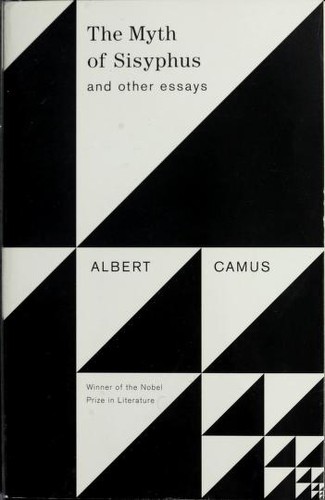 EssaisAlbert Camus
 Lettres à un ami allemandAlbert Camus
 Resistance, Rebellion and DeathAlbert Camus
 Selected essays and notebooksAlbert CamusThe Myth of SisyphusAlbert Camus