Leadership smarts
≈ From memoryLeadership is not a set of innate traits but a learned skill set centered on the ability to adapt your style to the specific competence and commitment levels of each individual follower.
In one sentence
Leadership is the art of situational adaptation—knowing when to direct, when to coach, when to support, and when to delegate based on the unique developmental needs of your team members.
Why read this (and who it's for)
Most new managers fail because they treat everyone the same: they either micromanage high-performers (stifling growth) or abandon low-performers (causing chaos). This book solves the "one-size-fits-all" leadership trap. It is for anyone transitioning from a "doer" to a "leader"—specifically those who need a structured, repeatable framework to manage diverse personalities and skill levels without losing their own sanity. After reading, you will be able to diagnose the "readiness" of any employee and select the precise leadership response required to move them to the next level.
The big idea
Blanchard argues that the greatest mistake a leader can make is assuming that a single leadership style is universally effective. Instead, leadership is a situational variable. The core thesis is built on the Situational Leadership® Model, which posits that the "right" way to lead depends entirely on the follower's competence (skill/knowledge) and commitment (motivation/confidence) regarding a specific task.
The logic is simple: if you treat a novice like an expert, they will feel overwhelmed and unsupported. If you treat an expert like a novice, they will feel insulted and stifled. To be a "smart" leader, you must develop a "leadership toolbox" and become an expert at diagnosing the specific needs of the individual in front of you. Success is measured not by the leader's personal style, but by the follower's growth and the team's results.
Key ideas
The Competence-Commitment Matrix
What it is: Leadership effectiveness is determined by two axes: a person's ability to do the task (Competence) and their internal drive to do it (Commitment). Why it matters: It forces you to stop judging people's "attitude" in a vacuum. A "lazy" employee might actually just be a "confused" employee who lacks the skills to succeed. In the book: Blanchard illustrates that a person can be highly committed but low in competence (the "enthusiastic beginner") or high in competence but low in commitment (the "reluctant expert").
The Four Leadership Styles
What it is: Based on the Situational Leadership model, there are four distinct modes: Directing, Coaching, Supporting, and Delegating. Why it matters: It provides a vocabulary for leadership. Instead of saying "I don't know how to handle this person," you can say, "This person needs a Supporting style because they have the skills but lack the confidence." In the book: The author breaks these down into specific behaviors: Directing (High Task/Low Relationship), Coaching (High Task/High Relationship), Supporting (Low Task/High Relationship), and Delegating (Low Task/Low Relationship).
The Importance of Diagnosis
What it is: Before you can lead, you must observe. You must identify the follower's developmental level for the specific task at hand. Why it matters: A person might be an expert at "Writing Reports" but a novice at "Public Speaking." You cannot apply a permanent label to a person; you must assess them per task. In the book: Blanchard emphasizes that "Leadership Smarts" starts with asking the right questions to determine where a follower sits on the development curve.
The "Relationship" vs. "Task" Balance
What it is: Leadership is a balance between getting the job done (Task) and building the person (Relationship). Why it matters: If you focus only on the task, you burn out your people. If you focus only on the relationship, you fail to produce results. In the book: The book argues that the "Smart" leader knows how to dial these two levers up or down depending on the situation.
The Growth Mindset of Leadership
What it is: Leadership is a skill that can be learned, practiced, and mastered, not a "gift" you are born with. Why it matters: It removes the "imposter syndrome" for new managers. It encourages you to view leadership as a series of behaviors you can intentionally choose to perform. In the book: Blanchard frames leadership as a set of "smarts"—intellectual and emotional competencies that can be developed through deliberate practice.
Frameworks & tools
The Situational Leadership® Model
To use this, you must first diagnose the follower's Development Level (D) for a specific task:
- D1: The Enthusiastic Beginner (Low Competence, High Commitment)
- D2: The Disillusioned Learner (Some Competence, Low Commitment)
- D3: The Capable Performer (High Competence, Variable Commitment)
- D4: The Self-Reliant Achiever (High Competence, High Commitment)
Once diagnosed, apply the corresponding Leadership Style (S):
S1: Directing (For D1)
- Goal: Provide high direction and low support.
- Actions: Tell them exactly what to do, when, and how. Provide specific instructions and monitor closely.
S2: Coaching (For D2)
- Goal: Provide high direction and high support.
- Actions: Explain "why" things are done. Listen to their frustrations. Provide both direction and encouragement.
S3: Supporting (For D3)
- Goal: Provide low direction and high support.
- Actions: Let them lead the "how." Your role is to listen, offer encouragement, and help them build confidence.
S4: Delegating (For D4)
- Goal: Provide low direction and low support.
- Actions: Give them the objective. Step back. Provide resources only when requested.
Memorable examples & stories
The "Over-Managed" Expert
Blanchard describes a scenario where a highly skilled veteran is treated like a trainee. The veteran becomes frustrated and disengaged because the leader is providing "S1" (Directing) instructions for a "D4" (Self-Reliant) performer. Lesson: Over-supervision kills motivation in high-performers.
The "Abandoned" Novice
Conversely, the book highlights a leader who gives a brand-new employee a "D4" (Delegating) mandate without any training. The employee feels overwhelmed and fails because they were given a "Low Task" leadership style for a "D1" development level. Lesson: Lack of direction is just as dangerous as too much direction.
The "Disillusioned Learner" (D2)
This is a critical stage where the "honeymoon phase" of a new job ends and the difficulty of the work sets in. The author emphasizes that this is when a leader must be most present as a Coach. Lesson: The D2 stage is the highest risk for turnover; your coaching here is vital.
Key quotes
"Leadership is not a set of traits; it is a set of skills." (Paraphrased) Why it matters: It empowers the reader to believe they can actually improve.
"The best leaders are those who can adapt their style to the needs of the individual." (Paraphrased) Why it matters: It defines the core "Smart" of the book—flexibility.
"You must match your leadership style to the developmental level of the follower." (Paraphrased) Why it matters: This is the actionable "how-to" of the entire book.
How to apply it
This week
- The Observation Audit: Choose one team member and one specific task they are currently working on. Do not intervene. Simply observe their competence and commitment levels. Write down where they fall on the D1–D4 scale.
- The Style Check: Identify your "default" leadership style. Do you tend to over-direct (S1) or under-direct (S4)? Identify one person who needs the opposite of your default.
- The "Why" Conversation: For a "D2" (Disillusioned Learner) team member, schedule a 15-minute check-in. Instead of asking "How is the work going?", ask "What part of this process feels most frustrating right now?"
Ongoing
- The Diagnostic Habit: Before every 1-on-1 meeting, spend 60 seconds mentally identifying the "Development Level" of the person you are about to meet with.
- The Style Shift: Consciously rotate your behavior. If you are a "Directing" person, practice "Supporting" by asking, "How do you think we should handle this?" instead of saying, "Do it this way."
- The Feedback Loop: After a project, ask the team member: "Did you feel I gave you enough direction/support, or was I hovering too much?"
Common pitfalls
- The "Personality" Trap: Many readers mistake "Style" for "Personality." You can be a warm, friendly person but still need to use a "Directing" style (S1) when a deadline is looming and a junior employee is failing. Style is a tool, not a personality trait.
- The Static Label: A common mistake is labeling a person as a "D2" and never changing that label. You must re-evaluate the development level every time a new task is introduced.
- The "Letting Go" Fear: Many leaders struggle with S4 (Delegating) because they fear a loss of control. The book warns that failing to delegate is a failure of leadership, as it prevents the follower from ever reaching D4.
Connects to
- The 7 Habits of Highly Effective People (Stephen Covey): While Blanchard focuses on the how of situational leadership, Covey focuses on the who—the character and mindset required to be a leader.
- Extreme Ownership (Jocko Willink): This provides a more aggressive, accountability-focused framework for leadership, whereas Blanchard offers a more nuanced, developmental framework for people management.
If you remember only three things
- Leadership is situational; there is no "perfect" style, only the "right" style for the current moment.
- Assess every follower based on two metrics: Competence (can they do it?) and Commitment (will they do it?).
- Match your leadership style (Directing, Coaching, Supporting, Delegating) to their specific Development Level (D1, D2, D3, D4).
Internalize it
-
Reflection questions
- Which of the four leadership styles (S1-S4) comes most naturally to you? Why?
- Think of a time a team member failed. Was it a lack of skill (Competence) or a lack of will (Commitment)? How would a different leadership style have changed the outcome?
- Who on your team is currently in the "D2" (Disillusioned) phase? What is one specific coaching action you can take today to help them?
-
Flashcards Q: What are the two axes of the Situational Leadership model? A: Competence (Skill) and Commitment (Motivation).
Q: What is the difference between S1 (Directing) and S2 (Coaching)? A: S1 provides high direction/low support; S2 provides high direction/high support.
Q: When should a leader use the S3 (Supporting) style? A: When a follower has high competence but variable commitment (D3).
Q: Why is it important to assess development levels per task? A: Because a person can be an expert in one area and a novice in another.
Q: What is the "D2" development level? A: The Disillusioned Learner (Some competence, low commitment).
Fidelity note
This summary is grounded in the core Situational Leadership® framework which is the foundation of Kenneth Blanchard's work. I am highly confident in the S1-S4 and D1-D4 classifications as they are the "gold standard" of his methodology. However, because Blanchard often uses proprietary corporate training materials to expand on these points, some of the specific "soft skills" nuances may vary depending on the specific version of the book (e.g., "Leadership Smarts" vs. "The One Minute Manager"). Readers should verify the specific "S" and "D" labels against their copy to ensure they match the author's specific numbering system.
More from Kenneth H. Blanchard
 Go team!Kenneth H. Blanchard
 Great leaders growKenneth H. Blanchard
 Gung ho!Kenneth H. Blanchard
 Lead Like JesusKenneth H. Blanchard
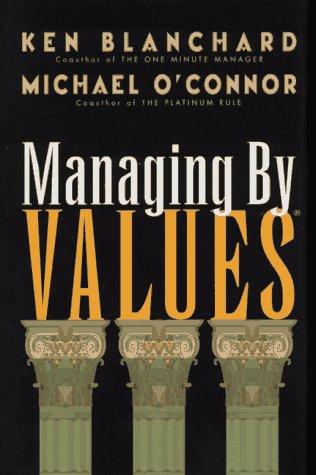 Managing by valuesKenneth H. Blanchard
 Raving fansKenneth H. Blanchard
 The heart of a leaderKenneth H. Blanchard
 The one minute apologyKenneth H. Blanchard
 The One Minute ManagerKenneth H. Blanchard and Spencer Johnson
 The servant leaderKenneth H. Blanchard
 Whale done!Kenneth H. Blanchard