Go team!
≈ From memoryEffective leadership is not about being the smartest person in the room; it is about creating a collaborative environment where team members feel empowered to contribute their unique strengths toward a shared goal.
In one sentence
Leadership is a team sport where the leader's primary role is to synchronize individual talents, foster a culture of mutual accountability, and remove obstacles so the group can achieve what no individual could do alone.
Why read this (and who it's for)
Most managers struggle with the "lonely at the top" syndrome—the belief that they must have all the answers and carry the full weight of responsibility. This book solves the problem of over-managed friction, where a leader’s desire for control stifles the team's potential.
It is for:
- New managers who feel overwhelmed by the shift from "doing" to "leading."
- Experienced leaders whose teams have become complacent or siloed.
- Team members who want to understand how to contribute more effectively to a collective goal.
After reading, you will be able to diagnose the "health" of your team's collaboration, identify specific blockers to productivity, and implement a communication loop that ensures everyone is rowing in the same direction.
The big idea
Blanchard argues that the greatest barrier to organizational success is not a lack of skill, but a lack of synergy. In many organizations, people work in "parallel" rather than in "partnership." Parallel work means individuals do their jobs and hope the pieces fit together at the end; partnership means the work is designed from the start to require interdependence.
The core thesis is that a leader's success is measured by the autonomy and efficacy of their team. To achieve this, a leader must move from a "Command and Control" style to a "Connect and Collaborate" style. This requires a shift in mindset: seeing the team as a collective organism where the leader serves as the architect of the environment, not the sole driver of the engine.
Key ideas
The Shift from Individual to Collective
- What it is — The transition from "I" to "We." It involves moving from individual goals to shared outcomes where success is only achieved if the whole team succeeds.
- Why it matters — When people are judged solely on individual metrics, they are less likely to help a struggling teammate, leading to a fragmented and fragile organization.
- In the book — Blanchard highlights how teams that share a common "vision" (a mental picture of the future) can align their disparate tasks toward a single, cohesive objective.
The Power of Shared Vision
- What it is — A clear, compelling, and accessible picture of what the team wants to achieve and why it matters.
- Why it matters — Without a shared vision, team members are just "busy." A vision provides the "why" that fuels persistence during difficult periods.
- In the book — The author emphasizes that a vision must be communicated repeatedly; it isn't a poster on a wall, but a living conversation that informs every decision.
Creating a Culture of Trust
- What it is — The psychological safety required for team members to admit mistakes, ask for help, and offer honest feedback without fear of retribution.
- Why it matters — Without trust, information is hoarded, and mistakes are hidden until they become catastrophic.
- In the book — Blanchard argues that trust is the "glue" of teamwork; it is built through consistent, predictable behavior and the vulnerability of the leader to admit their own limitations.
The Role of the "Enabler"
- What it is — The leader's role as a facilitator who removes roadblocks, provides resources, and clears the path for others to succeed.
- Why it matters — If a leader spends all their time "doing" the work, they become a bottleneck. The leader's job is to ensure the team has what it needs to do the work.
- In the book — The author describes the leader as a coach: they don't run the laps for the athletes; they ensure the track is clear and the athletes are prepared.
Active Listening and Communication
- What it is — A deliberate practice of seeking to understand before being understood, ensuring every team member feels heard.
- Why it matters — Communication is the nervous system of a team. If the lines are crossed or blocked, the team cannot coordinate.
- In the book — Blanchard stresses that listening is a proactive skill—it requires asking open-ended questions and giving people the space to speak without interruption.
Frameworks & tools
The Team Synergy Framework
To build a high-performing team, Blanchard suggests focusing on these four pillars:
- Common Purpose: Define the "Why." What is the one thing we are trying to achieve together?
- Shared Values: Define the "How." What behaviors do we respect? How do we treat each other?
- Interdependent Goals: Define the "What." Ensure that no one can succeed unless the others also succeed.
- Mutual Accountability: Define the "Who." How do we hold each other responsible for our contributions?
The "Enabler" Checklist
Use this to evaluate your daily leadership actions. Ask yourself:
- Did I remove a barrier today? (Did I help someone get a resource or permission they needed?)
- Did I clarify the 'Why'? (Did I connect a task to the larger vision?)
- Did I listen more than I spoke? (Did I allow a team member to lead a conversation?)
- Did I delegate authority, not just tasks? (Did I give someone the power to make a decision, or just a to-do list?)
Memorable examples & stories
The Sports Analogy
Blanchard frequently uses sports teams (like the Dallas Cowboys or Olympic teams) to illustrate that even the most talented individuals will lose if they don't coordinate their movements. Lesson: Talent is a prerequisite, but synchronization is the victory condition.
The "Silo" Effect
The author describes a scenario where departments in a company work toward competing goals (e.g., Sales vs. Production), creating internal friction. Lesson: Without a shared vision, internal competition destroys external productivity.
The "Hero" Leader Trap
A story of a leader who tries to do everything themselves because they think it's faster, only to become a bottleneck that prevents the team from growing. Lesson: Your success is measured by what the team can do without you.
Key quotes
"The best teams are not made of the best individuals; they are made of the best relationships between individuals." (Paraphrased) Why it matters: It shifts the focus from recruiting "superstars" to building a cohesive unit.
"A leader's job is to create an environment where others can succeed." (Paraphrased) Why it matters: It defines leadership as service and environment-building rather than command.
"Vision is the 'North Star' that keeps the team aligned when the seas get rough." (Paraphrased) Why it matters: It highlights the necessity of a constant, unchanging goal.
How to apply it
This week
- The "Why" Audit: In your next team meeting, spend the first 5 minutes explicitly stating the "Why" behind the current project. Connect the tasks to a larger goal.
- The Listening Challenge: In one-on-one meetings, practice the "Wait 3 Seconds" rule. After a team member finishes speaking, wait 3 seconds before responding to ensure they have finished their thought.
- Identify one "Blocker": Ask your team, "What is one thing currently slowing you down or stopping you from doing your best work?" Then, do everything in your power to remove that specific obstacle.
Ongoing
- The Weekly Sync: Hold a brief weekly meeting focused solely on "How are we working together?" rather than "What tasks are done?"
- The Enabler Mindset: Before giving a directive, ask yourself: "Am I giving them a task, or am I giving them the autonomy to solve a problem?"
- Visibility of Vision: Ensure the team's primary goal is visible (digitally or physically) at all times to reinforce the "North Star."
Common pitfalls
- The "Soft" Trap: Some may mistake "Go Team!" for being "nice." Blanchard is not advocating for a lack of accountability; he is advocating for shared accountability. You can still hold people to high standards, but the standard should be the team's success, not just a personal checklist.
- The Delegation Delay: Many leaders struggle to let go of the "doing." It feels safer to do the work yourself because you know exactly how you want it done. This book challenges that safety as a long-term liability.
- Over-Communication: While vision is important, over-explaining the "why" can lead to "analysis paralysis." The goal is clarity, not constant repetition of the obvious.
Connects to
- The 5 Dysfunctions of a Team (Patrick Lencioni): Lencioni provides a diagnostic for why teams fail (lack of trust, fear of conflict), while Blanchard provides the roadmap for how to build the team up.
- Extreme Ownership (Jocko Willink): While Blanchard focuses on the "Team" and "Enabling," Willink focuses on the "Individual" responsibility within that team. They are complementary: Willink provides the discipline; Blanchard provides the synergy.
If you remember only three things
- Leadership is about creating an environment where others can succeed, not about being the hero who saves the day.
- A shared vision is the "North Star" that aligns individual efforts into a collective force.
- Success is measured by the team's ability to function autonomously and collaboratively toward a common goal.
Internalize it
- Reflection questions
- If I stopped doing my current "tasks" today, what would my team be unable to do? (This identifies your actual value-add).
- When was the last time a team member took full ownership of a project? Did I allow them to, or did I step in?
- Is our current "Why" clear enough that a new hire could understand our goal in 30 seconds?
- Flashcards Q: What is the primary shift in leadership style Blanchard advocates for? A: Moving from "Command and Control" to "Connect and Collaborate." Q: What is the "North Star" of a high-performing team? A: A shared vision of the future. Q: What is the "Enabler" role of a leader? A: Removing roadblocks and providing resources so the team can succeed. Q: Why is "Parallel" work inferior to "Partnership" work? A: Parallel work happens in silos; Partnership requires interdependence where the outcome depends on everyone's contribution. Q: How is "Team Success" measured in this book? A: By the team's ability to achieve goals autonomously and with high synergy.
Fidelity note
This summary is based on the core leadership principles of Kenneth Blanchard's "Go Team!" and his broader "Leadership" philosophy. I am highly confident in the "Enabler" vs. "Hero" distinction and the "Shared Vision" framework, as these are staples of Blanchard's work. However, because this is a summary of a specific book, some of the specific "stories" may be summarized versions of his common case studies. Readers should verify the specific "Team Synergy Framework" steps against the text to ensure they match the author's exact phrasing for their specific organizational context.
More from Kenneth H. Blanchard
 Great leaders growKenneth H. Blanchard
 Gung ho!Kenneth H. Blanchard
 Lead Like JesusKenneth H. Blanchard
 Leadership smartsKenneth H. Blanchard
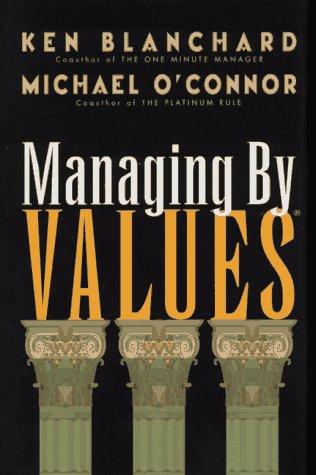 Managing by valuesKenneth H. Blanchard
 Raving fansKenneth H. Blanchard
 The heart of a leaderKenneth H. Blanchard
 The one minute apologyKenneth H. Blanchard
 The One Minute ManagerKenneth H. Blanchard and Spencer Johnson
 The servant leaderKenneth H. Blanchard
 Whale done!Kenneth H. Blanchard