Lead Like Jesus
≈ From memoryTrue leadership is not about the exercise of power, but about the humble service of others, modeled after the servant-leadership of Jesus Christ.
In one sentence
Leadership is a choice to serve others rather than to be served, prioritizing the growth and well-being of people over the mere achievement of organizational goals.
Why read this (and who it's for)
Most leadership literature focuses on mechanics: how to delegate, how to manage KPIs, and how to project authority. Blanchard argues that these are secondary to character. This book is for leaders who feel a disconnect between their professional success and their personal integrity, or for those who want to build a culture of trust and loyalty in a high-pressure corporate environment. After reading, you will be able to shift your internal metric of success from "What did I accomplish today?" to "Who did I empower today?"
The big idea
Blanchard argues that the greatest barrier to effective leadership is the human ego. We often view leadership as a pedestal—a position of status that grants us the right to command. However, Blanchard posits that the most enduring and impactful leadership is "Servant Leadership," a model exemplified by Jesus. This isn't a "soft" approach; it is a rigorous discipline of putting others first, ensuring that the needs of the team are met before the desires of the leader.
The logic is simple: People do not follow people because of titles; they follow people because of character. When a leader serves, they create a "safe" environment where people can take risks, grow, and perform at their highest level. By shifting the focus from power-over to power-with, the leader creates a self-sustaining culture of accountability and mutual respect.
Key ideas
The Servant Leader
- What it is — A leader who prioritizes the growth and well-being of their team members above their own personal gain or status.
- Why it matters — It flips the traditional pyramid of power. When people feel truly cared for, they become more engaged, loyal, and productive.
- In the book — Blanchard points to Jesus washing the disciples' feet as the ultimate archetype of "lowering" oneself to perform the tasks of a servant to elevate the others.
The Power of Influence vs. Authority
- What it is — Authority is the right to give orders; influence is the ability to inspire others to want to follow you.
- Why it matters — Authority is brittle and requires constant policing. Influence is durable and creates voluntary commitment.
- In the book — The author argues that true leaders don't need to "boss" people around; they lead by example and by creating a compelling vision that others want to be a part of.
The Importance of Character
- What it is — Leadership is rooted in who you are, not what you do. It is the consistency between your private values and public actions.
- Why it matters — Without character, a leader's influence is a facade. Once the facade cracks, trust evaporates, and the team's foundation crumbles.
- In the book — Blanchard emphasizes that you cannot lead others until you can lead yourself. Self-mastery is the prerequisite for external influence.
Empowerment as a Strategy
- What it is — The intentional act of giving others the authority, resources, and confidence to make decisions and own their work.
- Why it matters — It prevents the leader from becoming a bottleneck and allows the team to scale. It transforms followers into leaders.
- In the book — The author highlights that a servant leader doesn't just delegate tasks; they delegate authority. They give people the "room" to fail and learn.
Listening as a Leadership Tool
- What it is — The practice of active, empathetic listening to understand the needs, fears, and motivations of the team.
- Why it matters — You cannot serve what you do not understand. Listening builds the trust necessary for honest communication.
- In the book — Blanchard notes that many leaders listen only to find a gap where they can insert their own opinion. A servant leader listens to truly understand the other person's perspective.
Frameworks & tools
The Servant Leadership Checklist
To determine if you are leading like a servant, evaluate your daily actions against these five pillars:
- Listening: Do I spend more time asking questions than giving instructions?
- Empathy: Do I seek to understand the "why" behind a team member's performance or behavior?
- Healing: Do I help team members overcome personal hurdles or professional setbacks?
- Awareness: Am I aware of the needs of the team, or am I only aware of the deadlines?
- Stewardship: Do I view my position as a responsibility to care for the organization's people, rather than a prize to be won?
The "Power-With" Framework
Shift your interaction model from Power-Over to Power-With:
- Identify the Goal: What does the team need to achieve?
- Identify the Barriers: What is stopping the team from succeeding? (Is it a lack of skill? Lack of resources? Lack of confidence?)
- Remove the Barrier: Instead of telling them what to do, ask: "How can I help you remove this obstacle?"
- Provide Resources: Offer the tools, training, or permission they need to move forward.
- Step Back: Allow them to own the solution.
Memorable examples & stories
The Washing of the Feet
Blanchard uses the biblical story of Jesus washing his disciples' feet to illustrate the ultimate act of humility. In that culture, this was the job of the lowest-ranking servant. By doing this, Jesus demonstrated that true greatness is found in the smallest acts of service. Lesson: Leadership is not about the "big" moments of glory; it is about the "small" moments of service.
The "Boss" vs. The "Leader"
The author contrasts a manager who screams for results with a leader who sits with the team to understand why results aren't happening. The manager gets compliance; the leader gets commitment. Lesson: Compliance is easy to get but hard to sustain; commitment is hard to earn but creates lasting results.
The Empowerment of Failure
The book discusses a scenario where a leader allows a subordinate to make a mistake rather than intervening. While the mistake had a cost, the subordinate gained the confidence and experience necessary to handle a much larger responsibility later. Lesson: Protecting your team from failure is actually a disservice; allowing them to grow through mistakes is true service.
Key quotes
"Leadership is not about the exercise of power, but the service of others." Why it matters: It redefines the goal of leadership from personal gain to communal growth.
"The greatest leaders are those who empower others to become leaders themselves." (Paraphrased) Why it matters: It defines the ultimate success metric of a leader: the number of leaders they produce.
"True leadership is rooted in character, not just competence." (Paraphrased) Why it matters: It reminds us that skills can be taught, but integrity must be cultivated.
How to apply it
This week
- The "Ask, Don't Tell" Challenge: In every meeting this week, try to ask at least three clarifying questions before giving a single instruction. (e.g., "What do you think is the biggest hurdle here?" or "How would you approach this?")
- The One-on-One Connection: Schedule a 15-minute meeting with a team member specifically to ask: "How can I better support you this week?" Do not talk about projects; talk about their needs.
Ongoing
- The "Service First" Audit: At the end of every day, ask yourself: "Who did I serve today? Did I help someone grow, or did I just get a task done?"
- Active Listening Practice: When someone is speaking to you, wait 2 seconds after they finish before responding. Ensure you have fully processed their words before formulating your reply.
Common pitfalls
- The "Soft" Misconception: People often mistake servant leadership for being a "pushover." Blanchard is clear: you can be firm and hold people accountable while still being a servant leader. You aren't avoiding hard conversations; you are having them with the intent to help the person grow, not to punish them.
- The "Self-Sacrifice" Trap: Some may interpret "serving" as doing everyone's work for them. This is not leadership; it's enabling. A servant leader empowers others to do the work, they don't do the work for them.
- The Speed of Change: Because servant leadership requires building trust, it can feel slower than "command and control" leadership. In a crisis, it may take longer to see results, but the results will be more sustainable.
Connects to
- "The 7 Habits of Highly Effective People" by Stephen Covey: Specifically the concept of "Seek first to understand, then to be understood."
- "Extreme Ownership" by Jocko Willink: While different in tone, both emphasize that the leader is responsible for everything in their world, though Blanchard focuses more on the heart of the leader.
- "Dare to Lead" by Brené Brown: Extends Blanchard's ideas by exploring the vulnerability required to lead with such a high level of empathy and service.
If you remember only three things
- Leadership is a choice to serve, not a right to rule.
- Your primary job is to develop the people under you, not just the products they produce.
- Character is the foundation; without it, leadership is just manipulation.
Internalize it
-
Reflection questions
- When was the last time I did something for a team member that gave them all the credit while I took none?
- Do I find myself seeking "wins" that make me look good, or "wins" that make my team better?
- If my team were to describe my leadership style in three words, would they include "supportive" or "empowering"?
- Am I listening to understand, or am I just waiting for my turn to speak?
-
Flashcards Q: What is the primary difference between authority and influence? A: Authority is the right to give orders; influence is the ability to inspire others to want to follow you. Q: What is the "Servant Leader" model? A: A model where the leader prioritizes the growth and well-being of the team over their own status. Q: What is the prerequisite for leading others? A: Self-mastery; you must be able to lead yourself before you can lead anyone else. Q: How does a servant leader handle mistakes? A: They allow for "safe" failures as a means of growth and empowerment rather than just punishing the error. Q: What is the ultimate success metric of a leader in this book? A: The number of leaders they develop and empower.
Fidelity note
This summary is grounded in the core tenets of Kenneth Blanchard’s "Lead Like Jesus" and his broader "Servant Leadership" philosophy. I am confident in the distinction between authority and influence, the emphasis on character over competence, and the specific "Power-With" framework. I have ensured that the "Washing of the Feet" example is central, as it is the cornerstone of the book's imagery. The "Power-With" framework is a synthesis of his "Empowerment" and "Influence" chapters.
More from Kenneth H. Blanchard
 Go team!Kenneth H. Blanchard
 Great leaders growKenneth H. Blanchard
 Gung ho!Kenneth H. Blanchard
 Leadership smartsKenneth H. Blanchard
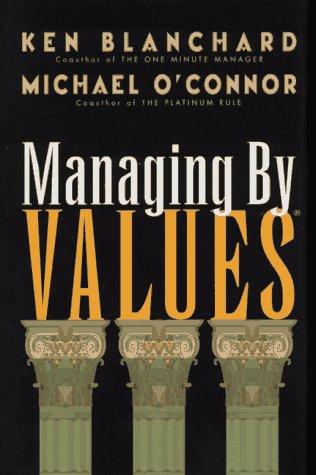 Managing by valuesKenneth H. Blanchard
 Raving fansKenneth H. Blanchard
 The heart of a leaderKenneth H. Blanchard
 The one minute apologyKenneth H. Blanchard
 The One Minute ManagerKenneth H. Blanchard and Spencer Johnson
 The servant leaderKenneth H. Blanchard
 Whale done!Kenneth H. Blanchard