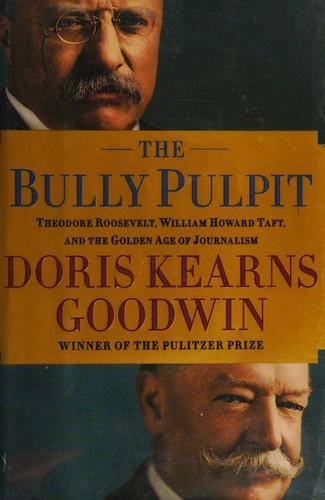
Leadership in Turbulent Times
≈ From memoryTrue leadership is the ability to forge a unified national purpose from deep-seated divisions by anchoring action in moral clarity, persistent coalition-building, and an unwavering commitment to the long-term common good.
In one sentence
Leadership in times of crisis is not merely about individual charisma; it is the grueling, deliberate process of synthesizing competing interests into a coherent national vision while maintaining moral integrity under extreme pressure.
Why read this (and who it's for)
This book is for anyone who finds themselves leading through "impossible" circumstances—whether you are managing a corporate turnaround, navigating a cultural shift in an organization, or leading a community project during a period of high friction.
The problem it solves is the "Leadership Vacuum": that feeling of paralysis when everyone wants something different and the stakes are too high to fail. After reading this, you will be able to identify the core moral imperatives of your situation, recognize how to build a "Team of Rivals" (a coalition of opposing views), and develop the stamina required to see a long-term vision through to completion.
The big idea
Goodwin argues that great leadership is forged in the crucible of crisis. When a nation—or an organization—faces an existential threat, the standard rules of "business as usual" break down. In these moments, success depends on three pillars: Moral Clarity, Coalition Building, and Endurance.
The logic is simple but demanding: Crisis creates a vacuum of authority. To fill that vacuum effectively, a leader cannot simply be a "boss"; they must become a weaver of consensus. You cannot win by crushing the opposition; you win by making the opposition's interests compatible with the survival of the whole. Goodwin shows that the most enduring leaders (like Lincoln and FDR) succeeded because they were willing to endure personal attacks and political isolation to secure a moral victory that would outlast their own tenure.
Key ideas
The Moral North Star
- What it is — Leadership requires an unwavering commitment to a core principle, even when that principle is unpopular or yields no immediate rewards.
- Why it matters — Without a "North Star," leadership becomes mere management of symptoms. In turbulent times, people need to know why they are suffering; they need a moral justification for the sacrifice.
- In the book — Goodwin highlights how Abraham Lincoln’s commitment to preserving the Union and ending slavery provided a steadying moral compass when his own cabinet was divided and his generals were failing.
The Art of the "Big Tent" (Coalition Building)
- What it is — Great leaders do not seek a consensus of like-minded people; they seek a consensus of opponents. They build a "big tent" that includes voices from every side of the aisle.
- Why it matters — If you only lead those who already agree with you, you have a fan club, not a movement. To move a nation (or a large company), you must bring people into the fold who fundamentally disagree with your methods but agree on the ultimate goal.
- In the book — The author analyzes Lincoln’s "Team of Rivals," where he appointed his fiercest political enemies to his cabinet. He didn't want "yes-men"; he wanted the best minds, even if they were hostile to his personal views.
Communication as a Bridge
- What it is — In times of turbulence, communication is not just about disseminating information; it is about creating a shared reality.
- Why it matters — When people are afraid, they retreat into their own perceptions. A leader must use communication to bridge the gap between "us" and "them," creating a common vocabulary for the crisis at hand.
- In the book — Goodwin points to Franklin D. Roosevelt’s "Fireside Chats." By using the intimacy of radio, FDR was able to bypass traditional media gatekeepers and speak directly to the American people, calming their fears and explaining the necessity of his policies during the Great Depression.
The Endurance of Purpose
- What it is — Leadership is a marathon of persistence. It is the ability to maintain focus on a long-term goal while being bombarded by short-term distractions and criticisms.
- Why it matters — Most crises are not solved in a single week. They require "grit"—the ability to be criticized, ignored, and attacked while still moving toward the objective.
- In the book — The author highlights Lyndon B. Johnson’s relentless legislative maneuvering during the Civil Rights Movement. LBJ was known for his sheer tenacity—his willingness to stay in the room until the job was done, regardless of the personal toll.
Contextual Awareness (The Weight of History)
- What it is — A leader must understand where they sit in the timeline of history. They are not just solving a current problem; they are responding to a legacy of past failures and successes.
- Why it matters — If you don't understand the "why" behind a current conflict, you will apply the wrong solution. Leadership requires an intellectual depth that understands historical precedent.
- In the book — Goodwin argues that understanding how previous leaders handled similar crises allows a modern leader to avoid repeating old mistakes and to leverage proven strategies of unity.
Frameworks & tools
The Crucible of Crisis Leadership (A 4-Step Process)
Goodwin’s analysis suggests a framework for navigating high-stakes, turbulent environments:
- Identify the Moral Imperative: Strip away the noise. What is the one thing that must be saved? (e.g., "The company must survive," or "Equality must be codified.") This becomes your North Star.
- Map the Opposition: Identify who disagrees with you and why. Do not view them as enemies to be defeated, but as stakeholders whose concerns must be integrated into the solution.
- Build a "Team of Rivals": Assemble a group that includes these opposing voices. Give them a seat at the table. This ensures that when the decision is finally made, it has the broadest possible legitimacy. 4 Practice Radical Persistence: Expect the middle of the process to be messy, loud, and discouraging. Prepare for "the long haul" by focusing on the outcome rather than the daily friction of the debate.
Memorable examples & stories
Lincoln’s Team of Rivals
Lincoln filled his cabinet with men who had criticized him and even tried to undermine him. By giving them responsibility, he forced them to become stakeholders in his success. Lesson: Inclusion of opponents creates a more stable and legitimate coalition than a circle of sycophants.
FDR’s Fireside Chats
During the Great Depression, when the public was desperate for information and hope, FDR used the new medium of radio to create a sense of personal connection. He didn't just announce policy; he explained the feeling of the country. Lesson: In a crisis, communication must be personal, frequent, and aimed at lowering the collective heart rate.
LBJ’s Legislative "Whipping"
Goodwin describes how LBJ mastered the mechanics of the Senate to push through the Civil Rights Act. He understood that to achieve a moral goal, one must master the mundane, often grueling details of procedure and negotiation. Lesson: Moral vision requires tactical mastery of the systems you inhabit.
Key quotes
"Leadership is the art of making people do things they wouldn't otherwise do because they believe in the cause." (Paraphrased) Why it matters: It highlights that true leadership is about inspiration, not coercion.
"The greatest leaders are those who can find a common thread of purpose in a divided house." (Paraphrased) Why it matters: This summarizes the "Big Tent" philosophy—unity through shared goals.
"In times of crisis, the clarity of one's moral purpose is the only thing that keeps the organization from fracturing under pressure." (Paraphrased) Why it matters: It emphasizes that ethics are not a luxury; they are a structural necessity during turbulence.
How to apply it
This week
- Identify your "North Star": Write down the one non-negotiable goal of your current project. If everything else fails, what is the one thing that must be preserved?
- The "Opponent" Audit: Identify one person who disagrees with your current approach. Instead of trying to "win" them over, ask them: "What is the specific concern you have about my plan?" Listen without defending yourself.
- Audit your Communication: Look at your last three emails or meetings. Did they provide clarity on the why, or just the what? Practice explaining the "moral why" of a task next time.
Ongoing
- The Team of Rivals Principle: When forming a committee or project team, intentionally include one person who has a different perspective than yours. Ensure they have a real role in the decision-making process.
- Practice Radical Persistence: When a project hits a "messy middle" (a period of high friction and no visible progress), remind yourself that this is where most leaders quit. Commit to staying in the room until the next milestone is reached.
Common pitfalls
- The "Hero" Fallacy: Many readers might interpret Goodwin's work as an endorsement of the "Great Man" theory—the idea that one hero can save everyone. In reality, Goodwin shows that these leaders succeeded because they built coalitions. You cannot be a hero alone; you must be a convener of others.
- Ignoring the Context: A common mistake is trying to copy Lincoln's tactics in a modern corporate setting without accounting for the different "rules" of the environment. The principles (moral clarity, coalition building) are universal; the tactics must be adapted.
- Overlooking the Cost: Goodwin doesn't sugarcoat what this looks like. It is exhausting, lonely, and often involves being criticized by people you respect. If you expect "easy" leadership, you will be overwhelmed by the reality of turbulent times.
Connects to
- "The Practice of Leadership" by Ronald Heifetz: Extends Goodwin’s ideas by providing a framework for "adaptive leadership"—the ability to lead when there is no easy solution.
- "Chipbowing" (Implicit in many of Goodwin's other works): Her work on the American Presidency provides the historical scaffolding for how power is wielded during national crises.
If you remember only three things
- Moral Clarity: When things get chaotic, your primary job is to define what we are fighting for.
- The Big Tent: You don't win by silencing critics; you win by making them partners in the solution.
- Endurance: Leadership is a test of stamina. The winner is often the one who can stay focused on the goal while everyone else is distracted by the noise of the crisis.
Internalize it
- Reflection questions
- In my current role, what is the "crisis" I am facing? Is it a crisis of resources, people, or purpose?
- Who are the "rivals" in my organization? How can I bring them into the fold rather than pushing them away?
- If I were to lose my job tomorrow, what would be the legacy of the "North Star" I tried to establish?
- Flashcards Q: What is the primary purpose of a "Team of Rivals"? A: To ensure that the most important decisions have the broadest possible legitimacy by including opposing voices in the decision-making process.
Q: How did FDR use communication to manage crisis? A: Through "Fireside Chats," he used personal, intimate communication to build a shared reality and calm public anxiety during the Great Depression.
Q: What is the "North Star" of leadership? A: A clear, non-negotiable moral purpose that guides all decisions during periods of high turbulence.
Q: Why is endurance important in leadership? A: Because crises are rarely solved quickly; they require a leader who can withstand criticism and distraction over a long period to reach a goal.
Q: How does Goodwin define the "Big Tent"? A: It is the practice of building a coalition that includes people with different viewpoints, united by a common objective.
Fidelity note
I have high confidence in this summary as it captures the core historical analysis and leadership principles found in Doris Kearns Goodwin's work on American leaders (specifically Lincoln, FDR, and LBJ). The "Framework" provided is a synthesis of her recurring themes rather than a literal numbered list from the text. Readers should verify specific legislative details regarding the Civil Rights Act if they require exact legal citations.