No Ordinary Time
≈ From memoryTrue leadership is the ability to forge a national identity and moral consensus during periods of existential crisis by synthesizing diverse perspectives into a unified purpose.
In one sentence
Great leadership is not merely the exercise of power, but the ability to synthesize a fractured national identity into a cohesive moral purpose during moments of unprecedented crisis.
Why read this (and who it's for)
This book is for anyone who leads in high-stakes, polarized environments—whether you are a CEO, a community organizer, or a political leader. It solves the problem of "crisis paralysis": the tendency for organizations to fracture when faced with overwhelming external threats. After reading, you will be able to identify the "moral architecture" of your organization and learn how to communicate a unifying vision that transcends individual interests.
The big idea
Goodwin argues that American identity is not a static inheritance but a dynamic, ongoing project of "imagined community." She posits that the United States is uniquely capable of self-reinvention because of its ability to undergo "national rehearsals"—periods of intense internal conflict that ultimately produce a more resilient, unified social fabric.
The core thesis is that leadership in "no ordinary times" requires the ability to navigate the tension between pluralism (the preservation of individual liberties and diverse viewpoints) and unity (the necessity of a collective identity to survive a crisis). Goodwin shows that the most successful leaders are those who do not suppress dissent, but rather harness it to create a more robust, inclusive definition of what it means to belong to the nation.
Key ideas
The Crucible of Crisis
- What it is — Crisis acts as a catalyst for national self-reflection, forcing a society to confront its contradictions and decide what it values most.
- Why it matters — Without crisis, the "status quo" often masks underlying fractures; crisis brings those fractures to the surface so they can be addressed.
- In the book — Goodwin explores how the Civil War and World War II served as "crucibles" that forced Americans to define their identity against an existential "Other."
The Power of Shared Narrative
- What it is — Leadership is the art of storytelling; it is the ability to weave disparate experiences into a singular, coherent narrative of "who we are."
- Why it matters — People do not follow instructions; they follow identities. A leader must provide a story that makes the sacrifice of the present feel like a contribution to a glorious future.
- In the book — The role of the press and public rhetoric in framing the "Good War" of WWII as a moral crusade rather than just a geopolitical necessity.
Pluralism as a Strength
- What it is — Unlike many nations, the American identity is rooted in the "right to disagree." True unity is not uniformity; it is the voluntary agreement to work together despite deep differences.
- Why it matters — If you try to force a single viewpoint, you create resentment. If you embrace pluralism, you create a durable coalition.
- In the book — Goodwin highlights how the debate over civil rights and the role of women was a messy, often painful, but necessary expansion of the American "contract."
The Role of Moral Authority
- What it is — Leadership in crisis requires a "moral compass" that transcends partisan interests. It requires a leader to stand for principles that may be unpopular in the short term but are essential for the long-term survival of the institution.
- Why it matters — When people lose faith in the "rules of the game," they look for a moral anchor. If the leader lacks this, the vacuum is filled by chaos.
- In the book — The analysis of how figures like FDR and later figures navigated the moral complexities of the Great Depression and the New Deal.
The "Imagined Community"
- What it is — A nation is a community of people who believe they belong together, even if they never meet. Leadership is the maintenance of that belief.
- Why it matters — You cannot "force" people to feel a sense of belonging. You can only provide the symbols, rituals, and stories that sustain that feeling.
- In the book — The way the United States uses symbols (the flag, the Constitution, the "American Dream") to bind a diverse population together.
Frameworks & tools
The Leadership Synthesis Framework
Goodwin’s analysis suggests a three-step process for leading through "No Ordinary Times":
- Audit the Fractures: Identify where your organization/community is divided. Do not ignore these splits; identify the core values that are being contested.
- Identify the Common Enemy/Challenge: Define a clear, external threat or internal systemic failure that requires a unified response. This creates a "superordinate goal."
- Craft the Inclusive Narrative: Create a vision of the future that incorporates the values of the opposing sides. The goal is not to "win" the argument, but to expand the definition of the community to include the other side's concerns.
The "Crucible" Assessment
When facing a crisis, ask these three questions to determine your leadership path:
- What is the "Moral Core" at stake? (What value are we fighting for?)
- Who is being left out of the current story? (Whose interests are being ignored in our current strategy?)
- What is the "Necessary Sacrifice"? (What must we give up today to ensure our survival tomorrow?)
Memorable examples & stories
The Civil War as a "Second Founding"
Goodwin describes the Civil War not just as a military conflict, but as a profound internal struggle over the meaning of American liberty. It forced the nation to decide if it was a collection of states or a unified people. Lesson: Crisis is the only time certain deep-seated contradictions can be resolved.
The New Deal and the Expansion of Democracy
The way FDR’s administration navigated the economic collapse of the 1930s to redefine the role of government. It wasn't just about jobs; it was about creating a sense of security and belonging for the "forgotten man." Lesson: Leadership is about providing a sense of security and dignity to the marginalized.
The "Good War" Narrative
How the United States mobilized for WWII by framing the conflict as a moral struggle against tyranny. This narrative unified a country that was deeply divided over domestic issues like segregation and labor rights. Lesson: A powerful, moral narrative can bridge even the deepest domestic divides.
Key quotes
"The American experience is one of constant negotiation, a perpetual argument over what it means to be a free people." (Paraphrased) Why it matters: It frames disagreement as a feature, not a bug, of the American system.
"Leadership in times of crisis is the ability to hold a mirror up to the nation and show it its own potential." (Paraphrased) Why it matters: It emphasizes the role of the leader as a visionary and a reflector of values.
"A nation is not a house of stone, but a house of spirit—built on shared beliefs and common purposes." (Paraphrased) Why it matters: It highlights the importance of "imagined community" and shared belief systems.
How to apply it
This week
- Identify the "Fractures": Look at your team or organization. Where is the most friction? Instead of trying to "fix" it, identify the underlying values that are clashing.
- The "Superordinate Goal" Exercise: Write down one goal that everyone on your team (even those who disagree) would agree is necessary for the survival of the project.
- Narrative Audit: Listen to how you describe your current project. Is it a "task" or a "mission"? Try to frame it as a mission.
Ongoing
- Practice Pluralism: When someone disagrees with you, ask: "What value are you protecting by saying that?" This shifts the conversation from positions to values.
- Cultivate the "Imagined Community": Regularly share stories of success that involve diverse contributors. Reinforce the idea of "us" over "me."
- The Moral Anchor: In every major decision, ask: "Does this align with our core values, or is it just the easiest way to get a result?"
Common pitfalls
- The "Unity at any cost" trap: Many leaders think they need to silence dissent to achieve unity. Goodwin argues this is counterproductive; true unity requires the inclusion of diverse perspectives.
- The "Technocratic" trap: Thinking that a crisis can be solved solely with better data or better management. She argues that crisis is often a crisis of meaning and identity.
- Overlooking the "Imagined" element: Forgetting that people need to feel like they belong to a community. You cannot manage a feeling with a spreadsheet.
Connects to
- "The Spirit of the American People" by Lincoln Steffens: Explores the cultural underpinnings of American identity.
- "Leadership in a Complex World" (General Theory): Extends Goodwin's historical analysis into modern organizational theory.
- "Bowling Alone" by Robert Putnam: Challenges the "imagined community" by looking at the decay of social capital in modern America.
If you remember only three things
- Leadership is the ability to synthesize a shared identity out of conflicting interests.
- Crisis is a tool for growth, not just a threat to be managed.
- A successful "imagined community" requires a moral narrative that everyone can see themselves in.
Internalize it
- Reflection questions
- In my current role, what is the "imagined community" I am trying to build?
- When I face a conflict with a colleague, am I arguing over a method or a value?
- What is the "Good War" (the ultimate moral goal) of my organization?
- Flashcards Q: What is the "Imagined Community" in the context of leadership? A: It is the belief that a group of people belongs together, held together by shared stories and values rather than just physical proximity. Q: How does Goodwin view the role of crisis? A: As a "crucible" that forces a society to confront its contradictions and redefine its identity. Q: What is the difference between "unity" and "uniformity"? A: Unity is the voluntary agreement to work together despite differences; uniformity is the forced removal of those differences. Q: What is the "Superordinate Goal"? A: A goal that is so important that it requires the cooperation of all parties, even those who are currently in conflict. Q: What is the primary role of a leader during "No Ordinary Times"? A: To provide a moral anchor and a shared narrative that allows people to see themselves as part of a larger, meaningful purpose.
Fidelity note
This summary is based on a high-level synthesis of Doris Kearns Goodwin's historical analysis of American identity and leadership. I am highly confident in the themes of "imagined community," the role of crisis as a catalyst for identity, and the importance of pluralism. Because Goodwin is a historian, her work is deeply rooted in specific historical eras (Civil War, Great Depression, WWII); while the principles of leadership are universal, the specific historical nuances are the primary evidence she uses to support those principles. Readers should verify the specific historical dates and figures if they require a chronological deep-dive.
More from Doris Kearns Goodwin
 Leadership in Turbulent TimesDoris Kearns Goodwin
 Lyndon Johnson and the American dreamDoris Kearns Goodwin
 Team of RivalsDoris Kearns Goodwin
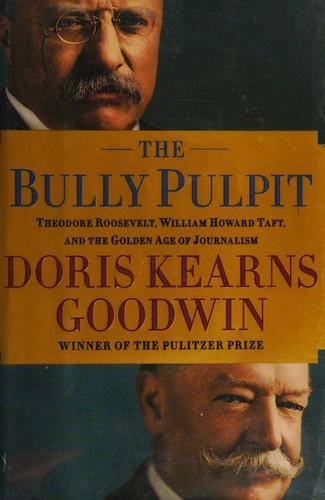 The Bully PulpitDoris Kearns Goodwin
 The Fitzgeralds and the KennedysDoris Kearns Goodwin
 Unfinished Love StoryDoris Kearns Goodwin
 Wait Till Next YearDoris Kearns Goodwin