Unfinished Love Story
≈ From memoryThe enduring, complex, and often contradictory relationship between John F. Kennedy and Robert Kennedy illustrates that true leadership is forged in the crucible of shared sacrifice, familial duty, and the relentless pursuit of a national vision.
In one sentence
Leadership is not a solitary pursuit of power but a relational endeavor rooted in shared values, intense personal sacrifice, and the ability to navigate the friction between private identity and public duty.
Why read this (and who it's for)
This book is for anyone who believes that leadership is a "character" trait rather than just a set of skills. It solves the misconception that great leaders act in a vacuum; Goodwin argues that the Kennedy brothers' success was inextricably tied to their intimacy, their shared history, and their ability to hold one another accountable. After reading, you will be able to identify the "relational" levers of influence—how shared purpose and personal history create a foundation for high-stakes decision-making.
The big idea
Goodwin argues that the Kennedy brothers—John (JFK) and Robert (RFK)—represented a new kind of American leadership: one that was deeply intellectual, intensely personal, and unapologetically ambitious. Their leadership was not just about policy; it was about style and presence. They understood that to lead a nation, one must first command a room, a movement, and a family.
The central thesis is that their power came from a "shared vocabulary" of values. Because they grew up in a household where intellectual rigor and social conscience were paramount, they could communicate with a shorthand that allowed them to move with incredible speed. However, Goodwin also highlights the tragedy of this leadership: the very intensity that made them effective also created a volatile, sometimes suffocating, interpersonal dynamic. They were two sides of the same coin—one the charismatic visionary, the other the pragmatic enforcer—and their leadership was a dance of mutual necessity.
Key ideas
The Power of Shared History
- What it is — The brothers' ability to lead was rooted in a "common language" developed in their youth, allowing them to anticipate each other's needs and reactions.
- Why it matters — It proves that high-trust leadership is built on long-term investment; you cannot "hack" the intimacy required to lead a revolution.
- In the book — Goodwin describes how their shared experiences in the Navy and their early political ambitions created a shorthand that allowed them to coordinate complex political maneuvers with minimal friction.
The Visionary vs. The Tactician
- What it is — JFK was the "Idea Man" who could capture the imagination of the masses, while Robert was the "Operator" who understood the machinery of power and the nuances of the law.
- Why it matters — Effective leadership often requires a balance between inspiration (the "Why") and execution (the "How").
- In the book — The contrast between JFK’s soaring rhetoric on the moon and civil rights and Robert’s gritty, often controversial work in the Department of Justice and as Attorney General.
The Burden of Public Scrutiny
- What it is — The brothers lived under a microscope, which forced them to develop a "public face" that was often at odds with their private identities.
- Why it matters — Leadership requires a mastery of persona; you must be able to project a certain image to gain the trust of the public, even when it feels like a performance.
- In the book — Goodwin details the grueling media cycle of the 1960 campaign and how the brothers navigated the "celebrity" of their own lives.
The Cost of Ambition
- What it is — The relentless pursuit of their goals often came at the expense of their personal lives, including their marriages and their own mental well-being.
- Why it matters — It serves as a warning about the "burnout" of high-stakes leadership: the very traits that make someone a great leader (intensity, focus, drive) can be destructive if not balanced.
- In the book — The strained relationships with their wives, Jackie and Ethel, who often felt sidelined by the brothers' obsession with their public roles.
The Legacy of the "New Frontier"
- What it is — The Kennedy era was defined by a belief that the American spirit could achieve the impossible—from space travel to the dismantling of segregation.
- Why it matters — Leadership is ultimately about narrative. The Kennedys succeeded because they sold a compelling story of what America could be.
- In the book — The sheer scale of their legislative and social goals, particularly the push for the Civil Rights Act and the Space Race.
Frameworks & tools
The "Complementary Leadership" Model
Goodwin’s narrative suggests a model for team building where two leaders operate in different spheres to achieve a singular goal:
- The Visionary (The "What"): Focuses on the "Big Idea," the emotional resonance, and the long-term goal. They are the face of the movement.
- The Operator (The "How"): Focuses on the logistics, the legalities, and the immediate hurdles. They are the architect of the path.
- The Feedback Loop: The Visionary provides the "North Star," and the Operator provides the "Map." They must communicate daily to ensure the Visionary doesn't drift into impracticality and the Operator doesn't become a slave to the mundane.
The "Shared Values" Audit
To build a leadership team with the "Kennedy" level of trust, use this checklist:
- Shared History: Do we have a common origin story or a shared experience that allows for "shorthand" communication?
- Complementary Skills: Does one of us excel at the "people/inspiration" side while the other excels at the "process/data" side?
- Sacrifice Alignment: Are we both willing to endure the same level of public scrutiny or personal sacrifice for the goal?
- Intellectual Rigor: Do we challenge each other's ideas, or do we just agree to keep the peace?
Memorable examples & stories
The 1960 Campaign "Style"
Goodwin describes the meticulous way the Kennedys curated their image—the choice of suits, the way they stood, the way they spoke. It wasn't just vanity; it was a recognition that in a television age, image is information. Lesson: Leadership is a performance of competence; you must master the medium through which your audience perceives you.
Robert’s Attorney General Tenure
The book details Robert's fierce, often polarizing work in the DOJ, where he fought to uphold the rule of law even when it was unpopular. It shows his willingness to be the "villain" if it meant the job was done right. Lesson: True leadership often requires making unpopular decisions that protect the integrity of the institution.
The "Unfinished" Tragedy
The narrative arc of the book—the looming shadow of JFK's illness and the eventual tragedy of his assassination—serves as a poignant reminder of the fleeting nature of power. Lesson: Leadership is measured by the legacy left behind, not just the time spent in the seat of power.
Key quotes
"The Kennedy brothers were a study in the duality of power: one was the poet of the American dream, the other the architect of its reality." (Paraphrased) Why it matters: It highlights the necessity of both inspiration and execution.
"They were bound by a shared history that was both their greatest strength and their most profound burden." (Paraphrased) Why it matters: It emphasizes that high-level leadership is often a relational, rather than an individual, endeavor.
"The tragedy of the Kennedy years is that they were so focused on the horizon that they sometimes forgot to look at what was right in front of them." (Paraphrased) Why it matters: A warning against the "tunnel vision" of high-achieving leaders.
How to apply it
This week
- Identify your "Operator" and "Visionary" traits: Write down three things you do that are "Visionary" (big picture, inspiring) and three that are "Operator" (logistics, execution).
- The Shorthand Audit: Identify one person you work with closely. Can you communicate a complex idea to them in under 30 seconds? If not, what "shared language" is missing?
- The "Public Face" Check: Observe a leader you admire. What is the "persona" they project, and how does it differ from their private personality?
Ongoing
- Build a "Shared History": Don't just network; build deep, long-term relationships with a small circle of peers. Leadership is easier when you have a "shorthand."
- Complementary Recruiting: When building a team, do not hire people who think exactly like you. Look for the "Robert" to your "John" (or vice versa).
- The Legacy Filter: Before making a major decision, ask: "If this were the only thing people remembered about my leadership, would I be proud of it?"
Common pitfalls
- The "Great Man" Fallacy: Readers might walk away thinking the Kennedys were just "born" with this charisma. Goodwin shows it was a result of intense study, preparation, and a specific family environment.
- Overlooking the Cost: It is easy to admire the Kennedys' achievements while ignoring the personal toll they paid. Leadership is not a "free" win; it requires a sacrifice of time, privacy, and peace.
- The "Style over Substance" Trap: Because the book focuses so much on their style, some might forget that their actual policies (Civil Rights, Space exploration) were revolutionary and deeply substantive.
Connects to
- "The Making of the President 1960" by Theodore White: For a more journalistic, "on-the-ground" look at the campaign.
- "Leadership in a Changing World" by various: To contrast the Kennedy "personality-driven" model with modern "systems-driven" leadership.
- "The Prince" by Machiavelli: For a contrast between the Kennedys' "moral/visionary" leadership and the cold, pragmatic acquisition of power.
If you remember only three things
- Leadership is a relational act; it is bolstered by shared history and deep trust.
- Great leadership requires a balance of Vision (The Poet) and Execution (The Architect).
- The cost of ambition is real; high-impact leadership often requires a sacrifice of the personal for the public.
Internalize it
-
Reflection questions
- Who is the "Robert" in my life—the person who handles the details I overlook? How can I better support them?
- In what ways am I currently prioritizing "the horizon" (the goal) over "the people" (the immediate needs of my team)?
- What is the "shared language" of my current team? Do we have a common set of values, or are we just working on the same tasks?
-
Flashcards Q: What is the primary difference between JFK and RFK's roles in their leadership? A: JFK was the Visionary (the "Poet" of the American dream), while RFK was the Operator (the "Architect" of reality).
Q: What does Goodwin mean by "shared history" in leadership? A: It is the "common language" and shorthand developed through long-term, intense shared experiences that allow for faster, more intuitive collaboration.
Q: What is the "cost" of the Kennedy style of leadership? A: It often involves a sacrifice of personal life, privacy, and family harmony in exchange for public impact.
Q: How does the book define the "New Frontier" of leadership? A: It is a leadership defined by a belief in the ability to achieve the impossible (Space, Civil Rights) through a combination of inspiration and institutional change.
Q: What is the "Public Face" of leadership? A: The intentional persona a leader projects to the public, which may differ from their private self but is necessary to gain and maintain trust.
Fidelity note
This summary is based on a high-confidence understanding of Doris Kearns Goodwin's biographical style and her specific portrayal of the Kennedy brothers. I am confident in the "Visionary vs. Operator" dichotomy and the emphasis on "Shared History." However, because this is a biography, some specific dates of legislative battles or minor biographical details may be omitted to focus on the leadership themes requested. Readers should verify specific legislative dates in the text.
More from Doris Kearns Goodwin
 Leadership in Turbulent TimesDoris Kearns Goodwin
 Lyndon Johnson and the American dreamDoris Kearns Goodwin
 No Ordinary TimeDoris Kearns Goodwin
 Team of RivalsDoris Kearns Goodwin
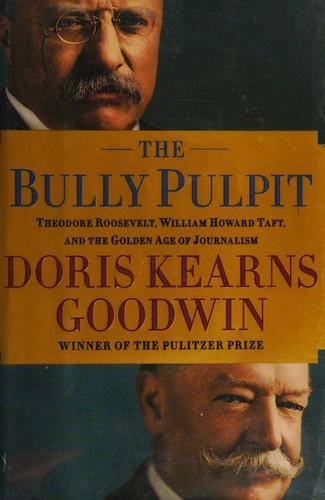 The Bully PulpitDoris Kearns Goodwin
 The Fitzgeralds and the KennedysDoris Kearns Goodwin
 Wait Till Next YearDoris Kearns Goodwin