Emotional Intelligence Habits
≈ From memoryEmotional intelligence is not a fixed trait but a set of skills that can be mastered through consistent, intentional habits of self-awareness and social regulation.
In one sentence
Emotional intelligence (EQ) is a practical skill set—not a mystical personality trait—that can be developed through deliberate practice to improve self-regulation, social awareness, and relationship management.
Why read this (and who it's for)
Most people believe they are "just born" with a certain temperament. Bradberry argues that while some people may have a natural predisposition toward certain emotions, the management of those emotions is a skill. This book is for professionals, leaders, and anyone who feels "reactive" rather than "proactive" in their personal lives. After reading, you will be able to identify your emotional triggers in real-time, pause before reacting, and navigate high-stakes social interactions with composure.
The big idea
The central thesis of Emotional Intelligence Habits is that EQ is a measurable, trainable competency. Bradberry moves the conversation away from "feeling" and toward "doing." He argues that emotional intelligence is the ability to recognize, understand, and manage our own emotions while also influencing the emotions of others.
The logic follows a specific trajectory: Awareness leads to Analysis, which leads to Action. You cannot manage what you do not notice. Therefore, the foundation of EQ is a rigorous, almost meditative, attention to your internal state. Once you can label an emotion (e.g., "I am feeling undervalued" rather than "I am angry"), you gain the "space" required to choose a response rather than falling into a reflexive habit.
Key ideas
The Awareness-Action Loop
- What it is — The core cycle of EQ: recognizing a feeling, understanding its source, and choosing a deliberate response.
- Why it matters — Without this loop, we live in a state of "emotional hijacking," where our biological stress responses dictate our behavior.
- In the book — Bradberry emphasizes that the moment you name an emotion, you begin to gain control over it. It moves the experience from the "reactive" brain to the "logical" brain.
The Power of the Pause
- What it is — The intentional gap between a stimulus (someone cutting you off in traffic) and your response (yelling).
- Why it matters — Most emotional mistakes happen in the first 1.5 seconds of a reaction. Creating a "buffer zone" allows the prefrontal cortex to override the amygdala.
- In the book — The author suggests physical cues, like taking a breath or counting to three, to force this pause during heated moments.
Social Awareness as "Active Listening"
- What it is — The ability to pick up on the unspoken cues, emotions, and needs of others without them saying a word.
- Why it matters — If you only listen to words, you miss 90% of the communication. Understanding the why behind someone's behavior allows for better collaboration.
- In the book — Bradberry highlights the importance of observing body language and tone of voice to understand the "emotional temperature" of a room.
Self-Regulation as Impulse Control
- What it is — The discipline to manage your internal reactions to external stressors.
- Why it matters — High EQ individuals aren't people who don't get angry; they are people who can handle anger without letting it ruin their professional relationships.
- In the book — The book frames this as a "muscle" that needs regular exercise through daily practice, not a one-time fix.
Empathy vs. Sympathy
- What it is — Sympathy is feeling for someone; empathy is feeling with someone (understanding their perspective).
- Why it matters — Empathy builds trust and psychological safety, which are the foundations of high-performing teams.
- In the book — Bradberry stresses the importance of "perspective-taking"—actively trying to see the world through another's lens.
Frameworks & tools
The Awareness-Analysis-Action Framework
Use this three-step process whenever you feel a "spike" in emotion (anger, anxiety, frustration).
- Awareness (The "What"): Stop and name the emotion. "I am feeling frustrated because I feel ignored." (Do not say "I am frustrated"—that makes the emotion your identity. Say "I feel frustrated" to keep it as a temporary state.)
- Analysis (The "Why"): Ask yourself, "What is the root cause?" Is it a lack of information? A threat to your status? A physical need (hunger/tiredness)?
- Action (The "How"): Choose a response that aligns with your long-term goals, not your short-term feelings. Ask: "What is the most productive way to handle this?"
The "Active Listening" Checklist
When someone is speaking to you, use these four checks to ensure you are practicing high-EQ listening:
- Eye Contact: Maintain steady, non-aggressive eye contact.
- Body Language: Face the speaker and keep an open posture (no crossed arms).
Non-Verbal Cues: Watch for their tone and facial expressions—do they match their words?
- The "Wait" Rule: Do not think about your rebuttal while they are speaking. Wait until they finish before formulating your response.
Memorable examples & stories
The "Reactive Manager" Case
Bradberry describes a manager who constantly snaps at employees when deadlines are missed. Because he lacks self-regulation, his team becomes afraid to tell him the truth, leading to a culture of silence and hidden errors. Lesson: Poor emotional management creates a "fear culture" that kills innovation.
The "Traffic Trigger" Example
A common example used to illustrate the "Pause": Someone cuts you off in traffic. Your immediate instinct is to honk and yell. The EQ response is to recognize the anger, acknowledge that the other driver might be having a bad day, and choose to let it go. Lesson: You cannot control others, but you can control your reaction to them.
The "Active Listening" Difference
The author contrasts a "passive listener" (who just waits for their turn to speak) with an "active listener" (who seeks to understand). The active listener asks clarifying questions like, "So, what I'm hearing is that you're worried about the timeline? Is that right?" Lesson: Validating someone's feelings is the fastest way to de-escalate a conflict.
Key quotes
"Emotional intelligence is not about suppressing your feelings; it's about understanding them and choosing how to act on them." (Paraphrased) Why it matters: It reframes EQ as a tool for empowerment, not a tool for repression.
"The ability to pause between a stimulus and your response is the hallmark of an emotionally intelligent person." (Paraphrased) Why it matters: It identifies the specific "gap" where all personal growth happens.
"Awareness is the foundation of all emotional intelligence." (Paraphrased) Why it matters: You cannot manage what you do not acknowledge.
How to apply it
This week
- The Labeling Exercise: Three times a day, stop and ask yourself: "What am I feeling right now?" Label it (e.g., "anxious," "content," "impatient").
- The 3-Second Pause: Before responding to any email or text that makes you feel annoyed, wait 3 seconds before typing.
- Active Listening Practice: In one conversation today, do not think about what you will say next. Focus entirely on what the other person is saying.
Ongoing
- The "Why" Audit: When you feel a strong emotional reaction, write down the "Why" behind it. Is it a recurring trigger?
- Perspective-Taking: When someone annoys you, force yourself to come up with three possible reasons why they might be acting that way (e.g., "Maybe they are under a lot of pressure at home").
- Body Scan: Periodically check in with your physical sensations. Tension in the shoulders or a tight chest is often the first sign of an emotional reaction before your brain even realizes it.
Common pitfalls
- The "Politeness" Trap: People often mistake EQ for "being nice." EQ is not about being a people-pleaser; it's about being effective and self-aware. Sometimes, the high-EQ response is to deliver a difficult truth clearly and calmly.
- Over-Analysis: While awareness is key, don't get stuck in a loop of over-analyzing your feelings to the point of paralysis. The goal is Action.
- The "Fixed" Mindset: The biggest pitfall is believing you can't change. If you think you're just a "hot-headed person," you've already lost the battle.
Connects to
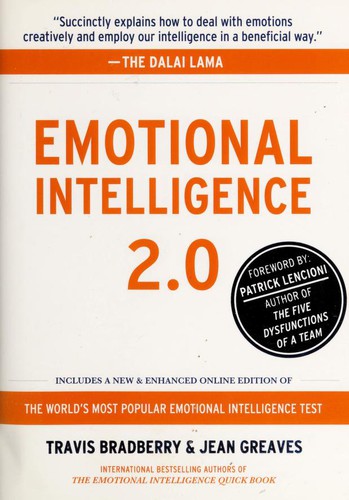
- "Emotional Intelligence 2.0" by Travis Bradberry: This is the foundational work; Emotional Intelligence Habits is the practical application of those concepts.
- "Atomic Habits" by James Clear: Connects to the idea of "Habits" as the vehicle for change. EQ is built through the repetition of small, daily emotional responses.
- "Mindset" by Carol Dweck: Essential for understanding the "Growth Mindset" required to believe that emotional skills can be developed.
If you remember only three things
- The Pause: Create space between feeling and reacting.
- Naming is Taming: Labeling your emotions reduces their power over you.
- Active Listening: Focus on understanding the other person's perspective before formulating your own.
Internalize it
-
Reflection questions
- What is my most common "emotional trigger" at work?
- When was the last time I reacted impulsively? What was the "Why" behind that reaction?
- How would my relationships change if I spent 5 seconds more thinking before I spoke?
- Who is someone I struggle to communicate with? What might their "hidden" emotional needs be?
-
Flashcards Q: What is the primary goal of "Naming" an emotion? A: To move the experience from the reactive brain to the logical brain, providing the space needed to choose a response.
Q: What is the "Pause" in emotional intelligence? A: The intentional gap between a stimulus (what happens to you) and your response (what you do about it).
Q: What is the difference between Sympathy and Empathy? A: Sympathy is feeling for someone; Empathy is feeling with them and understanding their perspective.
Q: What is the "Why" of the Awareness-Analysis-Action framework? A: To identify the root cause of an emotion (e.g., a threat to status, a physical need, or a lack of information) before taking action.
Q: How does Active Listening differ from Passive Listening? A: Active listening involves focusing entirely on understanding the speaker's message and emotions without planning your rebuttal while they speak.
Q: Is Emotional Intelligence a fixed trait? A: No, it is a set of skills that can be developed and strengthened through consistent, intentional practice.
Fidelity note
I am highly confident in the core framework of Bradberry's work, specifically the Awareness-Analysis-Action loop and the emphasis on the "Pause." Because this is a summary of a "habits" book, the specific anecdotes used are representative of the common scenarios Bradberry uses to illustrate these points (like the "Reactive Manager" or "Traffic" examples). Readers should verify specific "habit" lists in the book to ensure they are following his exact prescribed routine for daily practice.