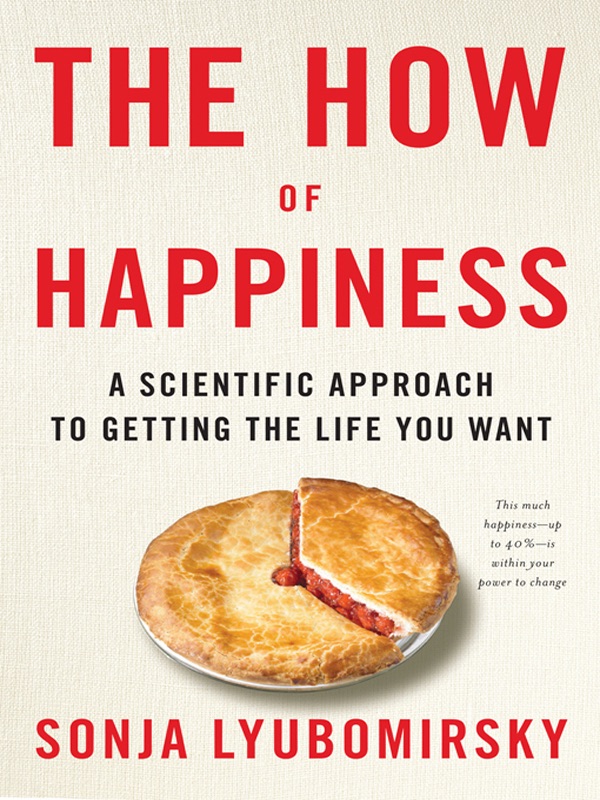
The Happiness Project
≈ From memoryHappiness is not a destination you reach; it is a skill you develop through the disciplined practice of daily habits, routines, and intentional behavioral changes.
In one sentence
True happiness is an active skill cultivated through consistent, deliberate behavior—specifically through routine, physical activity, and gratitude—rather than a passive feeling that arises from perfect circumstances.
Why read this (and who it's for)
Most people approach happiness as a "feeling" they are waiting to arrive: “I’ll be happy when I get the promotion/the house/the partner.” Rubin argues that this is a fundamental misunderstanding of how human psychology works. This book is for the high-achiever who feels like they are constantly moving forward but still feel unfulfilled, and for anyone who finds themselves stuck in a cycle of "waiting" to be happy before they start living.
After reading this, you will stop looking for a "happiness hack" and instead begin building a Happiness Infrastructure—a set of repeatable, reliable habits that stabilize your mood regardless of what external circumstances are happening in your life.
The big idea
Rubin’s central thesis is that happiness is a skill, not an emotion. While we often treat joy as something that happens to us (like a lucky break or a sudden spark of inspiration), Rubin argues that lasting happiness is the result of intentional, disciplined actions. It is a muscle that requires consistent training.
The logic follows a "Doing-Feeling" loop: We often think we need to feel like doing something before we do it (e.g., "I'll go for a run when I feel motivated"). Rubin flips this on its head. She argues that you must do the thing first—even when you don't feel like it—to eventually produce the feeling of happiness. By creating routines and structures, you remove the burden of decision-making from your willpower. When an action becomes a habit, it no longer requires "motivation" to execute; it simply becomes part of who you are.
Ultimately, she argues that we are often our own worst enemies when it comes to happiness because we allow ourselves to be distracted by social comparison, lack of physical movement, and a failure to practice gratitude. By systematically addressing these three pillars, we can build a life that feels inherently more satisfying.
Key ideas
Happiness as a Skill
- What it is — Happiness is an active practice, not a passive state of being. It requires the same kind of training as a sport or a musical instrument: repetition, discipline, and intentionality.
- Why it matters — If you view happiness as a feeling, you will always be at the mercy of your circumstances. If you view it as a skill, you regain agency. You become the architect of your own internal state by choosing which behaviors to repeat daily.
- In the book — Rubin shares her personal journey of trying to "find" happiness through various experiments, only to realize that she had to stop looking for it and start doing things that would make her life better.
The Distinction Between Joy and Happiness
- What it is — Joy is a fleeting feeling (a spark); Happiness is a state of being (the hearth). You can experience joy in a moment, but happiness is the overall quality of your life.
- Why it matters — We often confuse the two. If you chase "joy" alone, you will always be chasing a high that eventually fades. By focusing on "happiness," you focus on building a sustainable environment where joy can occur more frequently and naturally.
- In the book — She uses this distinction to explain why some activities (like eating a piece of chocolate) provide joy but don't contribute to long-term happiness, whereas others (like regular exercise or deep friendships) build a foundation for lasting well-being.
The Social Media Trap
- What it is — Social media creates a "highlight reel" culture where we compare our internal messy reality to everyone else’s curated external perfection. This creates a constant state of inadequacy.
- Why it matters — Comparison is the thief of joy. When we spend our time scrolling, we are essentially training our brains to look for what we don't have, which makes us less appreciative of what we do have.
- In the book — Rubin details her own experience of "doomscrolling" and how she eventually had to set hard boundaries—including deleting apps and designating "phone-free zones"—to reclaim her attention and self-esteem.
Physical Activity as a Mental Health Tool
- What it is — Exercise is not just about aesthetics; it is one of the most effective ways to regulate mood, reduce anxiety, and increase cognitive function.
- Why it matters — Because movement changes your brain chemistry. When you are stuck in a loop of negative thoughts, physical exertion forces a "reset" on your nervous system. It provides an immediate, tangible way to change how you feel.
- In the book — Rubin shares her struggle to find a workout she actually enjoyed. She emphasizes that the consistency of the movement matters more than the intensity; finding something you won't quit is the key to long-term mental health.
Gratitude as a Discipline
- What it is — Gratitude is not just "thinking" about things you’re thankful for; it is an active practice of identifying and acknowledging the good in your life.
- Why it matters — Our brains are evolutionarily wired to notice threats and problems (the "negativity bias"). We have to manually override this by intentionally scanning our environment for what is going right.
- In the book — She advocates for a literal gratitude list—writing down three things every day. This forces the brain to scan for positives, eventually retraining your internal "radar" to see opportunities instead of just obstacles.
The Power of Saying No
- What it is — Happiness requires boundaries. Every time you say "yes" to something you don't want to do, you are saying "no" to your own peace and priorities.
- Why it matters — Over-commitment leads to resentment and burnout. By saying no to obligations that drain you, you create the space necessary for the activities that actually nourish you.
- In the book — Rubin discusses how she had to learn to set boundaries with her time and energy, realizing that "no" is a complete sentence and a vital tool for protecting her mental health.
Frameworks & tools
The Gratitude List (The Daily Practice)
Rubin suggests that gratitude must be active to be effective. It shouldn't just be a vague feeling; it should be a recorded practice.
- Identify the Trigger: Every evening before bed, take 2 minutes to reflect on your day.
- Write Three Specifics: Do not write "I'm glad for my family." Instead, write "I loved the way my daughter laughed at dinner" or "The coffee tasted perfect this morning."
- Review Weekly: Look back at your list every Sunday. This reinforces the "positivity scan" in your brain.
The Social Media Audit
To stop the cycle of comparison, you must audit how you consume digital content.
- Identify Triggers: Which apps make you feel worse about yourself? (Usually Instagram or TikTok).
- Set Hard Limits: Use app timers to limit usage to 30 minutes a day.
- The "Unfollow" Rule: If an account makes you feel inadequate, jealous, or annoyed—unfollow it immediately. Your feed should be a source of inspiration, not comparison.
The Exercise Prescription
Stop looking for the "perfect" workout and start with what is accessible.
- Choose Movement over Intensity: If you hate running, don't run. Find something that feels like play (dancing, hiking, yoga).
- The 10-Minute Rule: Tell yourself you only have to do 10 minutes. Usually, once you start, the friction of "getting started" disappears.
- Schedule it as a Non-Negotiable: Put your workout on your calendar like a doctor's appointment.
Memorable examples & stories
The Social Media Detox
Rubin describes her own experience of feeling "addicted" to the validation of likes and the constant stream of information. She realized that she was using social media as a way to escape from herself. Lesson: Awareness is the first step; you must recognize when your habits are serving your ego rather than your well-being.
The Exercise Struggle
Rubin is honest about her own lack of motivation for exercise. She describes trying various workouts and failing because she was trying to do what "should" work rather than what actually worked for her body and spirit. Lesson: Sustainability beats intensity. If you don't enjoy the activity, you won't keep doing it.
The "No" List
She recounts moments where she felt overwhelmed by obligations—social invites, extra projects at work, and favors for others. She realized that her unhappiness was often a direct result of over-commitment. Lesson: Your time is your most precious resource; protect it fiercely to make room for what matters.
Key quotes
"Happiness is a skill, not a destination." (Paraphrased) Why it matters: This shifts the responsibility from "fate" to "action."
"We have to train our brains to see the good." (Paraphrased) Why it matters: It highlights the need for intentionality in our daily mental habits.
"Comparison is the thief of joy." (Paraphrased) Why it matters: It identifies the primary external drain on our internal peace.
How to apply it
This week
- The Gratitude List: Every night before you go to sleep, write down three specific things that went well today. They can be as small as a good cup of tea.
- Social Media Audit: Go through your "Following" list on Instagram or X (Twitter). Unfollow 10 accounts that make you feel poorly about your life, body, or success.
- The 10-Minute Move: Commit to 10 minutes of intentional movement every day—a walk, some stretching, or a quick yoga flow.
Ongoing
- The "No" Rule: Before saying yes to any new commitment this month, wait 24 hours. Ask yourself: "Does this align with my priorities?"
- Movement as Medicine: Treat exercise as a mental health prescription. When you feel stressed or stuck, go for a walk without your phone.
- The Ritual of Reflection: Keep the gratitude list going indefinitely. It is the most consistent way to rewire your brain's default settings toward appreciation.
Common pitfalls
- The "Optimization" Trap: One risk of this book is that you might turn "happiness" into another chore on your to-do list. If you become stressed about not being happy enough, you’ve missed the point. The goal is to create a life that feels good, not to perfectly execute a "happiness project."
- Ignoring Systemic Issues: Rubin focuses heavily on individual agency and behavioral changes. While this is incredibly empowering, it's important to remember that some unhappiness is caused by systemic issues (poverty, injustice, chronic illness) that cannot be "fixed" simply by practicing gratitude or exercising.
- The Perfectionist Trap: Don't try to do every single project at once. Pick one (like the Gratitude List) and master it before adding another.
Connects to
- Atomic Habits by James Clear: This provides the mechanical framework for how to actually build the habits Rubin suggests.
- Flow by Mihaly Csikszentmihalyi: Explores the psychological state of "flow" which is a key component of the joy and engagement Rubin describes.
- The meditations by Marcus Aurelius: For those who want a more philosophical, Stoic approach to internal resilience and perspective.
If you remember only three things
- Happiness is a skill that requires consistent practice and behavioral change.
- You must do the "doing" (exercise, routine, boundaries) before you can achieve the "feeling."
- Gratitude and movement are the two most effective tools for retraining your brain's default settings toward positivity.
Internalize it
-
Reflection questions
- In what areas of my life am I waiting for a "feeling" to arrive before I take action? How can I flip that script today?
- Which social media accounts or people in my life contribute most to my feelings of inadequacy? What is my plan to distance myself from them?
- If I were to look at my daily routine, what "habits" are currently serving my stress rather than my happiness?
-
Flashcards Q: Is happiness a feeling or a skill? A: It is a skill that is developed through consistent practice and behavior.
Q: What is the difference between Joy and Happiness? A: Joy is a fleeting, emotional spark; Happiness is a long-term state of being created by lifestyle and habits.
Q: Why is social media often detrimental to happiness? A: It encourages constant comparison between our internal reality and others' curated "highlight reels."
Q: How does exercise contribute to mental wellness? A: It acts as a "reset" for the nervous system and changes brain chemistry to improve mood and focus.
Q: What is the purpose of a daily Gratitude List? A: To retrain the brain's "negativity bias" by forcing it to actively scan for and acknowledge positive things.