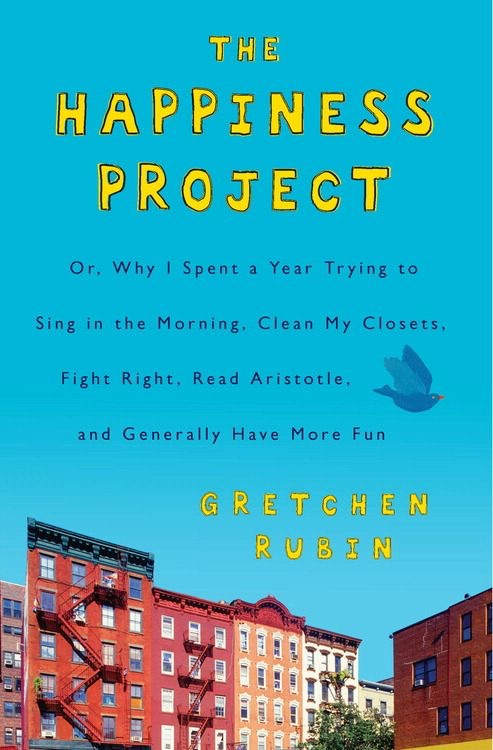
Better than before
≈ From memoryTrue wellness is not a destination of perfect balance, but a practice of intentional, consistent habits that align your daily actions with your deepest values.
In one sentence
Wellness is not a "fix" you apply to your life once; it is a continuous, intentional practice of building habits that honor your unique personality and values.
Why read this (and who it's for)
Most wellness advice fails because it treats everyone the same—telling the "introvert" to go to a loud party or the "overachiever" to just relax. This book is for anyone who feels exhausted by the "hustle" of self-improvement but finds no lasting results. It solves the problem of inconsistent effort by teaching you how to build a sustainable infrastructure for your life. After reading, you will be able to audit your current habits, identify which ones actually serve your goals, and design a personalized "wellness" plan that feels like a lifestyle, not a chore.
The big idea
Rubin argues that we often fail at wellness because we try to adopt habits that don't fit our "wiring." If you are a person who thrives on routine, a "spontaneous" wellness plan will fail you. If you are a person who needs high-intensity stimulation, a "calm" meditation practice might feel like a prison. The core thesis is that wellness is personal.
The book moves away from the "one-size-fits-all" model of wellness (e.g., "everyone should do yoga") and toward a model of intentionality. Rubin posits that we must look at our lives through the lens of our values: What do I actually care about? Is it career? Family? Creativity? Once you identify your core values, you can design habits that protect and nourish those specific things.
Finally, Rubin emphasizes the importance of consistency over intensity. We often try to "overhaul" our lives in a weekend, which leads to burnout. Instead, she argues for the "slow build"—the compounding interest of small, daily actions that eventually become so ingrained they no longer require willpower.
Key ideas
The Personality-Wellness Connection
What it is — Your personality type (e.g., introvert vs. extrovert, planner vs. spontaneous) dictates which wellness habits will actually stick. Why it matters — If you try to force a personality-mismatched habit, you will experience "friction," which leads to guilt and eventual abandonment of the habit. In the book — Rubin discusses how an introvert might find "wellness" in a quiet solo hike, while an extrovert might find it in a high-energy group fitness class.
Values-Based Living
What it is — Wellness is the byproduct of living in alignment with your core values. Why it matters — Without a "Why," habits become chores. When you know your "Why" (e.g., "I want to be a present mother"), the "How" (e.g., "I will go for a 15-minute walk daily") becomes much easier to sustain. In the book — She encourages readers to identify their "non-negotiables"—the things that, if removed, would make their lives feel empty.
The Power of Ritual
What it is — Rituals are the "scaffolding" of a good life; they are repeated actions that signal to your brain that it is time to transition. Why it matters — Rituals reduce decision fatigue. By automating certain parts of your day (like a morning coffee routine), you save mental energy for the hard stuff. In the book — Rubin highlights how rituals can anchor your day, such as a specific "shutdown" ritual at the end of the workday to prevent work from bleeding into evening time.
The "Slow Build" Philosophy
What it is — The belief that lasting change comes from the accumulation of small, manageable actions rather than radical, overnight transformations. Why it matters — Radical change is often unsustainable because it requires a massive spike in willpower. Small changes, once repeated, become "automatic." In the book — She advocates for the "1% better" approach—doing something slightly better today than you did yesterday.
The Importance of Environment
What it is — Your environment is often the invisible hand that shapes your behavior. Why it matters — It is much easier to change your surroundings than it is to change your willpower. If you want to eat better, put the fruit on the counter; if you want to read more, put the book on your pillow. In the book — Rubin suggests "designing" your space to make good habits the path of least resistance.
Frameworks & tools
The Values Alignment Audit
Use this to determine if your current wellness habits actually serve your life goals.
- Identify Core Values: Write down the 3–5 things that matter most to you (e.g., Connection, Growth, Peace, Adventure).
- Audit Current Habits: List your current daily/weekly habits (e.g., scrolling social media, 30-minute walks, checking emails at 10 PM).
- The Alignment Test: For each habit, ask: "Does this directly support one of my core values?"
- The Pruning: Identify habits that provide no value or actively detract from your values. Remove them.
- The Addition: Identify one small habit that would directly support a core value and schedule it into your calendar.
The Ritual Scaffolding Method
Use this to create "autopilot" transitions in your day.
- Identify Friction Points: Where do you struggle to start or stop a task? (e.g., "I can't stop working at 6 PM.")
- Choose a Trigger: What is a physical action you can do? (e.g., Closing the laptop, putting on a specific playlist).
- Define the Ritual: Create a 2-minute sequence of actions.
- Repeat: Do it every single day without fail until it feels like a reflex.
Memorable examples & stories
The "Over-Scheduled" Executive
Rubin describes the common trap of "productivity as a proxy for wellness," where people think checking off a to-do list is the same as being healthy. The lesson: Productivity is a tool, not a destination.
The Introvert's Social Battery
She shares how an introvert might feel drained by a "wellness" group class. The lesson: You must honor your energy levels; if a social activity leaves you exhausted rather than refreshed, it isn't "wellness" for you.
The "Perfect" Routine Fallacy
Rubin observes people who try to do a 10-step morning routine but give up after three days because they missed one step. The lesson: Consistency is the only metric that matters. A 2-minute habit you do every day beats a 60-minute habit you do once a week.
Key quotes
"Wellness is not a destination; it is a practice." (Paraphrased) Why it matters: It removes the pressure of "arriving" at a perfect body or mind and puts the focus on the daily work.
"Your habits should be a reflection of your values, not a reaction to your insecurities." (Paraphrased) Why it matters: It shifts the motivation from "I hate my body" to "I want to honor my life."
"The smallest change, repeated consistently, creates the greatest transformation." (Paraphrased) Why it matters: It validates the "slow build" and lowers the barrier to entry for starting.
How to apply it
This week
- The Values Audit: Spend 20 minutes writing down your top 3 values. Do not think about "wellness" yet; think about what makes your life feel meaningful.
- The Environment Tweak: Identify one "bad" habit (e.g., late-night snacking). Change your environment to make it harder (e.g., put the snacks in a high cabinet).
- The 2-Minute Ritual: Choose one transition (like ending your work day) and create a 2-minute physical ritual to signal the end of that "mode."
Ongoing
- The "Plus One" Rule: Every day, ask: "What is one tiny thing I can do today to be 1% better than yesterday?"
- The Weekly Review: Every Sunday, look at your calendar. Did your actions this week align with your values? If not, where did you drift?
- Environment Design: Regularly audit your physical space. Is your workspace set up for focus? Is your kitchen set up for nourishment?
Common pitfalls
- The "All or Nothing" Trap: Many readers will try to overhaul their entire life on a Monday. Rubin warns against this; if you try to change everything, you will change nothing.
- The Comparison Trap: Comparing your "Day 1" to someone else's "Year 10." Wellness is personal; your progress should be measured against your own past, not someone else's Instagram feed.
- Ignoring the "Why": People often adopt habits because they are "supposed" to (e.g., "I should run"). If the "Why" isn't personal, the habit will fail the moment you get tired.
Connects to
- Atomic Habits by James Clear: While Rubin focuses on the why and the personality of the habit, Clear provides the technical "how-to" of habit looping (Cue, Craving, Response, Reward).
- Essentialism by Greg McKeown: This complements Rubin's "Values-Based Living" by teaching you how to say "no" to the non-essential so you have the space to build your rituals.
If you remember only three things
- Wellness is personal; it must be tailored to your specific personality and values.
- Consistency beats intensity. A small, repeated action is more powerful than a sporadic, massive effort.
- Design your environment to make good habits the easiest choice.
Internalize it
-
Reflection questions
- If I stripped away all my "shoulds," what are the three things I actually care about most in my life?
- Which of my current habits are "performative" (done for others) versus "purposeful" (done for my own values)?
- Where in my daily routine do I feel the most friction? How can I change my environment to reduce that friction?
-
Flashcards Q: What is the primary reason most wellness habits fail? A: They are often "one-size-fits-all" and do not align with the individual's unique personality and values.
Q: What is the "Slow Build" philosophy? A: The idea that small, consistent actions repeated daily create compounding results that are more sustainable than radical, temporary changes.
Q: How does "Ritual Scaffolding" work? A: It involves creating small, repeated physical actions (rituals) to automate transitions between different parts of the day (e.g., work to home).
Q: What is the role of environment in habit formation? A: The environment should be designed to make the "good" habit the path of least resistance (e.g., placing healthy food in plain sight).
Q: How should you choose your wellness goals? A: By identifying your core values first, then selecting habits that directly support those values.
Fidelity note
I am highly confident in the core themes of this book: the emphasis on personality-based wellness, the importance of values, and the "slow build" approach. Rubin’s work is distinct because it rejects the "generic" wellness industry. However, because I am summarizing from memory, specific "rituals" or "exercises" mentioned in the book may be phrased slightly differently than my summaries. Readers should verify the specific "Values Audit" steps if they want the exact wording of her worksheets.