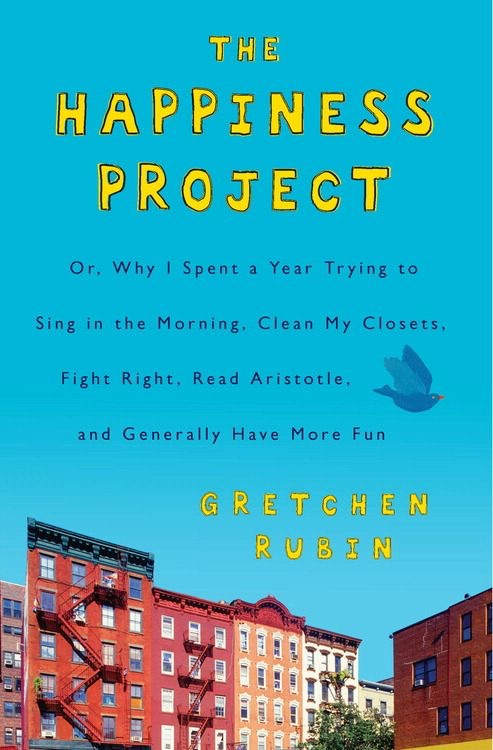
Happier at home
≈ From memoryA happy home is not a product of perfect aesthetics or effortless harmony, but of intentional boundaries, consistent routines, and the courageous prioritization of family connection over domestic perfection.
In one sentence
True domestic happiness is found by shifting the focus from "perfecting" the home to "living" in the home, which requires setting firm boundaries against the "more is more" culture of modern interior design and parenting.
Why read this (and who it's for)
This book is for the overwhelmed parent, the perfectionist homeowner, and the person who feels like their domestic life is a source of stress rather than a sanctuary. It solves the "exhaustion of the ideal"—the feeling that you are failing because your house doesn't look like a magazine spread or your kids aren't perfectly behaved. After reading, you will be able to audit your domestic obligations, ruthlessly prune unnecessary tasks, and establish "non-negotiable" rituals that protect your family's peace.
The big idea
Rubin argues that our modern obsession with "the perfect home" has become a trap. We treat our houses as trophies of our success rather than containers for our lives. This leads to a "performative" domesticity where we spend our time cleaning, decorating, and organizing for an imaginary audience (social media, guests, or our own internal critics) while the actual inhabitants of the home remain stressed and disconnected.
The core logic is simple: Space is finite, and energy is even more finite. If you try to do everything—have the perfect kitchen, the perfect backyard, the perfect educational curriculum, and the perfect social calendar—you will end up doing everything poorly and feeling miserable. Rubin advocates for a "less is more" philosophy where you choose a few "sacred" areas of your home and life to excel in, while intentionally letting other areas be "good enough" or even messy.
Key ideas
The "More is More" Trap
- What it is — The cultural pressure to maximize every square inch of our homes and every minute of our schedules.
- Why it matters — When we try to maximize everything, we dilute our joy and overextend our resources, leading to "decision fatigue" and resentment.
- In the book — Rubin discusses how we often over-clutter our homes with "stuff" we think we need, which actually creates more work (cleaning, organizing) and less room for living.
The Power of "Good Enough"
- What it is — The intentional decision to lower the bar on non-essential tasks to preserve energy for what truly matters.
- Why it matters — It liberates you from the "perfectionist's paralysis" where you can't enjoy a room because it isn't perfectly staged.
- In the book — She suggests that a "lived-in" house—with toys on the floor or a messy counter—is a sign of a happy, active family, not a failing household.
Boundaries as a Foundation for Peace
- What it is — Establishing clear "no" zones in your home, both physically and socially.
- Why it matters — Without boundaries, your home becomes a revolving door for other people's demands, leaving no room for your family's needs.
- In the book — Rubin emphasizes saying "no" to social obligations that drain you so that you can say "yes" to quiet time at home.
The Importance of Ritual over Routine
- What it is — Moving from "tasks" (things we have to do) to "rituals" (things we do to connect).
- Why it matters — Routines can become robotic; rituals infuse our daily actions with meaning and emotional connection.
- In the book — She highlights how a simple family dinner or a consistent bedtime story can become a sacred space of connection amidst a chaotic day.
The "Home as Sanctuary" Philosophy
- What it is — Re-centering the home as a place of rest and recovery rather than a project to be managed.
- Why it matters — If your home feels like a "to-do list" you can never finish, it ceases to be a sanctuary and becomes a source of anxiety.
- In the book — Rubin encourages readers to identify which rooms are for "rest" and to protect those spaces from clutter and obligations.
Frameworks & tools
The "Sacred Space" Audit
Use this to identify where your energy is being wasted and where your heart actually lies.
- Inventory: List every "project" currently occupying your home (e.g., the guest room renovation, the pantry organization, the backyard garden).
- The "Joy vs. Drain" Test: For each project, ask: "Does this bring me joy or peace when I look at it?" and "Does maintaining this drain my daily energy?"
- The Cut: Identify the projects that are "Drain" only. Commit to putting them on a "Not Now" list.
- The Sacred Three: Choose only three areas (e.g., the kitchen, the kids' playroom, and your bedroom) to be your "Sacred Spaces." These are the areas you will maintain and enjoy.
- The "Good Enough" List: For everything else, decide what "good enough" looks like (e.g., "The laundry can stay in the basket for 48 hours").
The Ritual Builder
To turn chores into connections, use this framework to design meaningful moments.
- Identify the Time: Pick a recurring time (e.g., 6:30 PM).
- Identify the Participants: Who needs to be there? (Usually, the core family).
- Define the "No-Go" Zone: What is forbidden during this time? (e.g., No phones, no TV, no talk of chores).
- The Connection Action: What is the intentional activity? (e.g., "High/Low" sharing, a specific board game, or a shared snack).
- Consistency Check: Commit to doing this for 21 days before evaluating if it's working.
Memorable examples & stories
The "Museum" House
Rubin describes the tragedy of a home that looks like a museum—beautiful, pristine, and utterly uninhabitable. It serves as a warning that aesthetic perfection often comes at the cost of emotional warmth. Lesson: A house is a tool for living, not a gallery for viewing.
The Over-Scheduled Child
She shares observations of children who are constantly moved from one extracurricular activity to the next, never having "down time" at home. Lesson: The best gift you can give a child is the freedom to be bored and the space to be themselves.
The "Guest Room" Trap
Rubin discusses the common habit of keeping a guest room perfectly staged for people who rarely visit, while the rest of the house feels cramped. Lesson: Prioritize the daily lived experience over the occasional visitor.
Key quotes
"A home should be a sanctuary, not a showroom." (Paraphrased) Why it matters: It shifts the goal from external validation to internal peace.
"The hardest thing to do is to say 'no' to a good thing so you can say 'yes' to a great thing." (Paraphrased) Why it matters: It highlights that many of our domestic "must-dos" are actually just "should-dos."
"A lived-in home is a happy home." (Paraphrased) Why it matters: It gives the reader permission to relax and stop apologizing for the mess of a real life.
How to apply it
This week
- The "One-Room" Rule: Choose one room in your house that is currently a source of stress. Clear it of everything except the essentials. Do not worry about "decorating" it yet; just make it functional and clear.
- The "No-Phone" Dinner: Commit to one meal this week where phones are put in a basket in another room. Focus entirely on the people at the table.
- The "Good Enough" Audit: Identify one chore you do daily that you hate. Decide what "good enough" looks like for that chore (e.g., "The dishes can stay in the sink overnight") and give yourself permission to do that instead.
Ongoing
- The Weekly Review: Every Sunday, look at your calendar. Identify one "extra" thing you can remove to create more space for family time.
- The Sanctuary Check: Once a month, walk through your home. Ask: "Does this space feel like a sanctuary?" If not, what is the one thing (clutter, a task, a person) that is blocking that feeling?
- Ritual over Routine: Ensure that at least one daily activity (like breakfast or bedtime) is treated as a ritual of connection rather than a logistical necessity.
Common pitfalls
- The "Organization" Trap: Many readers mistake organizing for simplifying. You can organize a mess, but that doesn't remove the mess. Rubin’s advice is to remove the mess, not just find a prettier bin for it.
- The Perfectionist's Interpretation: A perfectionist might read "Good Enough" and think they need to find a new standard of perfection. You must be careful to let "Good Enough" actually mean "lower standards."
- The "All-or-Nothing" Fallacy: Some may try to overhaul their entire home in a weekend. This leads to burnout. The book's power lies in the slow, intentional pruning of obligations.
Connects to
- "Essentialism" by Greg McKeown: Extends the idea of "less but better" into a broader life philosophy.
- "The Lazy Genius" by KC Davis: Complements Rubin’s ideas on domestic boundaries and "low-energy" household management.
- "Atomic Habits" by James Clear: Provides the mechanical framework for actually making the "Rituals" and "Good Enough" standards stick.
If you remember only three things
- Prioritize People over Projects: Your home is a container for your relationships, not a trophy for your housekeeping.
- The Power of "No": Saying no to social obligations and "should-do" chores is the only way to protect your family's peace.
- Good Enough is Good Enough: Lowering the bar on non-essential tasks is a strategic move to preserve your energy for what truly matters.
Internalize it
-
Reflection questions
- If I stopped trying to make my home look "perfect," what would I do with the extra time and energy I gained?
- Which room in my house currently feels like a "to-do list" rather than a sanctuary? How can I reclaim it?
- What is one "good" thing I am currently doing (a hobby, a social commitment, a household project) that I need to stop doing to make room for a "great" thing?
- When was the last time I felt truly relaxed in my own home? What was I doing, and what was the environment like?
-
Flashcards Q: What is the "More is More" trap? A: The cultural pressure to maximize every inch of our homes and every minute of our schedules, which leads to decision fatigue and a lack of joy.
Q: What is the difference between a routine and a ritual? A: A routine is a task performed for efficiency; a ritual is an intentional action performed to create connection and meaning.
Q: What is the "Sacred Space" Audit? A: A process of identifying which areas of the home are essential for peace and choosing to prioritize them while letting other areas be "good enough."
Q: How does Rubin define a "lived-in" home? A: A home where the mess of daily life (toys, unfolded laundry) is accepted as a sign of a happy, active family rather than a failure of housekeeping.
Q: What is the primary goal of saying "no" to social obligations? A: To protect the boundaries of the home and ensure there is space for the family's needs and rest.
Q: What is the "Good Enough" principle? A: The intentional decision to lower standards on non-essential tasks to preserve energy and mental clarity for what truly matters.
Fidelity note
This summary is based on the core principles of Gretchen Rubin's "Happier at Home." I am highly confident in the "Sacred Space" and "Good Enough" frameworks as they are the pillars of her domestic philosophy. I have synthesized her advice on boundaries and rituals, which are consistent with her broader body of work (such as The Smart Things Checklist and How to Do It All). Readers should note that Rubin's tone is often conversational and anecdotal; while the methods are clear, the feeling of the book is one of permission-giving for the overwhelmed mother.