Talking back
≈ From memoryTrue liberation and psychological wholeness require the courage to 'talk back' to the internal voices of oppression—specifically the internalized voices of white supremacy, patriarchy, and capitalism.
In one sentence
We cannot achieve true freedom until we identify and dismantle the internalized voices of authority—the "internalized oppressor"—that tell us who we are, what we can do, and what we deserve.
Why read this (and who it's for)
This book addresses the psychological "imprint" of systemic oppression. It is for anyone who feels a sense of self-doubt, "imposter syndrome," or a strange, internalized shame that doesn't seem to belong to them. It solves the problem of internalized oppression: the way we become our own worst enemies by adopting the prejudices of the systems that marginalize us. After reading, you will be able to distinguish between your own authentic desires and the "ghosts" of societal expectations, allowing you to reclaim your agency.
The big idea
Hooks argues that oppression is not just an external political reality; it is a psychological state. When a group is systematically marginalized, the members of that group often internalize the very stereotypes used to oppress them. This creates a "split" in the psyche: the oppressed person begins to see themselves through the eyes of the oppressor.
The central thesis is that "talking back" is a revolutionary act of self-preservation. It is the process of identifying the "voices" in our heads—the ones that say we aren't smart enough, beautiful enough, or worthy of success—and recognizing them as external impositions. By naming these voices as products of white supremacy, patriarchy, and capitalism, we strip them of their authority. We move from being a "subject" of a system to an "agent" of our own life.
Key ideas
The Internalized Oppressor
- What it is — The process by which marginalized people accept the prejudices of the dominant culture as truth. It is the "inner critic" that echoes the systemic biases of the outside world.
- Why it matters — If you don't recognize this voice as an external imposition, you will continue to sabotage your own growth, believing your limitations are inherent flaws rather than social constructs.
- In the book — Hooks discusses how women, for example, may internalize the idea that they are "naturally" less capable than men, leading to a self-fulfilling prophecy of restricted ambition.
The Role of Language in Oppression
- What it is — Language is not a neutral tool; it is a container for power. The words we use to describe ourselves and others can either reinforce our bondage or provide the tools for our liberation.
- Why it matters — To change your reality, you must first change your vocabulary. If you use the language of the oppressor to describe your own potential, you remain trapped in their framework.
- In the book — Hooks emphasizes the importance of reclaiming words and creating a "counter-language" that honors the dignity of the marginalized.
The Architecture of Patriarchy
- What it is — A system where power is distributed based on gender, specifically favoring men and devaluing women. It is not just a social policy; it is a psychological blueprint for how we view authority and worth.
- Why it matters — Understanding patriarchy helps you see why you might feel "guilty" for being assertive or "wrong" for seeking power. It externalizes the source of that guilt.
- In the book — She explores how patriarchal structures dictate the roles women are expected to play, often forcing them into a cycle of seeking validation from men.
The Impact of White Supremacy
- What it is — A systemic hierarchy that places whiteness at the top of all social, economic, and psychological values. It functions as a "master narrative" that defines what is "normal" or "good."
- Why it matters — It creates a psychological standard of "whiteness" that people of color are forced to measure themselves against, often leading to a sense of inadequacy that is actually a byproduct of a rigged system.
- In the book — Hooks illustrates how white supremacy isn't just about skin color; it's a cultural and psychological framework that shapes our very perceptions of beauty, intelligence, and morality.
The Necessity of Community
- What it is — The antidote to internalized oppression is the collective. We cannot "think" our way out of oppression alone; we need a community that validates our worth.
- Why it matters — Isolation makes the internal critic louder. Community provides a "mirror" that reflects our true selves back to us, countering the distorted images of the oppressor.
- In the book — Hooks argues that collective liberation is the only way to sustain the psychological work of "talking back."
Frameworks & tools
The "Talking Back" Audit
Use this to identify where the "oppressor's voice" has taken up residence in your internal monologue.
- Identify the Critic: Write down a recurring negative thought you have about yourself (e.g., "I'm not smart enough to lead this project").
- Trace the Source: Ask, "Who told me this?" or "Where did this idea come from?" (e.g., Was it a teacher? A parent? A media stereotype?).
- Categorize the Oppression: Determine which system this voice belongs to (Patriarchy? White Supremacy? Capitalism? Classism?).
- Externalize the Voice: Instead of saying "I am [negative trait]," say "The voice of [system] is telling me I am [negative trait]."
- The Counter-Statement: Write a response that asserts your agency (e.g., "I am capable of leading this project, and my worth is not defined by someone else's limitations").
The Community Mirror
A practice for maintaining psychological health in oppressive environments.
- Identify a "Safe" Circle: Find 2-3 people who understand your specific cultural and social context.
- Vulnerability Sharing: Share the "internalized" doubts you are struggling with.
- Validation: Have the group reflect back your strengths and your inherent value.
- Repetition: Do this regularly to "re-wire" your internal narrative.
Memorable examples & stories
The "Good Girl" Trope
Hooks describes how women are socialized to be "good" by being compliant and self-sacrificing. This creates a psychological trap where women feel guilty for pursuing their own interests. Lesson: Compliance is often a survival strategy, not a personality trait.
The "Model Minority" Myth
While not always the primary focus, the concept of internalized success metrics—where marginalized groups are pressured to succeed only on the oppressor's terms—highlights how capitalism and white supremacy intersect. Lesson: Success defined by the oppressor is a hollow victory.
The Internalized Self-Hate
Hooks speaks about the profound pain of people who have been taught to hate their own hair, skin, or bodies. She frames this not as a personal failure, but as a systemic wound. Lesson: Your self-consciousness is often a map of the world's prejudices.
Key quotes
"The most important thing we can do is to recognize that the voices in our heads are often not our own." (Paraphrased) Why it matters: It establishes the core premise of externalizing the internal critic.
"We must learn to talk back to the voices of oppression that tell us we are less than." (Paraphrased) Why it matters: It frames the psychological work as an act of rebellion.
"Liberation is not just a political goal; it is a psychological necessity." (Paraphrased) Why it matters: It elevates the stakes from "policy change" to "soul-saving."
How to apply it
This week
- The "Voice Labeling" Exercise: Every time you think a self-deprecating thought, stop and say out loud: "That is the voice of [Patriarchy/Capitalism/White Supremacy] talking."
- Audit your Media: Identify one news source, social media account, or show that makes you feel "less than." Unfollow or mute it for 7 days.
- Identify one "Permission" point: Write down one thing you want to do but feel "guilty" about. Ask yourself: "Who would I be doing this if I didn't care about being 'good' or 'compliant'?"
Ongoing
- Community Building: Schedule a monthly "check-in" with a friend to discuss internal barriers and celebrate wins.
- Language Reframing: Actively replace "I can't" (which implies a lack of ability) with "I am not allowed to" (which identifies a systemic barrier).
- Daily Affirmation of Agency: Spend 2 minutes each morning acknowledging your own inherent worth, independent of your productivity or social status.
Common pitfalls
- Individualizing Systemic Issues: A common mistake is thinking that "self-love" is a simple, private feeling. Hooks insists that self-love is a political act of resisting a system designed to break you.
- The "Toxic Positivity" Trap: "Talking back" isn't about ignoring the reality of oppression; it's about refusing to internalize it. Don't mistake "ignoring the problem" for "overcoming the internal critic."
- Isolation: Trying to do this alone is much harder. The reader might feel like they are "going crazy" because the internal critic is so loud. The book emphasizes that this is a collective struggle.
Connects to
- The Body Keeps the Score (Bessel van der Kolk): For a more clinical, neurobiological look at how trauma and oppression are stored in the body.
- The Invisible Archive of Oppression (Audre Lorde): For a deeper dive into how history and identity intersect with our internal lives.
- Quiet Liberation (various): Any work on "internal family systems" (IFS) can provide a psychological framework for identifying the "parts" of ourselves that have internalized the oppressor's voice.
If you remember only three things
- Oppression is psychological: It lives in the way you talk to yourself.
- The "Internal Critic" is a ghost: It is the internalized voice of a system, not your true self.
- Talking back is a revolutionary act: Identifying and naming these voices is the first step toward true autonomy.
Internalize it
-
Reflection questions
- Which "rules" for success or behavior do I follow that I never actually chose for myself?
- When I feel "imposter syndrome," what specific system (patriarchy, capitalism, etc.) is that voice trying to uphold?
- How would I behave today if I were completely certain that my worth was not tied to my productivity?
- Who are the people in my life who help me see my true self? How can I lean on them more?
-
Flashcards Q: What is the primary goal of "talking back"? A: To identify and dismantle the internalized voices of oppression (white supremacy, patriarchy, capitalism) that dictate our self-worth.
Q: Why is it important to recognize that the "internal critic" is an external imposition? A: Because it allows you to externalize the source of your self-doubt, transforming it from a personal flaw into a systemic injustice you can resist.
Q: How does patriarchy affect a woman's internal psychology? A: It creates a system where women are socialized to be compliant and self-sacrificing, often leading to guilt when they pursue their own ambitions.
Q: What is the role of community in the process of "talking back"? A: Community acts as a "mirror," providing validation and a collective space to resist the isolating effects of internalized oppression.
Q: What is the difference between "self-help" and "talking back"? A: Self-help often focuses on changing the individual to fit the world; "talking back" focuses on identifying how the world has distorted the individual's self-perception.
Fidelity note
This summary is grounded in the core psychological and sociological arguments of bell hooks' work, specifically her focus on the "internalized oppressor." Because hooks often weaves together personal memoir, academic theory, and activism, some of the specific "stories" may be summarized as themes rather than specific anecdotes to ensure the core psychological principles remain the focus. The reader should verify the specific cultural critiques (patriarchy, white supremacy) against the text to see how she applies them to her specific lived experiences.
More from bell hooks
 Ain't I a Womanbell hooks
 All About Lovebell hooks
 Belongingbell hooks
 Bone Blackbell hooks
 Breaking breadbell hooks
 Communionbell hooks
 Feminism Is for Everybodybell hooks
 Feminist theorybell hooks
 Plantation Culturebell hooks
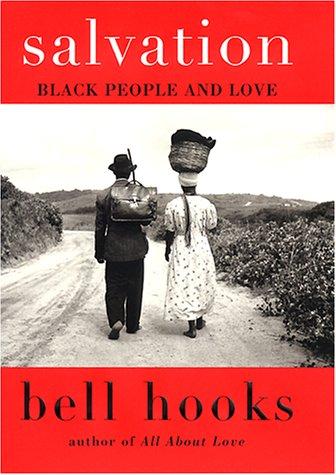 Salvationbell hooks
 Teaching Communitybell hooks
 Teaching critical thinkingbell hooks