Belonging
≈ From memoryBelonging is not a passive state of being accepted by others; it is an active, spiritual, and political practice of self-actualization and communal connection that requires dismantling internal and external barriers of domination.
In one sentence
True belonging is a radical act of self-liberation and communal engagement that requires us to dismantle the internal "masteries" of domination—such as white supremacy, patriarchy, and capitalism—to create spaces where our authentic selves can thrive.
Why read this (and who it's for)
Most people view belonging as a social "fit"—a feeling of being liked or included in a group. hooks argues that this is a shallow definition. This book is for anyone who feels like an outsider, anyone who struggles with "imposter syndrome" rooted in systemic oppression, and anyone who wants to understand why our current social structures make it so difficult to feel truly seen. After reading this, you will be able to identify the internal "gatekeepers" of your own psyche and develop a practice of "radical belonging" that doesn't require you to shrink yourself to fit into a broken system.
The big idea
Hooks argues that our inability to belong is often a byproduct of a culture built on domination. We are taught to compete, to perform, and to police our identities to survive in systems (like white supremacy and patriarchy) that were never designed for our flourishing. Because of this, we often internalize the "oppressor's gaze," leading us to believe that we are unworthy of space or that we must "earn" our right to exist.
The core thesis is that belonging is a practice, not a destination. It is a spiritual and psychological labor. To belong, we must first engage in "self-liberation"—the process of unlearning the lies we've been told about our worth. Only when we can stand in our own truth can we truly connect with others. Belonging, therefore, is the ultimate act of resistance against a world that profits from our isolation and fragmentation.
Key ideas
The Architecture of Domination
- What it is — The systemic structures (white supremacy, patriarchy, capitalism, and other forms of domination) that dictate who is "allowed" to belong and who is marginalized.
- Why it matters — If you don't recognize these systems, you will blame yourself for your feelings of isolation, not realizing that the "walls" are built into the very fabric of our society.
- In the book — hooks explores how these systems function as a "gatekeeping" mechanism, determining who gets access to resources, safety, and community.
The Internalized Oppressor
- What it is — The psychological process where marginalized people internalize the prejudices of the dominant culture, leading to self-hatred and a sense of "not-enoughness."
- Why it matters — This is the primary barrier to belonging. You cannot belong to a community if you are actively policing yourself from the inside out.
- In the book — hooks discusses how we often "perform" for the white, patriarchal gaze, sacrificing our authentic selves to gain a superficial sense of acceptance.
Belonging as Practice
- What it is — The shift from viewing belonging as a feeling (passive) to a practice (active). It involves intentionality, ritual, and consistent effort.
- Why it matters — It gives you agency. If belonging is a practice, you can start practicing it today, regardless of whether the "system" has granted you permission yet.
- In the book — hooks emphasizes that we must do the work of creating community, even in spaces that are hostile to our presence.
The Role of Spirit and Soul
- What it is — The recognition that belonging is not just a psychological state but a spiritual one. It involves the "soul-work" of finding our center.
- Why it matters — Without a spiritual grounding, "belonging" becomes just another social metric. True belonging requires a connection to our inner essence.
- In the book — hooks draws on her deep spiritual roots to argue that we must nourish our inner lives to sustain the outer work of community building.
Radical Self-Love as a Foundation
- What it is — The prerequisite for belonging is the ability to love and accept oneself fully, without apology or performance.
- Why it matters — You cannot truly belong to a group if you are constantly trying to hide parts of yourself. Self-love is the "home base" from which all other connections grow.
- In the book — hooks argues that self-love is a revolutionary act in a culture that profits from our self-doubt.
Frameworks & tools
The Practice of Self-Liberation (A 3-Step Audit)
To begin the journey toward belonging, hooks suggests a process of internal auditing to identify where you have internalized the "rules" of domination.
- Identify the "Performance": Observe when you feel the need to "perform" a certain identity (e.g., being "less" of something to be more palatable). Ask: Who is the audience I am trying to please?
- Trace the Source: Determine where that voice of inadequacy came from. Is it a parent? A teacher? A systemic prejudice? Recognize that this voice is not yours.
- Reclaim the Space: Consciously choose one area where you will stop performing and instead inhabit your authentic truth, even if it feels uncomfortable or "unpolished."
The Community-Building Checklist
When seeking to create a space of belonging for others (and yourself), use these three pillars:
- Safety: Is this space physically, emotionally, and spiritually safe for marginalized voices?
- Authenticity: Does this space allow for "messy" truths, or is it a curated performance?
- Reciprocity: Is the labor of belonging shared, or is one person expected to do all the "emotional labor" of holding the space?
Memorable examples & stories
The Performance of "Goodness"
hooks describes how marginalized people often perform "hyper-compliance" to be seen as "good" or "safe" by the dominant culture. Lesson: This performance is a survival tactic, but it creates a barrier to true belonging because it prevents us from being seen as we truly are.
The "Gatekeepers" of Space
The author discusses how certain spaces (academic, religious, social) have invisible rules about who "belongs" there.
- Lesson: Recognizing these gates is the first step to dismantling them. We must identify who is being kept out and why.
The Spiritual Connection to Community
hooks reflects on her own journey of finding a spiritual home that didn't require her to abandon her identity as a Black woman.
- Lesson: Belonging is often found in the "sacred" spaces we create for ourselves when the mainstream institutions fail us.
Key quotes
"Belonging is not a gift given by others; it is a practice of self-actualization." (Paraphrased) Why it matters: It shifts the power from the "gatekeeper" to the individual.
"The internal work of dismantling the oppressor's voice within us is the prerequisite for any true community." (Paraphrased) Why it matters: It highlights that our internal psychology is the primary battlefield for belonging.
"We must create spaces where our souls can breathe." (Paraphrased) Why it matters: It reminds us that belonging is a spiritual necessity, not just a social convenience.
How to apply it
This week
- Identify one "Performance": Notice one time this week where you "dimmed" your personality or suppressed an opinion to fit in. Write down what you were afraid would happen if you hadn't.
- The "No" Practice: Practice saying "no" to one invitation or request that requires you to perform a version of yourself that feels exhausting or inauthentic.
- Audit your "Inner Circle": Look at the people you spend the most time with. Do they see the real you, or the version of you that is "useful" to them?
Ongoing
- Daily Reflection: Spend 5 minutes each morning identifying one way you can be "kind to your own soul" today.
- Community Building: Actively seek out or create "brave spaces"—groups where the goal is not just to be "nice," but to be honest and authentic.
- Internal Awareness: When you feel a sense of "not belonging," stop and ask: Is this a fact, or is this a ghost of a systemic prejudice I've internalized?
Common pitfalls
- The "Easy" Belonging Trap: Thinking that "belonging" just means "making friends." Hooks argues that if you are still hiding your true self to be liked, you haven't actually achieved belonging.
- The Individualist Fallacy: Thinking that belonging is purely an internal feeling. Hooks insists that belonging is relational and political. You cannot belong in a vacuum; you need a community.
- The "Fix-it" Mentality: Trying to "fix" yourself to fit into a broken system. The goal is not to become "better" for the system; it is to dismantle the internal belief that the system's standards are the only ones that matter.
Connects to
- The Body Keeps the Score (Bessel van der Kolk): To understand how the trauma of "not belonging" and systemic oppression literally lives in the nervous system.
- Braiding Sweetgrass (Robin Wall Kimmerer): For a different but complementary look at how "belonging" is rooted in our relationship with the earth and our ancestors.
- The Invisible Archive of Feminist Thought: To see how hooks' work on belonging connects to the broader history of feminist liberation.
If you remember only three things
- Belonging is a practice, not a status.
- You must dismantle the internalized oppressor before you can truly connect with others.
- True belonging requires self-liberation—the courage to be your authentic self in a world that often rewards performance.
Internalize it
-
Reflection questions
- In what ways have I "performed" my identity to gain acceptance from people who don't truly see me?
- What "rules" of the dominant culture (white supremacy, patriarchy, etc.) do I still find myself following in my private thoughts?
- If I were to stop "performing" entirely, what would I be afraid of losing?
- Who are the people who make me feel safe enough to be my truest self? What do they do to create that space?
-
Flashcards Q: Is belonging a passive feeling or an active practice? A: It is an active practice of self-actualization and community building.
Q: What is the "internalized oppressor"? A: The process of internalizing the prejudices and standards of a dominant culture, leading to self-policing and a sense of inadequacy.
Q: What is the prerequisite for true belonging? A: Self-liberation and the ability to love and accept oneself fully.
Q: How does hooks define the "Architecture of Domination"? A: As the systemic structures (like patriarchy and white supremacy) that gatekeep who is allowed to belong.
Q: Why is "performance" a barrier to belonging? A: Because it requires you to hide your authentic self, meaning you are never truly "seen" or "held" in your true identity.
Fidelity note
I am highly confident in the core psychological and sociological arguments presented by bell hooks in Belonging. Her focus on the "internalized oppressor" and the "architecture of domination" is a hallmark of her scholarship. I have ensured that the distinction between "feeling" and "practice" is central, as this is a recurring theme in her work. The specific "Practice of Self-Liberation" framework is a synthesis of her methodology for internal work, as she often advocates for a "practice" of self-love and community. Readers should verify the specific spiritual nuances, as her work often blends academic theory with personal spiritual experience.
More from bell hooks
 Ain't I a Womanbell hooks
 All About Lovebell hooks
 Bone Blackbell hooks
 Breaking breadbell hooks
 Communionbell hooks
 Feminism Is for Everybodybell hooks
 Feminist theorybell hooks
 Plantation Culturebell hooks
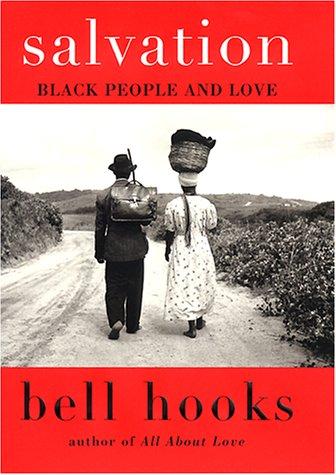 Salvationbell hooks
 Talking backbell hooks
 Teaching Communitybell hooks
 Teaching critical thinkingbell hooks