All About Love
≈ From memoryLove is not a feeling we fall into, but a disciplined practice of will, attention, and action that requires the dismantling of our internal and external domination.
In one sentence
Love is an active verb and a spiritual practice of "will" that requires us to acknowledge our capacity for domination and choose, instead, to cultivate a life of attention, honesty, and community.
Why read this (and who it's for)
Most people treat love as a byproduct of chemistry or a "spark" that happens to them. hooks argues that this view leaves us powerless and prone to repeating cycles of abuse and isolation. This book is for anyone who feels "broken" in their relationships, anyone who struggles with anger or self-hatred, and anyone who wants to understand how our cultural structures (racism, sexism, capitalism) distort our ability to love. After reading, you will be able to identify the "domination" in your own inner life and replace it with intentional practices of care.
The big idea
The central thesis of All About Love is that love is a practice, not a feeling. We have been conditioned to believe that love is something we "fall into" or "find," which places the agency outside of ourselves. Hooks argues that because love is a practice, it can be learned, cultivated, and disciplined. It is a spiritual and ethical commitment to the growth of the self and the other.
Hooks argues that our inability to love is often rooted in our inability to manage our own internal "domination." We are socialized into systems (like white supremacy and patriarchy) that reward aggression and competition. Consequently, we internalize these as "self-protection," but they actually act as barriers to true intimacy. To love, we must first engage in a rigorous "self-work" to identify where we are seeking power over others—or ourselves—and consciously choose to replace that power with attention.
Key ideas
Love as an Action, Not a Feeling
- What it is — Love is a "will" and a "practice." It is the active choice to show up, to listen, and to act in ways that foster the growth of another person and yourself.
- Why it matters — If love is a feeling, you are a victim of your emotions. If love is an action, you are the architect of your relationships. It gives you agency to build a life of meaning even when the "feeling" of romance is quiet.
- In the book — hooks contrasts "romantic love" (the Hollywood ideal) with "love as a practice," noting that the former is often a fantasy of consumption, while the latter is the actual work of staying present.
The Role of Domination
- What it is — Domination is the impulse to control, to own, and to exert power over others. It is the default mode of many of our social institutions (and our private thoughts).
- Why it matters — We cannot love while we are seeking to dominate. Domination is the opposite of love because it seeks to diminish the other to serve the self. To love, we must recognize how we use power to keep people at a distance.
- In the book — hooks explores how we dominate ourselves through self-criticism and "inner voices" that mirror the oppressive systems of the outside world.
Attention as a Form of Love
- What it is — Attention is the act of truly seeing and hearing another person without the immediate goal of extracting something from them.
- Why it matters — In a world of constant distraction, giving someone your full attention is a radical act of love. It creates a space where the other person can truly exist.
- In the book — hooks argues that many of our "loving" acts are actually performative; true love requires the "quiet" of attention, which is often uncomfortable because it requires us to be present with the reality of the other.
The Importance of Community
- What it is — Love is not just a private transaction between two people; it is a communal practice.
- Why it matters — We are social creatures. If we only love in isolation, we remain trapped in our own egos. Community provides the "scaffolding" for love to grow.
- In the book — hooks emphasizes that our capacity to love is tied to our ability to belong to a community that supports our growth and holds us accountable.
Self-Love as a Foundation
- What it is — You cannot love others effectively if you do not have a practice of loving yourself.
- Why it matters — Without self-love, we seek to fill our internal voids with others, which leads to dependency and, eventually, resentment.
- In the book — hooks describes self-love as a "practice of self-care" that involves identifying the ways we treat ourselves poorly and actively choosing to be kinder to our own spirits.
The Connection Between Love and Spirituality
- What it is — Love is a spiritual practice that connects us to something larger than our individual selves.
- Why it matters — When love is spiritual, it becomes a way of life, a way of perceiving the world, and a way of relating to the divine/universal.
- In the book — hooks argues that love is a "spiritual discipline" that allows us to transcend our petty, ego-driven desires.
Frameworks & tools
The Practice of Attention
To move from "feeling" to "doing," hooks suggests a framework of intentional presence.
- Silence the Internal Noise: Before engaging with another, acknowledge your own internal distractions (your to-do list, your judgments, your insecurities).
- Active Listening: Listen not to "respond," but to "understand." This means waiting until the other person is finished before formulating your next thought.
- Presence: Be physically and mentally present. Put away the phone, make eye contact, and allow the other person to occupy the space.
- Reflection: After the interaction, ask: "Did I see them, or did I see my needs reflected in them?"
The Domination Audit
Use this to identify where you are seeking power instead of connection.
- Identify the Impulse: When you feel angry, defensive, or jealous, ask: "What power am I trying to gain here?"
- Trace the Source: Is this a habit of domination you learned from your family, your job, or your culture?
- The Pivot: Instead of acting on the impulse to control, ask: "What would a loving action look like in this moment?"
- The Action: Choose a response that prioritizes the other's dignity over your own need for control.
Memorable examples & stories
The "Romantic" Illusion
hooks describes how our culture sells us a "consumptive" model of love—where we "find" a partner like a product. Lesson: This prevents us from doing the actual work of building a relationship.
The Internalized Oppressor
hooks discusses how marginalized people often internalize the voices of their oppressors, leading to a lack of self-love. Lesson: Self-love is a revolutionary act of reclaiming your own identity from a system that wants to diminish you.
The Community of Practice
hooks highlights how communal spaces (like neighborhoods or shared spiritual practices) provide the "soil" for love to grow. Lesson: Love is not a vacuum; it requires a community to sustain and reflect it.
Key quotes
"Love is an act of will—largely a spiritual practice." Why it matters: It shifts the responsibility of love from "luck" to "discipline."
"The practice of love is a practice of attention." (Paraphrased) Why it matters: It defines the primary tool of love as the ability to truly see another.
"Domination is the opposite of love." (Paraphrased) Why it matters: It identifies the core obstacle to intimacy as the desire for control.
"Love is not a feeling... it is a practice of the will." (Paraphrased) Why it matters: It reinforces that love is a choice we make every single day.
How to apply it
This week
- Practice Active Listening: In one conversation today, do not interrupt and do not think about your rebuttal. Simply listen until they are finished, then summarize what they said before you speak.
- The "No-Control" Challenge: Identify one situation where you usually try to control the outcome (e.g., how a coworker reacts to a task). Practice letting go of the control and observing the situation instead.
Ongoing
- The Daily Attention Check: Spend 5 minutes a day in silence, practicing "presence" without any distractions (no phone, no music, no goals).
- The Domination Audit: When you feel a surge of anger or irritation, pause and ask: "Is this a desire for power/control, or a genuine need?"
Common pitfalls
- The "Feeling" Trap: Many readers will still try to wait for a "feeling" of love before they act. Hooks insists that the action precedes the feeling.
- The Self-Help Trap: It is easy to read this as a "how-to" for dating. It is not. It is a philosophical and spiritual overhaul of how you view your own soul and your place in the world.
- The Individualist Trap: One might think this is just about "me and my partner." Hooks is clear that love is inextricably tied to community and the dismantling of systemic oppression.
Connects to
- "The Capacity to Receive" by bell hooks: Explores the other side of the love coin—how we allow ourselves to be loved and supported.
- "The Second Sex" by Simone de Beauvoir: For a foundational look at how social structures (specifically gender) shape our identities and our capacity for connection.
- "Quiet" by Susan Cain: While not about love, it shares the theme of the power of "presence" and the internal work of listening.
If you remember only three things
- Love is a practice of the will, not a feeling you fall into.
- Domination (the desire for control) is the primary barrier to true love.
- Attention is the fundamental tool of love; to love is to truly see.
Internalize it
- Reflection questions
- In what ways do I currently use "domination" (control, criticism, manipulation) to protect myself in my relationships?
- How would my relationships change if I stopped looking for a "spark" and started looking for "opportunities for attention"?
- What "internalized voices" of oppression am I currently allowing to dictate how I view my own worth?
- Flashcards Q: Is love a feeling or a practice? A: Love is a practice of the will and a spiritual discipline. Q: What is the opposite of love according to hooks? A: Domination (the impulse to control and own). Q: What is the primary tool of love? A: Attention (the act of truly seeing and hearing another). Q: Why is self-love important for loving others? A: Without self-love, we seek to fill internal voids with others, leading to dependency and resentment. Q: How does community relate to love? A: Love is a communal practice; we need a community to provide the "scaffolding" for love to grow.
Fidelity note
This summary is grounded in the core philosophical arguments of All About Love. I am confident in the definitions of "domination," "attention," and "love as practice." Because hooks' work is deeply spiritual and poetic, some of the nuances of her specific prose may be compressed for clarity. Readers should verify the specific "spiritual" nuances if they are seeking a purely academic analysis of her theological underpinnings.
More from bell hooks
 Ain't I a Womanbell hooks
 Belongingbell hooks
 Bone Blackbell hooks
 Breaking breadbell hooks
 Communionbell hooks
 Feminism Is for Everybodybell hooks
 Feminist theorybell hooks
 Plantation Culturebell hooks
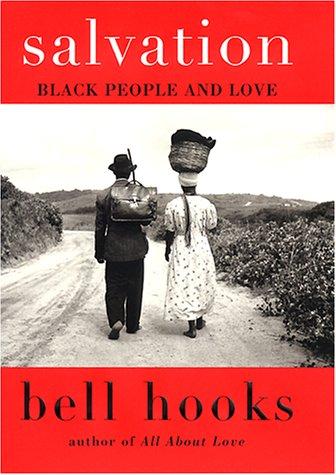 Salvationbell hooks
 Talking backbell hooks
 Teaching Communitybell hooks
 Teaching critical thinkingbell hooks