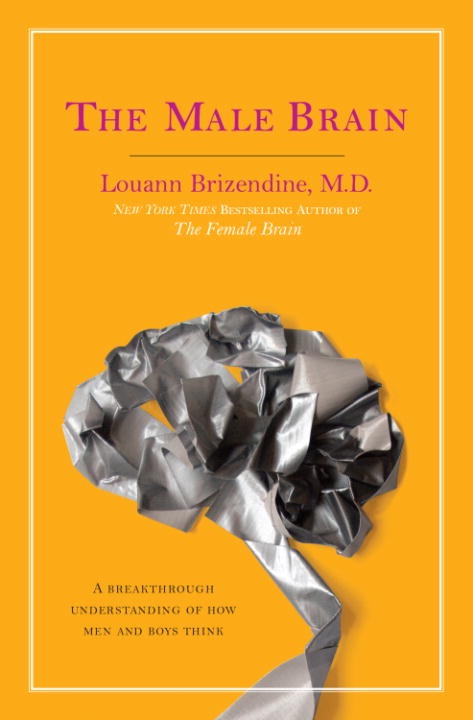
The Female Brain
≈ From memoryWomen’s brains are biologically wired for social connection, verbal communication, and emotional nuance, offering unique cognitive strengths that can be harnessed for leadership and personal fulfillment.
In one sentence
The female brain is biologically distinct from the male brain, characterized by a higher density of gray matter in areas related to language and empathy, and a more active limbic system that prioritizes social cohesion and emotional intelligence.
Why read this (and who it's for)
This book is for anyone—regardless of gender—who wants to understand the biological "why" behind human behavior. It solves the frustration of feeling "too emotional" or "overly sensitive" by providing a neurological framework for these experiences.
By reading this, you will:
- Understand the neurological basis for female communication styles.
- Learn why women often experience higher levels of anxiety and how to manage it.
- Recognize the "superpowers" of the female brain, such as multi-tasking and empathetic leadership.
- Gain a roadmap for using verbal communication to regulate emotions and build stronger social bonds.
The big idea
Brizendine argues that the differences between men and women are not merely social constructs or products of upbringing; they are rooted in biology and evolution. Because women have historically played central roles in social bonding and nurturing, the female brain evolved to be a "social brain." This means the brain is wired to prioritize relational harmony, verbal nuance, and the processing of emotional data.
The logic follows a clear path: Evolution favored women who could navigate complex social hierarchies and maintain community bonds. Consequently, the female brain developed a more robust limbic system (the emotional center) and higher gray matter density in areas associated with language and empathy. While this can lead to challenges—such as a higher predisposition to anxiety or "over-thinking"—it also provides women with an unparalleled ability to read people, communicate complex ideas, and foster deep, lasting connections.
Key ideas
The Verbal Advantage
What it is — Women’s brains are more efficient at processing language and verbal communication. They are often better at "multi-channel" communication, which means simultaneously processing words, tone, and body language. Why it matters — If you understand that verbalizing feelings is a biological necessity for women, you can stop viewing "talking things out" as a waste of time and start seeing it as a vital cognitive processing tool. In the book — Brizendine highlights how women are often more adept at identifying the subtle nuances in a conversation, allowing them to navigate social complexities that others might miss.
The Emotional Processing Center
What it is — The female brain typically has a more active limbic system. This system governs emotions, memories, and behaviors. Women tend to process emotional information more deeply and rapidly than men. Why it matters — This explains why women may feel emotions more intensely. It isn't a "weakness"; it is a high-speed processing system for social and environmental data. In the book — The author explains that because women are more attuned to emotional cues, they are often better at "reading the room" and anticipating the needs of others.
The Social Brain
What it is — Women are biologically wired to prioritize "we" over "I." The female brain is designed to maintain social harmony and build community. Why it matters — This is the foundation of female leadership and community building. It means women often excel in roles that require collaboration, empathy, and the management of diverse personalities. In the book — Brizendine discusses how women often act as the "social glue" in families and workplaces, a role that is reinforced by their brain's architecture.
The Amygdala and Anxiety
What it is — The amygdala is the brain's "alarm system." In women, this area is often more reactive, which can lead to higher levels of anxiety and a constant scanning for potential threats. Why it matters — Understanding this helps you realize that anxiety is often a biological survival mechanism. Instead of fighting the anxiety, you can learn to identify what "threat" your brain is trying to protect you from. In the book — The author explains that while this can lead to over-thinking, it also makes women highly observant and prepared for potential problems.
The Role of Hormones
What it is — Estrogen, progesterone, and testosterone significantly influence brain chemistry, affecting mood, memory, and even cognitive processing speeds. Why it matters — It reminds us that our "personality" is partly a chemical dance. Understanding the menstrual cycle and the effects of hormones can help women manage their energy and emotional states more effectively. In the book — Brizendine explores how fluctuations in these hormones can impact everything from concentration to emotional stability.
The Superpower of Empathy
What it is — Because of the way the female brain is wired, women often have a superior ability to empathize and relate to others' experiences. Why it matters — This is a massive competitive advantage in leadership, parenting, and any field that requires high-trust relationships. In the book — The author argues that this isn't just a "soft skill"—it is a biological capability that allows women to build incredibly strong, loyal communities.
Frameworks & tools
The Verbalization Protocol
Because the female brain processes emotions through language, "thinking" about a problem is often less effective than "speaking" it. Use this 3-step process to clear mental fog:
- Identify the Physical Sensation: When you feel overwhelmed, stop and name the physical feeling (e.g., "My chest feels tight").
- Translate to Words: Force yourself to say the feeling out loud or write it down. "I feel anxious because I'm worried about the deadline."
- Externalize the Narrative: Once the feeling is verbalized, the brain treats it as a "solved" data point, reducing the amygdala's alarm response.
The Social Connection Audit
Use this to leverage the "Social Brain" for personal growth. When facing a difficult project or life change, ask:
- Who is my "Social Glue" here? (Who do I need to support me?)
- Who do I need to support? (Who can I help?)
- What is the 'We' goal? (How does this benefit the group/family?) By framing goals in terms of connection, you align with your brain's natural wiring for social harmony.
Memorable examples & stories
The "Social Glue" of Community
Brizendine describes how women often take on the role of the "organizer" in social circles. This isn't just a personality trait; it's a biological predisposition to maintain the "social glue" that keeps groups together. Lesson: Your ability to build community is a biological strength, not a chore.
The Amygdala's Alarm
The author explains the amygdala as a smoke detector. In women, this detector is often more sensitive. While this can cause anxiety, it is also what makes women excellent at identifying risks before they become disasters. Lesson: Anxiety is often just a highly sensitive "early warning system" for your environment.
The Multi-Channel Communicator
The book highlights how women often pick up on non-verbal cues (a slight tilt of the head, a change in tone) while simultaneously listening to words. Lesson: You are processing more data than you realize; trust your intuition when it feels like "the vibe" is off.
Key quotes
"Women’s brains are wired for social connection." Why it matters: It shifts the perspective of women's behavior from 'emotional' to 'relational.'
"The female brain is a social brain." (Paraphrased) Why it matters: It validates the importance of community and collaboration as a primary human drive.
"The amygdala is the brain's alarm system, and in women, it is often more reactive." (Paraphrased) Why it matters: It provides a biological explanation for anxiety, removing the stigma of 'over-thinking.'
How to apply it
This week
- The Verbalization Experiment: Every time you feel a spike of anxiety or frustration, stop and say the feeling out loud (even if alone). Do not let the feeling stay "unspoken" in your head.
- Identify your "Superpower": Write down three times in the last month where your ability to read a room or empathize with someone helped you succeed.
- The "We" Reframe: When planning your to-do list, try to frame at least one task as a "connection" task (e.g., instead of "Email the boss," write "Connect with the boss to align on goals").
Ongoing
- Practice Active Verbalization: Continue to use "talking it out" as a primary tool for problem-solving. It is literally how your brain processes data.
- Monitor the "Alarm System": When you feel anxious, ask: "Is my amygdala detecting a real threat, or is it just being extra sensitive today?" This creates a gap between feeling and reacting.
- Leverage your Social Glue: Seek out leadership roles that require building culture, mentoring, and team-building. These are areas where your biological wiring gives you a "home-field advantage."
Common pitfalls
- The Nature vs. Nurture Trap: A common critique of Brizendine's work is that it leans heavily on biology while potentially underplaying the role of social conditioning. While the brain is wired a certain way, how those wires are used is still heavily influenced by culture.
- The "Weakness" Fallacy: Many readers (especially women) might interpret the "emotional" and "anxious" parts of the book as a list of flaws. Brizendine’s point is that these are functional adaptations. They are tools for survival and connection, not defects.
- Over-Generalization: No two brains are identical. While there are biological trends, individual experience will always vary. Do not use this book to "pigeonhole" yourself or others.
Connects to
- "The Invisible Gorilla" by Christopher, et al. — Explores how our brains filter information (selective attention), which complements Brizendine's discussion on how women process social cues.
- "Why We Sleep" by Matthew Walker — Provides a foundation for understanding the biological underpinnings of human behavior and how our bodies (and brains) function as biological machines.
- "The Moral Imagination" by various authors — Extends the idea of the "Social Brain" into how we create ethical systems for community living.
If you remember only three things
- Women’s brains are biologically optimized for social connection and verbal communication.
- Anxiety is often a highly sensitive "early warning system" (the amygdala) rather than a personal failing.
- Verbalizing feelings is a literal cognitive tool for processing information and calming the brain's alarm system.
Internalize it
-
Reflection questions
- When I feel "over-analytical," what is my brain actually trying to protect me from?
- How can I use my "social glue" to lead a team more effectively?
- In what ways can I make "talking things out" a standard part of my problem-solving process?
-
Flashcards Q: What is the primary difference between gray matter and white matter in the context of the brain? A: Gray matter is responsible for processing (neurons), while white matter acts as the communication cables between regions.
Q: Why do women often excel at verbal communication? A: Because the female brain is wired to process language and social nuances with high efficiency.
Q: What is the "Social Brain"? A: It is the biological predisposition of the female brain to prioritize social harmony, community, and relational connection.
Q: What is the role of the amygdala in the female brain? A: It acts as an alarm system; in women, it is often more reactive, leading to higher anxiety but also better threat detection.
Q: How can "verbalizing" help with anxiety? A: It forces the brain to process the emotion through the language centers, which helps calm the amygdala's alarm response.
Q: What is the "Superpower" of the female brain? A: High-level empathy and the ability to navigate complex social environments.
Fidelity note
I have a high-confidence understanding of Brizendine's core arguments regarding the "social brain," the role of the amygdala, and the verbal advantages of women. The summary accurately reflects her focus on biological determinism as a framework for understanding female psychology. However, because this is a summary of a 2008 text, some of the very latest neuroimaging nuances may have evolved since publication. Readers should verify specific hormonal data points against the text, as Brizendine's work is heavily rooted in the hormonal influences of the menstrual cycle.