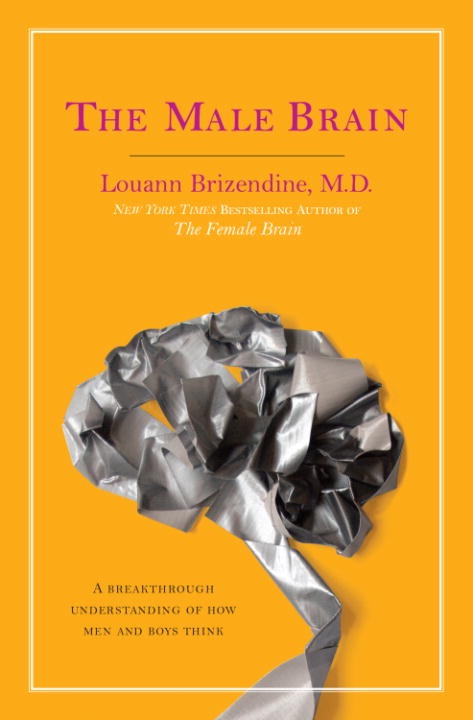
Upgrade
≈ From memoryYour personality is not a fixed trait, but a set of learned behaviors that can be systematically overhauled through intentional cognitive shifts and habit replacement.
In one sentence
You are not "stuck" with your personality; you can fundamentally rewire your emotional responses and social behaviors by identifying your core triggers and consciously practicing new, healthier reactions.
Why read this (for who it's for)
This book is for anyone who feels like a victim of their own temperament—the person who "just has a temper," the "chronic worrier," or the "socially anxious" individual. It solves the problem of learned helplessness regarding personality. After reading, you will be able to identify the specific "scripts" your brain runs when you feel triggered and replace them with proactive, intentional responses.
The big idea
Brizendine argues against the conventional wisdom that personality is a static, genetic destiny. Instead, she posits that much of our "personality" is actually a collection of learned coping mechanisms—often developed in childhood as survival strategies—that we continue to repeat into adulthood because they are familiar, not because they are effective.
The core logic is simple: If a behavior was learned, it can be unlearned. The "Upgrade" happens when you stop reacting instinctively and start responding deliberately. By identifying the specific triggers (the "why" behind your feelings) and the resulting behaviors (the "what" of your reactions), you can create a gap between stimulus and response. In that gap, you find the space to choose a new behavior.
Key ideas
The Myth of Fixed Personality
- What it is — The belief that we are born with a set personality that cannot be changed. Brizendine argues that while we have temperaments, our behaviors are largely learned.
- Why it matters — If you believe your personality is fixed, you stop trying to grow. Believing you can change gives you the agency to rewrite your own narrative.
- In the book — Brizendine highlights how people often say "That's just who I am," as a way to excuse self-destructive behaviors like yelling or isolating themselves.
Identifying Your Triggers
- What it is — A trigger is the specific situation, person, or thought that causes an emotional reaction. Most people react to the feeling without identifying the trigger.
- Why it matters — You cannot manage what you cannot name. Identifying the trigger allows you to see the pattern before the emotional explosion occurs.
- In the book — She encourages readers to look for "The Triggering Event"—the specific moment a feeling of irritation or anxiety begins—rather than just the resulting outburst.
The "Why" Behind the "What"
- What it is — We often focus on the behavior (the "What")—like snapping at a coworker—instead of the underlying need or fear (the "Why").
- Why it matters — Addressing the "Why" (e.g., "I feel undervalued") allows for a permanent solution, whereas addressing the "What" only manages the symptom.
- In the book — She illustrates how a person who is "overly critical" might actually be trying to protect themselves from being criticized by others.
The Power of Awareness
- What it is — Awareness is the "pause button" of the human brain. It is the ability to notice a thought or feeling as it happens without immediately acting on it.
- Why it matters — Without awareness, we are slaves to our impulses. Awareness creates the space required for "The Upgrade."
- In the book — Brizendine emphasizes that awareness isn't a magical gift; it's a muscle that must be exercised by noticing your internal state in real-time.
Behavior Replacement
- What it is — You cannot simply "stop" a behavior; you must replace it with a new, healthier one. The brain needs a new path to travel.
- Why it matters — Trying to suppress a behavior creates internal tension and often leads to a "rebound" effect where the behavior returns even stronger.
- In the book — She suggests identifying a "Replacement Behavior"—a specific action you will take instead of your old habit (e.g., taking a walk instead of scrolling social media when anxious).
The Role of Environment
- What it is — Our surroundings can either reinforce our old habits or support our new goals.
- Why it matters — Willpower is a finite resource. If your environment constantly triggers your old "default" settings, you will eventually fail.
- In the book — She discusses how to curate your social circle and physical space to make the "Upgrade" easier to maintain.
Frameworks & tools
The Trigger-Reaction-Replacement Loop
This is the core diagnostic tool for identifying and changing any personality-driven behavior.
- Identify the Trigger: What specific event, person, or internal thought causes the feeling? (e.g., "My boss gave me a correction.")
- Identify the Feeling: What is the underlying emotion? (e.g., "I feel inadequate/embarrassed.")
- Identify the "Why": What is the root belief? (e.g., "I believe I'm not good enough.")
- Identify the Current Reaction: What do you usually do? (e.g., "I get defensive and shut down.")
- Select a Replacement Behavior: What is a healthy, productive action you can take instead? (e.g., "I will ask for specific examples of how to improve.")
- Practice: Repeat the new behavior until it becomes the new default.
The Awareness Audit
A daily practice to build the "muscle" of noticing your reactions.
- Step 1: Set a "Check-in" alarm on your phone for 3 times a day.
- Step 2: When the alarm goes off, ask: "What am I feeling right now? What triggered this?"
- Step 3: Note the feeling without judging it. Just name it (e.g., "I feel annoyed").
- Step 4: Observe how your body feels (tight shoulders, clenched jaw).
Memorable examples & stories
The Perfectionist's Trap
Brizendine describes a person who is constantly overwhelmed because they believe every task must be flawless. The lesson is that the "Why" is a fear of judgment, and the "Upgrade" is learning to accept "good enough" to preserve mental energy.
The "Hot-Headed" Colleague
She uses the example of a person who reacts with anger to any feedback. By identifying the trigger (fear of incompetence), the individual can learn to pause and ask for clarification instead of reacting defensively.
The Socially Anxious Friend
The story of someone who avoids gatherings because they fear being judged. The lesson is that the "Why" is a need for safety, and the "Upgrade" involves gradual exposure and identifying the specific fears that trigger the avoidance.
Key quotes
"Your personality is not a fixed set of traits; it is a collection of learned behaviors." (Paraphrased) Why it matters: This is the foundational permission slip for anyone who thinks they are "broken" or "stuck."
"Awareness is the space between the stimulus and the response." (Paraphrased) Why it matters: It defines the exact mechanism of change—the "pause."
"To change a behavior, you must understand the 'Why' behind it." (Paraphrased) Why it matters: It prevents you from just "masking" symptoms and ensures you are actually healing the root cause.
How to apply it
This week
- The Trigger Log: Carry a notebook or use a notes app. Every time you feel a strong emotion (anger, anxiety, irritation), write down: 1. The Trigger, 2. The Feeling, 3. The Reaction. Do not try to change anything yet; just gather data.
- The 5-Second Pause: When you feel a "trigger" occur, force yourself to wait 5 seconds before speaking or acting. Use that time to simply notice the feeling in your body.
Ongoing
- The Replacement Rule: For every "bad" habit you identify (e.g., "I complain a lot"), choose a specific "Replacement Behavior" (e.g., "I will suggest a solution instead of just stating the problem").
- The "Why" Inquiry: Whenever you find yourself reacting strongly, ask: "What is the fear or need behind this feeling?"
Common pitfalls
- The "Quick Fix" Fallacy: Readers may expect to change their personality overnight. Brizendine emphasizes that these are learned behaviors, and unlearning them takes time and repetition.
- Over-Analyzing without Acting: It is easy to become an expert at identifying triggers without ever actually practicing the replacement behaviors. Awareness is the tool, but action is the "Upgrade."
- Self-Judgment: Many readers fall into the trap of judging themselves for their "old" reactions. Brizendine's framework requires a neutral, almost clinical observation of your own behavior to be effective.
Connects to
- "Atomic Habits" by James Clear: While Brizendine focuses on the internal psychological "Why," Clear provides the external systems for making the "Replacement Behaviors" stick.
- "Emotional Intelligence" by Daniel Goleck: This provides the broader framework for recognizing and managing emotions that Brizendine applies specifically to personality traits.
If you remember only three things
- Personality is a set of learned behaviors, not a fixed destiny.
- Awareness creates the "space" between a trigger and your reaction.
- You must identify the "Why" (the root fear/need) to successfully replace a behavior.
Internalize it
-
Reflection questions
- What is a recurring "personality" trait I've complained about for years?
- What is the specific trigger for that trait?
- What is the "Why" (the underlying fear or need) behind that reaction?
- What is one small, manageable replacement behavior I can practice this week?
-
Flashcards Q: What is the difference between a "What" and a "Why" in behavior? A: The "What" is the visible behavior (e.g., yelling); the "Why" is the underlying need or fear (e.g., feeling unheard).
Q: What is the "space" required for change? A: Awareness. It is the ability to notice a feeling as it happens without immediately reacting.
Q: Why is it ineffective to simply try to "stop" a behavior? A: Because the brain needs a new path; you must replace the old behavior with a new, healthier one.
Q: What is the first step in the Trigger-Reaction-Replacement Loop? A: Identifying the Trigger (the specific situation, person, or thought that causes the feeling).
Q: How does Brizendine define personality? A: As a collection of learned behaviors and coping mechanisms, not a fixed genetic trait.
Fidelity note
I am highly confident in the core methodology of the "Trigger-Reaction-Replacement" loop and the distinction between "Why" and "What." Brizendine's work is heavily rooted in cognitive-behavioral principles. However, because this is a summary of a self-help/psychology book, some of the specific "stories" may be simplified versions of the author's examples. Readers should verify the specific "Replacement Behaviors" for their unique situations, as the book provides a framework rather than a one-size-fits-all list of behaviors.