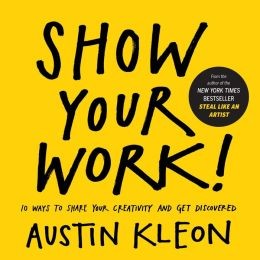
Austin Kleon — Fueling Artistic Ambition
✓ Source-groundedArtistic success is not a byproduct of waiting for inspiration, but of the disciplined, public practice of 'showing your work' to overcome the modern barriers to creative visibility.
In one sentence
Creative output is sustained by the discipline of showing your work and the intentional cultivation of hobbies to manage the "manic energy" of ambition.
Why read this (and who it's for)
This conversation addresses the paralysis of the modern creator: the feeling that the "barriers to entry" are too high and that the "black box" of private creation is no longer enough to succeed. It is for anyone who feels overwhelmed by the need for self-promotion, anyone struggling to find a consistent creative practice, and those who feel their personal "manic energy" is becoming destructive rather than productive. After reading this, you will be able to view your creative process as a public journey rather than a private secret, and you will have a framework for protecting your creative spark through hobbies.
The big idea
Austin Kleon argues that the modern era has fundamentally changed the "economics" of being an artist. In the past, an artist could operate in a "black box"—creating in private and only emerging when a singular work of genius was ready. Today, because of the sheer volume of content, you cannot "start at zero." You must build a public presence while you are still learning.
Kleon posits that the primary obstacle to creativity is not a lack of talent, but the "resistance" of the modern world. To combat this, one must "show your work"—making the process of creation visible to others. This isn't just an artistic choice; it is a survival strategy in a crowded marketplace. Furthermore, he suggests that high-achieving individuals often possess a "manic energy" that requires a productive outlet; without a hobby or a creative "home," that energy can become self-destructive.
Key ideas
The Death of the "Black Box"
The ability to produce a masterpiece in total isolation and then "shatter" the world with its release is no longer a viable primary strategy. Because the system for surfacing new work is so crowded, you must build an audience and a reputation while you are still in the "learning" phase.
- Why it matters: If you wait until you are "perfect" to show your work, you will likely never be heard. You must build a bridge to your audience while you are still building the work itself.
- In the conversation: Kleon notes that "you can't start at zero" and that making a "singular work of genius" is a "very dangerous bet to make on yourself."
Showing Your Work
Showing your work means making the process of creation public. It is the act of inviting people into the "how" of your creation, rather than just the "what."
- Why it matters: It builds a community of supporters who are invested in your journey, creating a foundation of visibility that protects you from the volatility of the algorithm.
- In the conversation: Kleon discusses how the old system of "black boxes" no longer exists, and therefore, the "requirements now" for skill and self-promotion are much higher.
The Necessity of Hobbies
A hobby is not a distraction from work; it is a necessary container for "manic energy." For high-achievers, an obsession that doesn't have a productive outlet can "destroy" the individual.
- Why it matters: Hobbies provide a "socially adaptive" way to channel intense drive. They allow you to "feast" on your own energy without burning out or becoming socially isolated.
- In the conversation: Kleon discusses the idea of "manic energy" in successful people and how, without a productive outlet like woodworking or history, that energy can become destructive.
The "Bullshit" of Modern Education
The current educational system often trains students to "say a lot and say nothing." By asking students to fill boxes and meet word counts, we encourage "mediocre" writing and the production of "slop."
- Why it matters: Recognizing this helps you strip away the "filler" in your own work. It allows you to move past the "boxes" to find what actually matters in the message.
- In the conversation: Kleon references a discussion on how we've "already taught kids to bullshit in their essays" by encouraging them to "fill the boxes" of a 500-word requirement.
The Power of the "Vibe" (Music vs. Text)
Music is a unique art form because it can capture a "vibe" or a feeling in three seconds that might take a writer five years to craft in words.
- Why it matters: It highlights the importance of feeling and resonance in art. Sometimes, the goal isn't to explain, but to evoke.
- In the conversation: Kleon and the host discuss how a "drum fill" or "opening riff" can capture a feeling that a written word might struggle to convey.
Frameworks & tools
The "Show Your Work" Strategy
To build a sustainable creative career in a crowded market, stop waiting for the "big reveal" and start sharing the "messy middle."
- Identify the Process: What is the "how" of your work? (e.g., your research, your sketches, your failed attempts).
- Publicize the Progress: Share these "in-progress" moments on social media, newsletters, or blogs.
- Build the Bridge: Use these updates to invite your audience into your world before the final product is finished.
- Lower the Stakes: By showing the work, you remove the pressure of the "singular work of genius" and replace it with a consistent, visible practice.
The "Manic Energy" Outlet
To prevent your ambition from becoming self-destructive, you must find a "socially adaptive" hobby.
- Identify the Energy: Recognize when you have an excess of "manic" drive or obsession.
- Select a "Feasting" Hobby: Choose a craft (like woodworking, history, or a sport) that requires focus and produces a tangible result.
- Apply the Obsession: Direct that energy into the hobby to ensure it "feasts on itself" productively rather than consuming your personal life.
Memorable examples & stories
The "Black Box" of the Past
Kleon describes how artists used to be able to operate in a "black box," where they could be "bad at life" or "bad at self-promotion" but still succeed because they could "play the hell out of their guitar."
- Lesson: The "barriers to entry" have changed; you now need a broader skillset that includes self-promotion and community building.
The "Manic" Success Story
The conversation touches on the idea of high-achievers who, without a hobby, might find their own "manic energy" becoming a problem.
- Lesson: Success requires a "socially adaptive" outlet for your internal drive to keep it from becoming destructive.
The "Bullshit" of 500-Word Essays
The discussion on how students are taught to "fill the boxes" of a 500-word essay to say nothing.
- Lesson: Be wary of "slop." True creative work is about saying something meaningful, not just filling a required space.
Key quotes
"You can't start at zero."
- Why it matters: It highlights the necessity of building a public presence while you are still a beginner.
"You have to bring people in with what... you can't start at zero."
- Why it matters: It reinforces that visibility is a prerequisite for success in the modern creative economy.
"You can't control how many followers you have... What you can control is you make the best game you can, the game that you like the most that you wanna play."
- Why it matters: This is a Stoic application to social media—focus on the quality of your "game" (your work) rather than the external metrics of "followers."
How to apply it
This week
- Share one "in-progress" thing: Post a sketch, a rough draft, or a "messy" note about a project you are working on. Do not wait for it to be finished.
- Identify your "Manic Energy": Notice when you feel an intense, obsessive drive. Where is that energy going? Is it productive or just spinning its wheels?
- Audit your "Slop": Look at something you wrote recently. Did you "fill a box" or did you actually say something?
Ongoing
- The "Show Your Work" Habit: Make it a rule to share the process of your work at least once a week.
- The Hobby Anchor: Dedicate at least 2 hours a week to a hobby that has nothing to do with your professional output (e.g., woodworking, gardening, history).
Common pitfalls
- The "Genius" Trap: Many people fall into the trap of thinking they need to produce a "singular work of genius" to be noticed. Kleon warns that this is a "dangerous bet."
- The "Follower" Obsession: It is easy to get caught up in the "how many" of social media. The Stoic advice here is to focus on the "game" (the work itself) rather than the score (the followers).
- The "Slop" Trap: Don't fall into the habit of "saying a lot and saying nothing" just to meet a perceived requirement (like a word count or a posting schedule).
Connects to
- Stoicism (Marcus Aurelius/Epictetus): The conversation explicitly applies Stoic principles to creative output—focusing on what you can control (your work) vs. what you cannot (the audience's reaction).
- Steven Pressfield (The War of Art): Mentioned in the transcript as a contemporary who also speaks to the "resistance" of the creative process.
If you remember only three things
- The "Black Box" is dead; you must build a public presence while you are still learning.
- "Show your work" to build a bridge to your audience and overcome the "resistance" of the market.
- Use hobbies to channel "manic energy" into productive, socially adaptive outlets.
Internalize it
-
Reflection questions
- What "black box" am I hiding in that is preventing me from building a connection with my audience?
- If I stopped worrying about the "score" (followers/likes), what "game" would I want to play with my craft?
- What is my "manic energy" currently feeding on, and is it a productive hobby or a destructive obsession?
-
Flashcards Q: Why is the "Black Box" of creation no longer viable? A: Because the modern market is so crowded that you cannot "start at zero"; you must build a public presence while you are still learning.
Q: What does it mean to "Show Your Work"? A: It means making the process of creation public, inviting people into the "how" of your work rather than just the "what."
Q: Why does Kleon suggest having a hobby? A: To provide a "socially adaptive" outlet for "manic energy" so that high-achieving drive doesn't become self-destructive.
Q: What is the "Bullshit" trap in modern writing? A: The tendency to "say a lot and say nothing" by simply filling the boxes of a required word count or format.
Q: What is the Stoic approach to social media? A: Focus on what you can control (the quality of the "game" you play) rather than what you cannot (the number of followers).
Fidelity note
This summary is grounded in the provided transcript. I am confident in the interpretation of Kleon's core philosophies (Show Your Work, Manic Energy, The Black Box). The transcript is a conversation, so some of the "rules" of his books are inferred from his verbal explanations of those concepts. The "Stoic" elements are specifically the ones the host (Ryan Holiday) applied to the conversation.