Angela Duckworth — Do You Need Closure?
✓ Source-groundedUnfinished tasks and unresolved emotions occupy significant cognitive bandwidth; 'closure' is the psychological mechanism that clears our mental workspace.
In one sentence
The "Zeigarnik Effect" explains why our brains obsess over unfinished tasks, and the psychological principle of "closure" explains why unresolved emotional conflicts persist until they are fully processed.
Why read this (and who it's for)
This summary is for anyone who feels "mental clutter"—the nagging feeling of an unfinished email, a lingering grudge, or a lingering "what if." It explains the science of why your brain won't let go of these items and provides a framework for "externalizing" your mental load to regain focus and emotional peace. You will learn how to systematically clear your mental "buffer" to improve productivity and interpersonal relationships.
The big idea
The human brain is designed to prioritize active, unfinished tasks. According to the Zeigarnik Effect, we remember interrupted or incomplete actions much more vividly than completed ones. This is an evolutionary efficiency: the brain keeps "open loops" in our working memory so we don't forget to finish what we started. However, this becomes a liability when the "open loop" is a stressful work task or a painful emotional conflict.
Angela Duckworth and her co-host explain that while this effect is useful for remembering to buy milk, it becomes problematic when it leads to rumination. To counter this, we need "closure." Closure is the act of providing a complete accounting for an event or task. Once a task is finished or an emotion is explained, the brain "erases the hard drive" of that specific memory, freeing up cognitive bandwidth for the present moment.
Key ideas
The Zeigarnik Effect
- What it is — The psychological phenomenon where people remember unfinished or interrupted tasks better than completed ones.
- Why it matters — It explains why "mental clutter" is so persistent; your brain is literally holding onto the task because it hasn't been "checked off."
- In the book — The story of a waiter who could remember a massive number of complex orders but, once the meal was served, seemed to have "erased the hard drive" of memory regarding where the guests sat.
Cognitive Bandwidth and Working Memory
- What it is — The brain prioritizes what it needs to do now, and unfinished tasks "eat up" the limited space available for active thinking.
- Why it matters — If you have an unfinished task (like an email you need to send), you will be distracted and less capable of focusing on the task currently in front of you.
- In the book — A study showed that people with an uncompleted task were more likely to mind-wander and understand less of what they were currently reading.
Externalizing Memory
- What it is — The act of moving information from your internal "working memory" to an external medium (like paper or a digital list).
- Why it matters — It provides a sense of "closure" even if the task isn't finished yet, allowing your brain to stop "looping" the reminder.
- In the book — Angela Duckworth describes her system of using a notebook to write down "thought bubbles" (like "buy milk") to clear them out of her head so she can focus on the meeting at hand.
The Psychological Immune System
- What it is — A theory by Tim Wilson and Dan Gilbert suggesting that humans have a system to regulate and process emotions, much like the body regulates temperature.
- Why it matters — Emotions (both positive and negative) linger when there is a lack of closure; they only "settle" when we have a complete accounting of what happened.
- In the book — The authors discuss how frustration persists until an explanation is provided, at which point the original frustration diminishes (though a new, different frustration might arise).
Attunement and Relational Closure
- What it is — The process of "tuned processing" in relationships, where partners communicate to reach a shared understanding of a negative event.
- Why it matters — Without closure, negative events in a relationship act like "improvised explosive devices" (IEDs) that can be triggered by unrelated future events.
- In the book — Drawing on John Gottman’s research, the authors explain that if a couple avoids processing a regrettable incident, the event will "fester" and be rehearsed repeatedly in each person's mind.
Frameworks & tools
The Externalization Protocol (For Productivity)
Use this to stop "mental looping" on tasks you cannot complete immediately.
- Identify the "Thought Bubble": Recognize the intrusive thought (e.g., "I need to call X").
- Externalize: Write it down immediately in a physical notebook or a dedicated digital list.
- Verify Closure: Acknowledge that the task is now "stored" safely outside your head.
- Return to Present: Consciously pivot your attention back to the current task.
The Attunement Method (For Relationships)
Use this to resolve lingering tension or "ghosting" in relationships.
- Initiate a "Why" Conversation: Instead of accusing, ask for the underlying reason (e.g., "Can you help me understand why we haven't been able to set up this meeting?").
- Seek the Accounting: Listen for the "why"—is it a lack of time, a feeling of being threatened, or a different strategy?
- Reach Closure: Once the explanation is stated, the "loop" is closed. The old frustration should diminish, even if the new reality requires a different plan.
Memorable examples & stories
The "Secret Admirer" Effect
- A child's book describes a man whose life changes because he doesn't know who loves him. The mystery allows him to imagine a whole world of possibilities.
- Lesson: Lack of closure can actually be beneficial for positive emotions (like joy or anticipation) because it allows us to "marinate" in low-probability fantasies.
The $1 Coin Experiment
- Researchers gave students a $1 coin with a note from the "Smile Society." Those who received a card explaining why the money was given (the "certain" condition) were in a less positive mood than those who received a vague note (the "uncertain" condition).
- Lesson: Closure ends positive emotions; for some things, you want the mystery to linger.
The "IED" of Unprocessed Conflict
- John Gottman’s research describes how un-processed negative events in a relationship stay inside a partner like an explosive device.
- Lesson: Avoiding a hard conversation doesn't make the problem go away; it just ensures it will explode later.
Key quotes
"The brain is relieved of the responsibility of keeping something in its working memory... because you know that you've written it down." (Paraphrased)
- Why it matters: Writing things down isn't just about remembering; it's about mental freedom.
"Our emotions go up and down with closure or lack thereof." (Paraphrased)
- Why it matters: This applies to both frustration and joy.
"To understand is to forgive." (Paraphrased)
- Why it matters: Understanding provides the "closure" necessary to stop the cycle of rumination.
How to apply it
This week
- The "Brain Dump": At the end of each day, write down every "open loop" (tasks, worries, ideas) on a piece of paper. Do not do them; just get them out of your head.
- The "Why" Check: If you feel a lingering irritation with a friend or colleague, ask yourself: "Do I have a full accounting of why this happened, or am I just ruminating on a lack of closure?"
Ongoing
- Externalize Immediately: Never rely on your brain to "hold" a reminder. If it pops into your head, write it down instantly.
- Practice Attunement: When a conflict arises, prioritize "understanding" over "winning." Aim for a complete accounting of the other person's perspective to close the emotional loop.
Common pitfalls
- The "Positive" Trap: Do not apply the "closure" rule to everything. Sometimes, mystery (like a surprise gift or a "secret admirer") is what makes a positive experience special. Closure kills the magic of anticipation.
- The "Explanation" Fallacy: Simply saying "I'm sorry" is not always sufficient closure. Closure requires a "complete accounting"—the other person needs to understand the why behind the action.
Connects to
- The Zeigarnik Effect (Psychology)
- Emotional Regulation (Tim Wilson & Dan Gilbert)
- The Gottman Method (Relationship Counseling)
If you remember only three things
- Unfinished tasks occupy "mental real estate" because the brain is designed to keep them active until they are resolved.
- Closure (the complete accounting of an event) is the only way to stop the "looping" of negative emotions.
- Externalizing your to-do list isn't just a productivity hack; it's a way to clear your brain's working memory for what matters now.
Internalize it
- Reflection questions
- Which "open loops" in my life are currently draining my cognitive bandwidth?
- Is there a relationship where I am avoiding a "hard" conversation that would actually provide me with closure?
- When I feel frustrated, is it because of the event itself, or because I lack a clear explanation for why it happened?
- Flashcards
- Q: What is the Zeigarnic Effect?
- A: The tendency to remember unfinished or interrupted tasks better than completed ones.
- Q: How does "externalizing" help with the Zeigarnic Effect?
- A: It moves information from active working memory to an external source, providing the brain with "closure" and freeing up cognitive bandwidth.
- Q: Why do emotions linger when there is a lack of closure?
- A: Because the brain continues to "loop" the event until it has a complete accounting of what happened.
- Q: What is the "IED" metaphor in relationship counseling?
- A: Unprocessed negative events act like Improvised Explosive Devices, ready to be triggered by unrelated future events if not addressed.
- Q: When is "closure" NOT desirable?
- A: When it comes to positive emotions, where the mystery and anticipation (like a "secret admirer") can enhance the experience.
Fidelity note
This summary is based strictly on the provided transcript of the "No Stupid Questions" episode featuring Angela Duckworth. The summary captures the distinction between the Zeigarnic Effect (tasks) and the theory of emotional closure (relationships). The distinction between positive and negative closure is a key nuance in the text.
More from Freakonomics Radio
 223. What About All the Questions We Haven’t Answered No Stupid QuestionsFreakonomics Radio445. Why Do We Seek Comfort in the FamiliarFreakonomics Radio
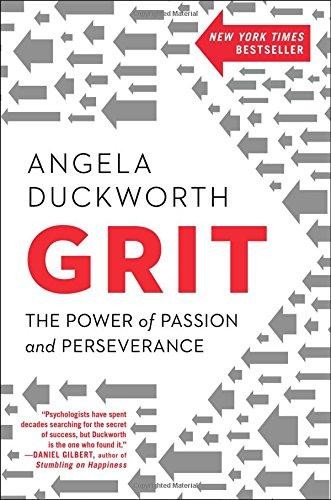 GritAngela Duckworth
 Grit The Power of Passion and PerseveranceAngela Duckworth
 Stop Doing Things the Hard Way with Dr. Angela DuckworthThe Happiness LabWhy Is Everyone Having Less Sex No Stupid Questions Episode 138Freakonomics Radio