Angela Duckworth — What About All the Questions We Haven’t Answered? | No Stupid Questions
✓ Source-groundedMeaning is found not in the final resolution of life's questions, but in the purposeful tension of the pursuit itself.
In one sentence
The purpose of life is found in the "striving" for meaningful goals—specifically those that involve self-transcendence and service to others—rather than in reaching a final state of comfort or total certainty.
Why read this (and who it's for)
This summary is for anyone paralyzed by the "analysis paralysis" of existential dread or the anxiety of an uncertain future. It provides a framework for shifting from a passive, anxious state of "not knowing" to an active, purposeful state of "seeking." You will learn how to reframe uncertainty as a catalyst for growth and how to identify the specific types of goals that actually generate lasting meaning.
The big idea
The central thesis of the conversation is that human beings are fundamentally "meaning-seeking" creatures. While we often view uncertainty as a source of anxiety to be eliminated, the guest, Angela Duckworth, argues that the most meaningful lives are lived in a state of "tension"—the gap between who we are and who we ought to become.
Drawing heavily on the work of Viktor Frankl, Duckworth argues that we do not seek a "tensionless" state of pure pleasure or the final answer to every mystery. Instead, we find our greatest fulfillment in the process of the pursuit. Meaning is not a destination you reach; it is the "striving" for a worthwhile task. Therefore, the goal of life is not to stop asking questions, but to ensure we are asking the right questions—those that lead to self-transcendence and service to others.
Key ideas
The Three Categories of Questions
There are three distinct types of questions we ask: Educational (seeking existing knowledge), Experiential (deciding on actions like jobs or relationships), and Existential (the "why" of human existence). Why it matters: Recognizing that existential questions are fundamentally different from "how-to" questions allows you to stop trying to "solve" them like a math problem and start "living" them as a practice. In the book: Duckworth notes that while we can't "fix" the uncertainty of the future (like AI's impact), we can develop a "muscle" for holding that uncertainty without falling apart.
The "Muscle" of Uncertainty
Uncertainty is often aversive, but our ability to tolerate it is a key component of a healthy, meaningful life. Why it matters: If you wait for 100% certainty before acting, you will remain stagnant. Developing a tolerance for "not knowing" allows for a state of "approaching" rather than retreating. In the book: Duckworth references clinical psychologists who work with patients to bolster their tolerance for uncertainty, treating it as a skill to be developed rather than a problem to be solved.
The "It Depends" of Confusion
Research shows that how we respond to confusion depends heavily on our "Openness to Experience" (a Big Five personality trait). Why it matters: People high in openness can feel confused and interested simultaneously, viewing confusion as a gateway to learning. In the book: Duckworth cites a 2019 study showing that for those with high openness, confusion leads to an "approach orientation"—they lean into the mystery rather than pulling away.
The Tension of Meaning (Logotherapy)
Meaning is found in the "tension" between what one has already achieved and what one still ought to accomplish. Why it matters: This flips the script on the "Pleasure Principle." If you seek only comfort, you will eventually feel empty. If you seek a "worthwhile goal," you find a reason to endure. In the book: Drawing from Viktor Frankl, Duckworth explains that mental health is based on this striving for a "freely chosen task."
The Three Paths to Meaning
Frankl identifies three specific ways humans find meaning: through the attitude they take toward unavoidable suffering, through their connections with other people, and through the work (or deeds) they perform. Why it matters: It provides a roadmap for meaning-making. If you feel lost, you can look at these three pillars: How am I facing my challenges? Who am I loving? What am I contributing? In the book: Duckworth emphasizes that the "work" path is particularly powerful when it is "self-transcendent"—meaning it looks outward to serve something larger than the self.
Frameworks & tools
The Meaning-Seeking Framework
To move from existential anxiety to purposeful action, use this three-pillar assessment:
- The Path of Suffering: How am I responding to the things I cannot change? (Focus on the nobility of your response).
- The Path of Connection: Who am I loving? (Focus on helping them actualize their potential).
- The Path of Work: What am I contributing? (Focus on "self-transcendent" goals that serve others).
The "Action/Reaction" Filter for Questions
When faced with an unanswered question that causes anxiety, run it through this filter:
- Can I learn about this? (Action: Research, study, and gain familiarity).
- Can I do something about this? (Action: Take a tangible step toward a solution).
- Is this outside my control? (Reaction: Practice the "Serenity Prayer" approach—accept the uncertainty and stop the "wallowing" of worry).
Memorable examples & stories
The Professional Athlete's Reframe
Professional athletes in high-pressure moments (like Game 7 of a World Series) often reframe "anxiety" and "fear" as "excitement." The Lesson: You can choose the emotional label you apply to uncertainty; reframing the "unknown" as "excitement" allows for a state of flow.
The Serenity Prayer as a "Courage Prayer"
The Serenity Prayer is often misunderstood as a prayer of passive acceptance. However, the original version by Reinhold Niebuhr emphasizes the "courage to change the things that should be changed." The Lesson: The goal isn't to sit passively in the face of the unknown; it is to find the courage to act on the things within our reach.
The "Purpose" of the Pursuit
Matt Damon once expressed his gratitude for winning an Academy Award early in his career, only to realize that the pursuit of the award was the meaningful part, not the trophy itself. The Lesson: The "destination" of a goal is often a mirage; the meaning is found in the "striving" and the "process" of the climb.
The "People Who Love Us" Answer
When asked what happens after we die, a profound answer is: "The people who love us miss us." The Lesson: When existential questions become too big or "crushing," bring them back to the practical: the importance of loving and being loved in the present moment.
Key quotes
"The goal is not to have no questions... the goal is to have a lot of questions." Why it matters: It validates curiosity as a lifelong pursuit rather than a problem to be solved.
"What man actually needs is not a tensionless state but rather the striving and struggling for a worthwhile goal." (Paraphrased from Frankl) Why it matters: It defines meaning as a process of tension rather than a state of rest.
"You can't have the goal to be a happy person... but you can have the goal to serve someone else, and success and happiness ensue." Why it matters: It identifies "self-transcendent" goals as the primary engine for meaningful living.
How to apply it
This week
- Identify your "Uncertainty Muscle": Identify one thing you are currently worrying about that you cannot control. Practice "holding" that uncertainty for 5 minutes without trying to solve it.
- The "Action/Reaction" Audit: Write down three questions that are currently causing you anxiety. Label them: Can I learn? Can I do? Or Must I accept?
- Practice "Active" Listening: Reach out to a loved one and ask about their goals. Practice the "Path of Connection" by listening to what they want to become.
Ongoing
- The Self-Transcendent Goal: Ensure your primary goals for the next six months involve "looking outward." Ask: "How does this serve someone else?"
- The Tension Check: When you reach a milestone or "peak," acknowledge the achievement, then immediately identify the next "mountain" to climb. Meaning lives in the striving, not the summit.
Common pitfalls
- The "Happiness" Trap: Many people try to make "happiness" their goal. Duckworth warns that happiness is a byproduct of meaningful action, not a destination you can reach by trying harder.
- The "Solution" Fallacy: We often treat existential questions as if they have a "correct" answer. Some questions are meant to be lived, not solved.
- The Passive Acceptance Trap: Do not mistake "acceptance" for "inaction." The goal is to accept what you cannot change while finding the courage to change what you can.
Connects to
- Man's Search for Meaning by Viktor Frankl: The foundational text for Logotherapy and the idea of finding meaning in suffering and responsibility.
- The Grit Factor (Angela Duckworth): Connects the idea of "striving" to the psychological persistence required to achieve long-term goals.
If you remember only three things
- Meaning is found in the pursuit of a goal, not the achievement of it.
- The most meaningful goals are "self-transcendent"—those that serve others and things larger than yourself.
- Uncertainty is a "muscle" to be built; learn to hold the unknown without falling apart.
Internalize it
- Reflection questions
- What is one "mountain" I am currently climbing, and am I doing it for myself or for something larger?
- In what areas of my life am I "wallowing" in questions I cannot control instead of acting on what I can?
- How can I reframe my current "anxiety" as "excitement" for the opportunity of the unknown?
- Flashcards
- Q: What is the difference between the "Pleasure Principle" and Frankl's view of meaning?
- A: The Pleasure Principle suggests we seek relief from pain and pleasure; Frankl argues we seek meaning, which often involves a state of "tension" and striving.
- Q: What are the three paths to meaning according to Frankl?
- A: 1. The attitude toward suffering, 2. The connections with others, and 3. The work/deeds one performs.
- Q: Why is "self-transcendence" important in finding meaning?
- A: Because goals that are "other-centered" (serving others) are the ones that consistently lead to a sense of meaning and purpose.
- Q: How does the "Action/Reaction" filter work?
- A: It categorizes questions into: Can I learn? Can I do? Or must I accept?
- Q: What is the "muscle" of uncertainty?
- A: The ability to hold a state of "not knowing" without becoming paralyzed by anxiety.
Fidelity note
This summary is grounded in the transcript of the final episode of No Stupid Questions. The summary accurately reflects Angela Duckworth's synthesis of Viktor Frankl's work and her own psychological perspectives. The "Action/Reaction" filter and "Meaning-Seeking Framework" are synthesized from her specific advice on how to handle unanswered questions. The distinction between "Pleasure" and "Meaning" is a core pillar of the conversation.
More from Freakonomics Radio
 445. Why Do We Seek Comfort in the FamiliarFreakonomics Radio569. Do You Need ClosureFreakonomics Radio
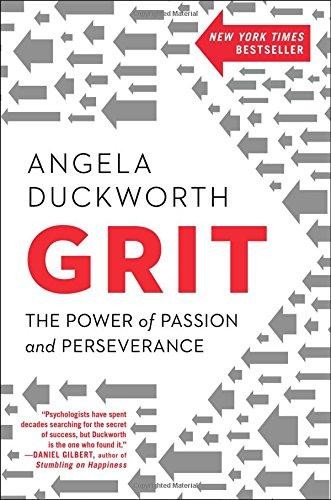 GritAngela Duckworth
 Grit The Power of Passion and PerseveranceAngela Duckworth
 Stop Doing Things the Hard Way with Dr. Angela DuckworthThe Happiness LabWhy Is Everyone Having Less Sex No Stupid Questions Episode 138Freakonomics Radio