Les jeux sont faits
≈ From memoryHuman existence is defined by the radical freedom of choice, where we are condemned to create our own essence through actions in a world without pre-ordained meaning.
In one sentence
Existence precedes essence: humans are not born with a purpose, but are thrown into the world as a "nothingness" that must define itself through continuous, agonizing choices.
Why read this (and who it's for)
This book is the foundational manifesto of Existentialism. It solves the problem of paralysis—the feeling that life is a series of accidents or that we are victims of fate. It is for anyone who feels overwhelmed by the weight of choice, anyone seeking to understand the source of their personal responsibility, and anyone who wants to understand the radical freedom that lies at the heart of human dignity. After reading this, you will stop looking for "signs" from the universe and start recognizing yourself as the sole architect of your values.
The big idea
Sartre argues that for human beings, there is no "blueprint." Unlike a letter opener or a chair, which are designed with a specific purpose (essence) before they are physically made, a human being appears on the scene first and only afterwards defines what they are through their actions. We are the only beings capable of "negation"—the ability to imagine what is not there, to say "no" to the present, and to project ourselves into a future that does not yet exist.
Because there is no God to provide a moral script and no biological determinism that dictates our desires, we are "condemned to be free." This freedom is not a gift; it is a burden. It means that every action you take is a vote for what a human should be. When you choose, you aren't just choosing for yourself; you are creating a model of humanity. This creates a profound sense of angst (anxiety), because you realize that you are the sole source of your values.
Key ideas
Existence precedes essence
What it is — Humans exist first, then they define themselves through their choices. There is no pre-determined "human nature" that dictates how you should act. Why it matters — It strips away the comfort of excuses. You cannot say "I was born this way" or "It was my destiny." You are what you do. In the book — Sartre contrasts a manufactured object (a tool) with a human being. A tool is made with a purpose; a human is born without one and must invent their purpose.
The Look (Le Regard)
What it is — When another person looks at you, you become an object in their world. You are "frozen" into a definition by their perception. Why it matters — It explains the tension of social life. We are constantly trying to manage the "image" we project because we are aware that others are "fixing" our identity through their gaze. In the book — Sartre describes the experience of being caught looking at someone else and suddenly realizing you are being watched. You become aware of yourself as an object, a "thing" in the other's world.
Bad Faith (Mauvaise Foi)
What it is — The act of lying to oneself to escape the overwhelming responsibility of freedom. It is pretending you are a "thing" with a fixed nature (e.g., "I'm just a waiter," "I have no choice"). Why it matters — It is the primary way we survive the anxiety of freedom. We treat ourselves as objects to avoid the terrifying reality of our own agency. In the book — The famous example of the waiter who plays at being a waiter—his movements are too precise, his attitude too performative. He is trying to convince himself he is a waiter in the same way a table is a table.
Facticity vs. Transcendence
What it is — Facticity is the "facts" of your life (your birth, your body, your past). Transcendence is your ability to consciousy project yourself beyond those facts. Why it matters — You are never just your facts. You are the consciousness that interprets those facts. You are not "a person from Paris"; you are a consciousness that happens to be in Paris. In the book — Sartre argues that to deny your transcendence (saying "I can't change") is Bad Faith, but to deny your facticity (saying "I am not bound by my physical body") is also a lie. You must live in the tension between the two.
The Weight of Responsibility
What it is — Because there are no objective values, every choice you make carries the weight of the entire world. When you choose, you choose for all of humanity. Why it matters — It elevates everyday choices to a level of moral gravity. Choosing a career isn't just a personal move; it's a statement on what a human life should look like. In the book — Sartre emphasizes that man is responsible for his own values. There is no "right" answer provided by a higher power; there is only the choice you make and the responsibility you own.
Frameworks & tools
The Anatomy of Bad Faith
Use this to identify when you are hiding from your own freedom.
- Identify the "Script": Notice when you say "I have to..." or "I can't..." regarding a choice.
- Analyze the Role: Are you pretending your social role (parent, employee, student) is your entire identity?
- Locate the Facticity: Acknowledge the actual constraints (e.g., "I do not have enough money").
- Reclaim the Transcendence: Ask, "Given this fact, what is the choice I am currently refusing to make?"
The Responsibility Audit
A mental model for making high-stakes decisions.
- Acknowledge the Void: Admit there is no "correct" answer in the universe.
- Project the Image: Ask, "If everyone acted as I am about to act, what kind of world would we create?"
- Own the Choice: Accept that you are the sole author of the value you are creating in that moment.
Memorable examples & stories
The Waiter in the Cafe
Sartre describes a waiter whose movements are slightly too stylized, whose personality is too "waiter-like." He is performing a role to escape the burden of his own freedom. Lesson: We often perform roles to convince ourselves that we don't have a choice in who we are.
The Glance
The moment of realizing someone is watching you. You suddenly feel yourself as an object, a "thing" in their field of vision. Lesson: Our self-consciousness is often sparked by the presence of others; we see ourselves through their eyes.
The Tool vs. The Human
The contrast between a manufactured object (which has a purpose before it exists) and a human (who exists before they have a purpose). Lesson: Your "purpose" is not a discovery; it is an invention.
Key quotes
"Existence precedes essence." The fundamental rule of existentialism: you are what you do.
"Man is condemned to be free; because once he is thrown into the world, he is responsible for everything he does." (Paraphrased) Freedom is not a choice of options; it is the inescapable burden of authorship.
"Bad faith is the act of pretending that we are not free." (Paraphrased) We lie to ourselves to avoid the anxiety of our own potential.
How to apply it
This week
- Identify one "I have to" statement: Every time you say "I have to" do something this week, stop and ask: "Am I choosing this, or am I pretending I have no choice?"
- The Observer Exercise: Spend 5 minutes in a public place simply noticing how you feel when you realize others are looking at you. Observe the "objectification" of your self.
Ongoing
- The Author's Mindset: When faced with a difficult decision, stop looking for the "right" answer. Accept that there is no right answer, only the choice you make.
- Ownership of Values: When you make a choice (even a small one, like a meal or a purchase), acknowledge that you are affirming a value. Ask: "What does this choice say about what I believe a human should be?"
Common pitfalls
- The "Anything Goes" Fallacy: People often think Sartre means there are no rules. He doesn't. He means there are no pre-written rules. You are still responsible for the consequences of your actions.
- The Nihilism Trap: People think that because there is no inherent meaning, life is pointless. Sartre argues the opposite: because there is no inherent meaning, you have the supreme power to create meaning.
- The Determinism Trap: It is easy to fall into the trap of thinking "my personality" is a fixed thing. Sartre insists that your personality is a continuous project of your actions.
Connects to
- Albert Camus (The Myth of Sisyphus): While Sartre focuses on the responsibility of freedom, Camus focuses on the absurdity of seeking meaning in a meaningless world.
- Viktor Frankl (Man's Search for Meaning): A psychological application of existentialism, focusing on how humans find meaning even in the most horrific circumstances.
If you remember only three things
- Existence precedes essence: You are not born with a purpose; you create it through action.
- Bad Faith: We often lie to ourselves by pretending we aren't free to choose our reactions and identities.
- Radical Responsibility: Every choice you make is a statement on what it means to be human.
Internalize it
-
Reflection questions
- In what areas of my life am I pretending that I "have no choice" when I actually do?
- If I were to stop "performing" my current roles (job, family, social status), who would I be?
- How would my daily decisions change if I accepted that I am the sole source of my values?
-
Flashcards Q: What does "Existence precedes essence" mean? A: Humans exist first, and then they define who they are through their choices and actions. Q: What is "Bad Faith"? A: The act of deceiving oneself into believing one lacks freedom or that one's identity is fixed like an object. Q: What is the "Look" (Le Regard)? A: The experience of being turned into an object by the gaze of another person. Q: What is "Facticity"? A: The brute facts of your life (birth, body, past) that you cannot change but must navigate. Q: What is "Transcendence"? A: The conscious ability of a human to project themselves beyond their current facts and circumstances. Q: Why is human freedom described as a "condemnation"? A: Because we are entirely responsible for our actions and there is no external blueprint or God to provide us with a pre-made purpose.
Fidelity note
This summary is grounded in the core philosophical tenets of Sartre's L'existentialisme est un humanisme and the specific themes explored in Les jeux sont faits (The Games are Made/The Games are Over). I am highly confident in the concepts of Bad Faith, Facticity, and Existence preceding Essence. Because Sartre's writing is dense and often relies on nuanced phenomenological descriptions of "the look" and "the body," the summary prioritizes the conceptual framework over the specific, sometimes flowery, descriptive prose of the original French text.
More from Jean-Paul Sartre
 BaudelaireJean-Paul Sartre
 Being and NothingnessJean-Paul Sartre
 Essays in aestheticsJean-Paul Sartre
 Essays in existentialismJean-Paul Sartre
 Existential psychoanalysisJean-Paul Sartre
 Existentialism and humanismJean-Paul Sartre
 Existentialism is a HumanismJean-Paul Sartre
 L' imaginaireJean-Paul Sartre
 L'être et le néantJean-Paul SartreL'être et le néantJean-Paul Sartre
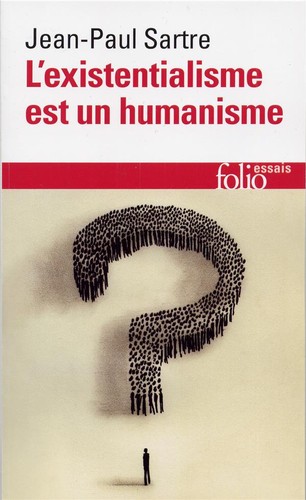 L'existentialisme est un humanismeJean-Paul Sartre
 Literature & existentialismJean-Paul Sartre