Existentialism is a Humanism
≈ From memoryHuman beings possess no pre-determined essence; we are entirely defined by the sum of our actions and choices, making us radically free—and therefore radically responsible—for the meaning of our lives.
In one sentence
Existence precedes essence: you are born into the world without a blueprint, purpose, or "soul" defined by any higher power or biology; you only become who you are through the continuous series of choices you make.
Why read this (and who it's for)
Most people live their lives as if they are following a script written by society, parents, genetics, or fate. This creates a profound sense of "autopilot" that leads to a hollow life and a lack of genuine agency.
This book is for anyone who feels trapped by circumstances, paralyzed by the sheer number of choices in modern life, or seeking a deeper sense of purpose beyond traditional religious or social structures. After reading this, you will stop looking for "the meaning of life" as if it were a hidden treasure to be found; instead, you will understand that meaning is something you forge through action. You will gain the tools to identify when you are lying to yourself (Bad Faith) and how to reclaim your agency in even the most restrictive environments.
The big idea
Sartre addresses a common criticism: that existentialism is a philosophy of despair or "anything goes" nihilism. He argues the opposite. Existentialism is a Humanism because it places the entire weight of meaning-making on human shoulders.
The core logic follows this progression:
- Objects have essence before existence: A letter opener is designed with a purpose (to open envelopes) before it is ever made. Its "essence" precedes its physical existence.
- Humans are the exception: There is no "God-concept" or "Human Nature" blueprint that dictates what a human must be. You exist first, and only afterward do you define what you are through your actions.
- Freedom is absolute (and terrifying): Because there is no pre-set blueprint, you are "condemned to be free." Every action you take is a choice, and every choice defines who you are.
The reason this is "Humanism" is that it asserts that man is the sole source of value. If there is no objective morality written in the stars, then you are the one who decides what is good, what is beautiful, and what is meaningful. This isn't a license to do whatever you want; it is a demand for total responsibility. When you choose, you aren't just choosing for yourself—you are creating an image of what a human being should be.
Key ideas
Existence Precedes Essence
What it is — The fundamental principle that humans appear on the scene, encounter themselves, and only then define themselves. Unlike a tool designed for a specific task, a human has no "built-in" purpose. Why it matters — It destroys the idea of "destiny." You cannot blame your personality on your upbringing, your genes, or your "fate." While those things influence you, they do not define you until you act upon them. In the book — Sartre uses the example of a paper cutter (or letter opener). A craftsman creates it with a specific goal in mind. The object's purpose is known before it exists. Humans, however, are born into the world without a prior "goal" and must create their own purpose through lived experience.
Radical Responsibility
What it is — Because there is no pre-determined path, you are 100% responsible for every action you take—and by extension, for the person you become. Why it matters — This removes the "victim" narrative from existence. While you may not choose your starting point (your birth, your country, your body), you are entirely responsible for how you respond to those circumstances. In the book — Sartre argues that even a prisoner of war is free because they choose their attitude toward their captivity. They can choose to resist, to despair, or to find meaning in solidarity. The situation is not chosen, but the response is an act of pure freedom.
Facticity vs. Transcendence
What it is — "Facticity" refers to the brute facts of your life (your birth, your body, your past). "Transcendence" is your ability to project yourself beyond those facts through conscious choice. Why it matters — Most people fall into the trap of thinking they are only their facticity ("I can't do that because I'm X"). Sartre argues you are always more than your circumstances because you have the capacity to choose how to relate to them. In the book — He explains that a human being is a "being-for-itself." You are not a rock (a being-in-itself) because a rock cannot imagine itself being something else. You, however, can always imagine and act toward a future that does not yet exist.
Bad Faith (Mauvaise Foi)
What it is — The act of lying to yourself to escape the overwhelming weight of freedom. It is pretending you "have no choice" when, in reality, you are choosing to remain in your current state. Why it matters — This is how people justify their inaction. By saying "I have to do this," you turn yourself into an object to avoid the responsibility of being a free subject. In the book — Sartre describes the waiter who plays at being a waiter too perfectly—miming the movements and attitude of the role so much that he tries to convince himself he is the role, rather than a human being performing a job.
The Ethics of Action
What it is — Values are not discovered; they are created through engagement with the world. There is no "moral code" outside of human action. Why it matters — It means that your values are only as real as the actions you take to uphold them. You cannot say you value courage if you never act courageously. In the book — Sartre argues that when a person chooses, they are not just choosing for themselves; they are affirming a value for all of humanity. If I choose to be a rebel against injustice, I am saying "It is good for a human to be a rebel."
Frameworks & tools
The Responsibility Audit (Identifying Bad Faith)
Use this whenever you feel stuck or paralyzed by a situation to determine if you are hiding behind "Facticity" to avoid the discomfort of choice.
- Identify the "I have to" statement: Write down the excuse you are currently using (e.g., "I have to stay in this job because I'm not good enough to find another," or "I have to be this way because of my personality").
- Isolate the Facticity: What is the actual, objective fact? (e.g., "The fact is that I currently lack the savings for a new job.")
- Identify the Transcendence: What is the choice you are making right now by staying in that situation? (e.g., "I am choosing to prioritize security over risk, and I am choosing not to spend my free time searching for alternatives.")
- Own the Choice: Reframe the statement from "I have no choice" to "I am choosing this specific path because of its immediate benefits/comforts."
The Facticity-Transcendence Map
Use this to navigate life's constraints without falling into despair or delusion.
- The Constraint (Facticity): List the external pressures you cannot change today (e.g., your current location, your physical limitations, your past mistakes).
- The Projection (Transcendence): For each constraint, write down three ways you can respond to it or act within it.
- The Action: Choose one response and commit to a tangible action today that reinforces that choice.
Memorable examples & stories
The Paper Cutter Analogy
Sartre compares human beings to manufactured objects like paper cutters. A knife is made with the "essence" of cutting in mind before it ever exists physically. Humans, however, exist first and then define their essence through their actions. The Lesson: You are not a finished product; you are a continuous project.
The Waiter in the Cafe
Sartre describes a waiter who is too much of a waiter—moving with a mechanical precision that mimics the "essence" of waiting tables. He is trying to convince himself that he is his job, rather than a free human being playing a role. The Lesson: We often use our roles (parent, employee, student) as shields to avoid the terrifying responsibility of our own freedom.
The Prisoner of War
Sartre discusses a soldier who is captured and held in a cell. While he cannot choose his captors or his cell, he still chooses how he perceives his situation—whether he will be a victim, a hero, or a man seeking escape. The Lesson: Circumstances may limit your options, but they never fully eliminate your freedom to choose your internal attitude and response.
Key quotes
"Existence precedes essence." (Paraphrased) Why it matters: This is the foundational rule of existentialism—you are born as a blank slate of potentiality.
"Man is condemned to be free; because once he is thrown into the world, he is responsible for everything he does." (Paraphrased) Why it matters: Freedom isn't a gift; it's a burden. You cannot escape the responsibility of your own life.
"The man who chooses... chooses for all men." (Paraphrased) Why it matters: Your actions are a vote on what it means to be human. Every choice you make sets a standard for what a human being should be.
How to apply it
This week
- Identify one "I have to" lie: Find one area where you've told yourself you have no choice (e.g., "I have to watch this show," "I have to eat this"). Acknowledge that you are choosing the comfort of the action over the effort of the alternative.
- The 5-Minute Project: Choose one small thing you've been putting off because you felt "unready." Recognize that there is no "perfect" time; your readiness is created by the act of doing. Do it today.
- Audit your Roles: Observe yourself in a social setting (like a dinner or a meeting). Notice when you are "performing" a role (the "Good Employee," the "Perfect Parent"). Briefly acknowledge that you are a free agent playing that role, not the role itself.
Ongoing
- Practice Radical Ownership: When things go wrong, stop asking "Why did this happen to me?" and start asking "How am I choosing to respond to this?"
- The Action-First Rule: Whenever you feel lost about who you are or what your purpose is, stop thinking and start doing. You find yourself in the doing, not in the contemplating.
- Value Creation: Before making a major life decision, ask: "If everyone acted like I am about to act, what kind of world would we create?" This forces you to see the weight of your choice for all humanity.
Common pitfalls
- The "Anything Goes" Fallacy: People often think existentialism means you can do whatever you want without consequence. Sartre argues that because there is no pre-determined meaning, the consequences of your actions are even more significant—you are the sole author of the consequences.
- Ignoring Facticity: Some readers might interpret "freedom" as the ability to do anything (like flying by flapping arms). Sartre is clear: you have a body and a history. Freedom is not about ignoring reality; it's about how you relate to that reality.
- The Paralysis of Choice: Because freedom is absolute, some people become paralyzed by the "too many options" problem. The remedy is to realize that inaction is also a choice. If you don't choose, you are choosing to let the world choose for you.
Connects to
- Viktor Frankl's Man's Search for Meaning: While Sartre focuses on the radical freedom of the individual, Frankl applies these ideas to the survival of the human spirit in concentration camps, showing how "meaning-making" is a literal survival tool.
- Albert Camus' The Myth of Sisyphus: Camus explores the "Absurd"—the conflict between our search for meaning and the silent universe. While Sartre focuses on the responsibility of choice, Camus focuses on the defiant joy of persisting in an absurd world.
If you remember only three things
- Existence Precedes Essence: You are not born with a purpose; you create your purpose through your actions.
- Radical Responsibility: You are entirely responsible for how you respond to your circumstances, even when those circumstances are unfair or restrictive.
- Bad Faith is the Enemy: Whenever you say "I have no choice," you are lying to yourself to avoid the weight of your own freedom.
Internalize it
-
Reflection questions
- In what areas of my life am I currently pretending that I "have" no choice? What would happen if I admitted I was choosing this path for comfort or fear?
- If there is no "meant-to-be" in my career or relationships, how does that change the way I approach my goals today?
- How can I practice "transcendence" in a situation where my "facticity" (my current limitations) feels overwhelming?
-
Flashcards Q: What does it mean that "Existence precedes essence"? A: It means humans exist first and then define who they are through their actions; there is no pre-set blueprint for human life.
Q: What is "Bad Faith" (Mauvaise Foi)? A: The act of deceiving oneself into believing one lacks freedom by pretending that social roles or circumstances dictate every action.
Q: How does Sartre define "Facticity"? A: Facticity refers to the brute facts of your life—your birth, body, and past—which provide the context for your choices.
Q: What is "Transcendence" in existentialist terms? A: The human ability to project themselves beyond their current circumstances through conscious choice and imagination.
Q: Why is existentialism considered a "Humanism"? A: Because it places the responsibility of creating values, meaning, and morality entirely on human beings rather than on external forces or deities.
Q: What is the difference between a "being-in-itself" and a "being-for-itself"? A: A being-in-itself (like a rock) simply is what it is; a being-for-itself (a human) is conscious of what it is and can choose to be something else.
Fidelity note
I have high confidence in the core philosophical arguments presented here, specifically regarding Existence Precedes Essence, Bad Faith, and the distinction between Facticity and Transcendence. These are the pillars of Sartre's public-facing existentialism. However, because Existentialism is a Humanism was originally a lecture delivered to a general audience (not a dense academic treatise like Being and Nothingness), some of his more technical ontological definitions are simplified for clarity. Readers should be aware that while the "Humanism" he describes is a philosophy of radical freedom, it is not an endorsement of hedonism; it is a rigorous, often difficult demand for personal integrity.
Keep going — related reads


More from Jean-Paul Sartre
 BaudelaireJean-Paul Sartre
 Being and NothingnessJean-Paul Sartre
 Essays in aestheticsJean-Paul Sartre
 Essays in existentialismJean-Paul Sartre
 Existential psychoanalysisJean-Paul Sartre
 Existentialism and humanismJean-Paul Sartre
 L' imaginaireJean-Paul Sartre
 L'être et le néantJean-Paul SartreL'être et le néantJean-Paul Sartre
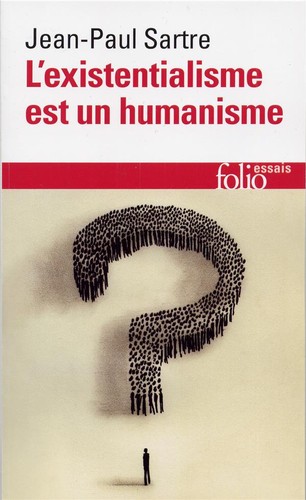 L'existentialisme est un humanismeJean-Paul Sartre
 Les jeux sont faitsJean-Paul Sartre
 Literature & existentialismJean-Paul Sartre