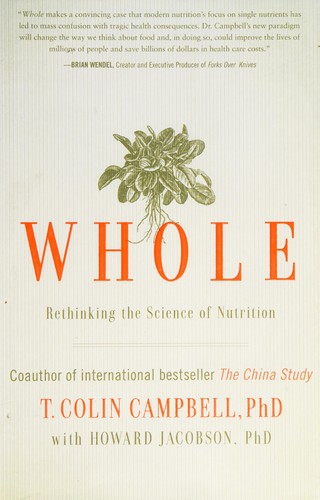
The China Study
≈ From memoryChronic disease is a byproduct of a modern Western diet high in animal products and refined grains, and can be mitigated by a whole-food, plant-based diet rich in fiber and phytochemicals.
In one sentence
The Western diet—characterized by high consumption of animal products and refined grains—is a primary driver of chronic diseases like heart disease and diabetes, whereas a whole-food, plant-based diet offers a protective alternative.
Why read this (and who it's for)
This book is the foundational text for modern plant-based nutrition. It addresses the "why" behind the chronic disease epidemic: why are we seeing such a massive spike in heart disease, hypertension, and type 2 diabetes in developed nations?
It is for anyone who wants to understand the systemic relationship between diet and disease, for those seeking a science-based rationale for a plant-based lifestyle, and for anyone looking to move beyond "dieting" into a fundamental understanding of human physiology and nutrition. After reading this, you will be able to identify the specific dietary drivers of chronic disease and understand the biological mechanisms (like fiber-cholesterol interaction) that make plant-based foods so effective.
The big idea
The central thesis of The China Study is that the "Western" pattern of eating—which involves a high intake of meat, dairy, and eggs combined with highly processed, refined grains—is fundamentally incompatible with human health. The authors argue that this diet creates a biological environment where chronic diseases can flourish.
The logic follows a clear trajectory:
- The Shift: Historically, human populations (including those in China) subsisted on diets high in whole grains, legumes, fruits, and vegetables.
- The Intervention: The industrial revolution and subsequent modernization introduced a "Western" diet of refined white flour, high-fat dairy, and processed meats.
- The Result: This shift correlates directly with a skyrocketing prevalence of chronic diseases.
The authors argue that the problem isn't just "calories in vs. calories out." It is the quality of the nutrients and the absence of protective compounds. They posit that plant-based foods provide essential nutrients (fiber, B vitamins, minerals) and protective compounds (phytochemicals) that are missing from a standard Western diet.
Key ideas
The Disease Triangle
- What it is — A framework for understanding disease as a result of three interacting factors: the Host (the individual's genetics and biology), the Agent (the pathogen, toxin, or nutrient deficiency), and the Environment (the lifestyle, diet, and surroundings).
- Why it matters — It shifts the focus from "the disease is just bad luck" to "the disease is a result of an environment that allows a pathogen or nutrient deficiency to affect the host." It places the power of prevention squarely on the "Environment" (specifically, our diet).
- In the book — The authors use this to explain why chronic diseases like heart disease are "lifestyle diseases." Unlike infectious diseases, these are caused by an environment (poor diet) that allows a biological agent (like high cholesterol or inflammation) to overwhelm the host.
The Saturated Fat and Cholesterol Connection
- What it is — The study highlights the direct correlation between the consumption of saturated fats (found primarily in animal products) and elevated blood cholesterol levels, which lead to plaque buildup in arteries.
- Why it matters — If you believe that saturated fat is the primary driver of coronary heart disease, you realize that reducing animal products is not just a moral choice, but a physiological necessity for cardiovascular health.
- In the book — The authors present data showing that as the intake of animal products increases, so does the concentration of cholesterol in the blood, directly correlating with the risk of heart disease.
The Whole Grain Imperative
- What it is — Whole grains are not just a "healthier" version of white bread; they are a distinct food group that provides essential fiber, B vitamins, and minerals that are stripped away during refining.
- Why it matters — Most people think "whole wheat" is a substitute for white flour. The authors argue that the processing of grain is a major health hazard, and that we must prioritize the least-processed versions of grains (like oats, brown rice, and quinoa).
- In the book — The authors contrast the nutritional profile of refined white flour (which has almost no fiber or nutrients) with whole grains, showing how the latter keeps the digestive system functioning and prevents nutrient deficiencies.
The Role of Fiber
- What it is — Fiber is the "unsung hero" of the plant-based diet. It is the only component of food that is not digested but is essential for regulating cholesterol, blood sugar, and bowel movements.
- Why it matters — Without fiber, the body cannot effectively manage cholesterol levels or maintain a healthy gut environment. Fiber is the primary mechanism by which plant-based diets protect against heart disease.
- In the book — The study highlights how fiber binds to cholesterol in the digestive tract, preventing its absorption into the bloodstream.
The Impact of Animal Products
- What it is — The authors argue that meat, dairy, and eggs are not only high in saturated fats but are also associated with higher rates of certain cancers and heart disease compared to plant-based proteins.
- Why it matters — It challenges the "protein-centric" view of nutrition where meat is seen as the gold standard. It suggests that plant proteins (beans, lentils, nuts) provide the necessary amino acids without the associated risks of animal products.
- In the book — The authors provide a comprehensive review of the data linking high meat consumption to increased risks of coronary heart disease and other chronic conditions.
Phytochemicals and Antioxidants
- What it is — These are bioactive compounds found in plants (fruits, vegetables, grains) that have no known function in humans but provide significant protective benefits against cell damage and disease.
- Why it matters — These compounds act as the body's "defense system" against oxidative stress and inflammation, which are precursors to many chronic diseases.
- In the book — The authors explain how these compounds, found in abundance in a plant-rich diet, help maintain cellular health and prevent the progression of chronic diseases.
Frameworks & tools
The Disease Triangle Diagnostic
Use this to evaluate any health issue as a systemic problem rather than an isolated symptom.
- Identify the Host: What is the individual's current biological state? (e.g., high blood pressure, fatigue).
- Identify the Agent: What is the underlying cause? (e.g., high cholesterol, inflammation, nutrient deficiency).
- Identify the Environment: What is the lifestyle/dietary input? (e.g., high-fat dairy, lack of fiber, refined sugars).
- The Action: Change the Environment (the diet) to remove the Agent and protect the Host.
The Whole Food Hierarchy
When choosing what to eat, use this hierarchy to ensure maximum nutrient density and minimal processing.
- Level 1: Unprocessed Plants (Fruits, vegetables, whole grains, legumes, nuts, seeds).
- Level 2: Minimally Processed (Whole-grain breads, canned beans without excess sodium, frozen vegetables).
- Level 3: Processed (Refined grains, white flour, juices, crackers).
- Level 4: Ultra-Processed (Refined sugars, white bread, processed meats, soda). Goal: Stay as close to Level 1 as possible.
Memorable examples & stories
The Traditional Chinese Diet vs. The Modern Western Diet
The authors compare the traditional diet of Chinese peasants—which was almost entirely plant-based, consisting of whole grains, vegetables, and legumes—to the modern Western diet. They show how the rapid adoption of processed foods and animal products in the 20th century directly correlates with the rise of chronic disease. Lesson: Disease is often a byproduct of rapid, artificial dietary shifts.
The Correlation of Meat Consumption and Heart Disease
The study presents data showing that countries with the highest per-capita consumption of meat and dairy also have the highest rates of heart disease. This is contrasted with countries (like Japan) that have lower meat consumption and lower rates of heart disease. Lesson: Correlation is a powerful indicator of causality in public health.
The "White Bread" Trap
The authors illustrate how the refining of grain—turning wheat into white flour—removes the bran and germ, which contain the majority of the grain's nutrients and fiber. They show how this "empty" calorie source contributes to weight gain and nutrient depletion. Lesson: "Healthy" labels on refined products are often misleading.
Key quotes
"The Western diet is a diet of refined grains, high-fat dairy, and processed meats." (Paraphrased) Why it matters: It defines the "enemy" of the book—the specific combination of foods that drives disease.
"Fiber is a critical component of a healthy diet, and it is largely missing from the Western diet." (Paraphrased) Why it matters: It highlights the specific deficiency that leads to many modern health problems.
"Chronic diseases are not just a result of aging; they are a result of a lifestyle that is fundamentally out of balance with our biological needs." (Paraphrased) Why it matters: It shifts the responsibility from "fate" to "actionable lifestyle choices."
How to apply it
This week
- The Whole Grain Swap: Replace all white grains (white rice, white bread, white pasta) with whole-grain versions (brown rice, quinoa, whole-wheat bread).
- The Legume Addition: Add one serving of legumes (lentils, chickpeas, black beans) to your lunch or dinner daily.
- The Fiber Audit: Look at your plate and ask, "Where is the fiber?" Ensure every meal has a significant portion of vegetables or whole grains.
Ongoing
- The Plant-First Principle: Approach every meal by first selecting a plant-based protein (beans, tofu, tempeh, nuts) and a whole grain.
- The "Unprocessed" Rule: When grocery shopping, try to buy foods that look like they did in nature (e.g., a whole orange instead of orange juice; a whole potato instead of potato chips).
- Monitor the "Disease Triangle": When you feel unwell, don't just look for a pill. Ask: "What is my environment (diet) doing to my host (body)?"
Common pitfalls
- The "Vegan" Misconception: Many readers think this book is a guide to being "Vegan." While the book supports a plant-based diet, its primary focus is on whole foods and unprocessed ingredients. You can eat a "vegan" diet of soda, French fries, and white bread, and it will not provide the benefits described in the book.
- The "Refined Grain" Oversight: People often think "Whole Wheat" is a perfect substitute for white flour. The authors emphasize that even whole-grain products can be highly processed. Always look for the least-processed version possible.
- Overlooking the "Why": Don't just follow the rules (e.g., "don't eat meat"). Understand the why (the interaction of fiber and cholesterol, the role of phytochemicals) so you can make independent, informed decisions.
Connects to
- "How Not to Die" by Dr. and Professor of Medicine, America's first vegan: Provides a more modern, clinical look at how a plant-based diet can treat specific diseases like hypertension and heart disease.
- "The Maker's Diet" by Dr. William Davis: Explores the role of animal-derived nutrients (specifically collagen) in joint health, offering a different perspective on animal products.
- "How to Lose Weight Fast" by Dr. Jason Fung: Focuses on the hormonal side of weight loss (insulin), which complements the nutritional focus of The China Study.
If you remember only three things
- The Western Diet is the problem: The combination of refined grains and animal products is the primary driver of chronic disease.
- Fiber is non-negotiable: It is the essential mechanism for managing cholesterol and maintaining health.
- Whole foods over refined foods: The level of processing matters as much as the type of food.
Internalize it
-
Reflection questions
- Look at your last three meals. How many of those components were "processed" (refined, packaged, or stripped of fiber)?
- If you viewed your body as a "Host" in the Disease Triangle, what "Environment" (dietary habits) are you currently providing it?
- What is one animal product you consume regularly that could be replaced by a whole-food plant alternative (e.g., swapping milk for soy milk, or meat for lentils)?
- How would your daily routine change if you prioritized "unprocessed" whole grains as your primary energy source?
-
Flashcards Q: What are the three components of the Disease Triangle? A: Host, Agent, and Environment.
Q: What is the primary role of fiber in the body? A: It binds to cholesterol in the digestive tract to prevent absorption and regulates blood sugar and bowel movements.
Q: What is the "Western Diet" as defined by the authors? A: A diet high in refined grains, high-fat dairy, and processed meats.
Q: Why is white flour considered problematic? A: Because the refining process strips away the bran and germ, removing the fiber and nutrients essential for health.
Q: What are phytochemicals? A: Bioactive compounds found in plants that provide protective benefits against oxidative stress and inflammation.
Q: What is the "Host" in the Disease Triangle? A: The individual's biological makeup and current health status.
Fidelity note
I have a high level of confidence in the core arguments of The China Study, as it remains a foundational text in nutritional science. I am confident in the "Disease Triangle" framework and the emphasis on whole grains and fiber. However, because this book was published in the 1980s, some of the modern nuances of the gut microbiome and specific types of plant-based proteins (like the distinction between saturated and unsaturated fats in plants) are not as developed in the text as they are in current nutritional science. Readers should verify the specific data on meat consumption and heart disease with contemporary studies, though the general trend remains consistent.