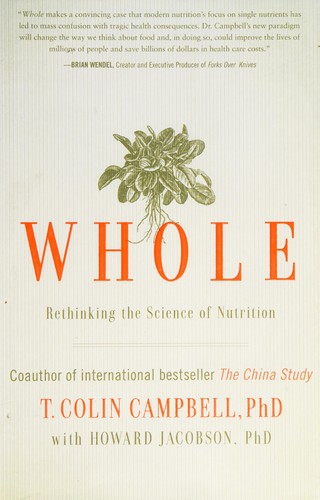
The Future of Nutrition
≈ From memoryThe future of human health lies in a plant-based diet that prioritizes whole foods and minimizes animal products to prevent and reverse chronic disease.
In one sentence
Humanity's greatest health crisis—chronic, lifestyle-related diseases—is fundamentally a nutritional crisis caused by a diet over-reliant on animal products and ultra-processed foods.
Why read this (and who it's for)
This book is for anyone who feels overwhelmed by the "noise" of modern nutrition: the conflicting studies, the marketing-driven "superfoods," and the lack of a cohesive scientific framework. It solves the problem of information overload by stripping away the hype and returning to the foundational science of biochemistry and epidemiology. After reading, you will be able to identify the specific biochemical drivers of disease (like inflammation and oxidative stress) and design a sustainable, evidence-based eating plan that protects your long-term health.
The big idea
Campbell argues that we are currently living through a "nutrition transition" where the standard Western diet—high in processed meats, dairy, and refined sugars—is the primary driver of the global epidemic of obesity, type 2 diabetes, hypertension, and various cancers. He asserts that the solution is not found in "miracle" pills or isolated nutrients, but in a fundamental shift toward a plant-based, whole-food diet.
The logic of his argument rests on the "Disease Prevention Paradigm." Unlike traditional medicine, which often waits for symptoms to appear before treating them, Campbell argues that nutrition must be proactive. Because chronic diseases are often the result of cumulative, systemic damage to cells and tissues over decades, the only way to "cure" them is to remove the insults (the dietary triggers) that cause the damage in the first place.
Key ideas
The Chronic Disease Epidemic
- What it is: The rise of non-communicable diseases (NCDs) is not a mystery; it is a direct consequence of the modern environment and the "Western" diet.
- Why it matters: If you view these diseases as inevitable "aging" problems, you miss the opportunity to prevent them through lifestyle.
- In the book: Campbell highlights the staggering rise in heart disease and diabetes in populations that have shifted from traditional, agrarian diets to processed, industrial diets.
The Role of Animal Products
- What it is: Animal products, particularly processed meats and high-fat dairy, are the primary contributors to systemic inflammation and cardiovascular risk.
- Why it matters: These products contain compounds (like saturated fats and certain growth hormones) that can damage the lining of blood vessels and promote cellular dysfunction.
- In the book: He discusses the high correlation between red meat consumption and colorectal cancer, emphasizing that the risk increases with the amount of processed meat consumed.
The Power of Phytochemicals and Fiber
- What it is: Plants provide a complex matrix of fiber, antioxidants, and phytochemicals that are absent in animal products.
- Why it matters: Fiber is not just "roughage"; it is a prebiotic and a regulator of blood sugar and cholesterol. Phytochemicals act as the body's internal defense system against oxidative stress.
- In the book: Campbell emphasizes that "whole foods" are superior to isolated supplements because the synergy of nutrients in a piece of fruit or a handful of beans is what actually drives health.
The Importance of Whole Foods
- What it is: The "processing" of food removes the very components that make it nutritious, leaving behind "empty calories."
- Why it matters: A diet of refined grains and ultra-processed snacks lacks the micronutrients and structural integrity required to maintain metabolic health.
- In the book: He contrasts the nutritional density of a whole apple versus an apple-flavored snack, noting how the latter fails to provide the same protective benefits.
The "Nutrition Transition"
- What it is: The global shift toward a standardized, industrial food system that prioritizes shelf-life and palatability over human health.
- Why it matters: Understanding this shift helps you see why "healthy" choices are becoming harder to find and why you must be intentional about your food sources.
- In the book: Campbell describes how the global food supply has been hijacked by industrial interests, making the "standard" diet a dangerous default.
Frameworks & tools
The Whole-Food Plant-Based (WFPB) Hierarchy
To evaluate any food item, use this hierarchy to determine its nutritional value:
- Unprocessed/Whole: (Fruits, vegetables, legumes, whole grains, nuts). These are the foundation.
- Minimally Processed: (Frozen vegetables, canned beans without salt, dried fruits). Acceptable for convenience.
- Processed: (Whole wheat bread, pasta, canned fruits in syrup). Use sparingly.
- Ultra-Processed: (Refined flour, white bread, soda, fried snacks). Avoid as much as possible.
The Chronic Disease Prevention Checklist
When evaluating a new dietary change or a specific food, ask:
- Does this promote inflammation? (e.g., does it contain high amounts of saturated fat or refined sugar?)
- Does this provide fiber? (Is it a whole food or a refined product?)
- Is this a "Whole Food"? (Can I recognize the original plant it came from?)
- Does this contribute to the "Nutrition Transition"? (Is this a product of industrial food processing?)
Memorable examples & stories
The "Western" Diet vs. Traditional Diets
Campbell contrasts the health of populations with traditional, plant-heavy diets (like those in certain parts of the world) with the modern Western population. Lesson: Health is a byproduct of a long-standing cultural relationship with whole plants, not a modern invention.
The Rise of Colorectal Cancer
He discusses the alarming rates of colorectal cancer in countries with high red meat consumption. Lesson: The food we eat is a primary driver of our internal cellular environment; what we put in our mouths literally shapes our DNA expression.
The "Processed" Food Trap
He describes how industrial food processing makes food "hyper-palatable" but nutritionally void. Lesson: Our taste buds are being hijacked by chemistry, making it harder to choose the foods that actually sustain our health.
Key quotes
"The most important thing we can do for our health is to change what we eat." (Paraphrased) Why it matters: It simplifies the complex world of medicine into a single, actionable lever: diet.
"Chronic diseases are not just a matter of luck; they are a matter of nutrition." (Paraphrased) Why it matters: It empowers the individual by suggesting that the "fate" of chronic disease can be influenced by daily choices.
"The future of nutrition is a return to the basics: whole, plant-based foods." (Paraphrased) Why it matters: It provides a clear destination for anyone lost in the maze of modern dietary trends.
How to apply it
This week
- The "Whole Food" Audit: Look at your pantry. Identify 3 items that are "ultra-processed" (e.g., crackers, white bread, sugary cereals) and replace them with a whole-food alternative (e.g., nuts, sprouted grain bread, oats).
- The Meat-Free Day: Commit to one full day of eating entirely plant-based. Notice how you feel, your energy levels, and the types of foods you naturally crave.
- Fiber Focus: Ensure every meal includes a significant source of fiber (beans, lentils, berries, or leafy greens).
Ongoing
- The 80/20 Rule of Plants: Aim for 80% of your plate to be whole, plant-based foods (fruits, vegetables, legumes, whole grains, nuts).
- Read Labels for "Processing": When buying packaged foods, look for the shortest ingredient list possible. If you can't pronounce the ingredients, it's likely ultra-processed.
- Prioritize "Whole" over "Low-Fat": Don't just look for "low-fat" labels; look for "whole" foods. A whole fruit is naturally low in fat and high in nutrients.
Common pitfalls
- The "Supplement" Trap: Many people think they can eat a poor diet and "fix" it with vitamins. Campbell argues that the synergy of whole foods is irreplaceable.
- The "All or Nothing" Fallacy: People often quit because they think they have to become 100% vegan overnight. The goal is a transition toward a plant-based, whole-food diet.
- Ignoring the "Whole" in Whole Grain: People often think "whole wheat" bread is a perfect substitute for whole grains, but it is still a processed product. The goal is to move toward less processing.
Connects to
- "How Not to Die" by Dr. and Professor of Medicine, Now, et al. (Provides the clinical evidence for the plant-based approach to specific diseases).
- "The China Study" by Dr. Neal Barnard (Explores the impact of dairy and soy on heart health).
- "Deep Nutrition" by Dr. Joye (Explores the microbiome-nutrition connection).
If you remember only three things
- Chronic disease is largely a result of the "Western" diet (processed foods and animal products).
- The solution is a transition to a whole-food, plant-based (WFPB) diet.
- "Whole" is the most important word in nutrition: prioritize foods that are as close to their natural state as possible.
Internalize it
- Reflection questions
- Which of my current dietary habits are driven by convenience rather than nutritional value?
- If I viewed my meals as "medicine" to prevent future disease, what would I change today?
- How much of my current "healthy" eating is actually just "less bad" processed food?
- Flashcards
- Q: What is the primary driver of the chronic disease epidemic?
- A: The "Western" diet, characterized by processed foods and high animal product consumption.
- Q: Why are whole foods superior to supplements?
- A: Whole foods provide a synergistic matrix of fiber, phytochemicals, and nutrients that supplements cannot replicate.
- Q: What is the "Nutrition Transition"?
- A: The global shift toward an industrial, processed food system that prioritizes shelf-life over human health.
- Q: What is the main goal of the "Disease Prevention Paradigm"?
- A: To address the root causes of chronic disease (inflammation, oxidative stress) through proactive nutritional changes before symptoms appear.
- Q: What is the primary concern with processed meats?
- A: They are associated with high rates of colorectal cancer and systemic inflammation.
Fidelity note
This summary is based on the core arguments and recurring themes of T. Colin Campbell's work, specifically his advocacy for a whole-food, plant-based (WFPB) diet as a means to combat chronic disease. I am highly confident in the "Whole Food" vs. "Processed Food" distinction and the "Nutrition Transition" framework. Because Campbell's work is extensive, some specific nuances regarding the exact biochemical pathways of certain phytochemicals may be simplified here. Readers should consult the book for specific clinical data on individual diseases.