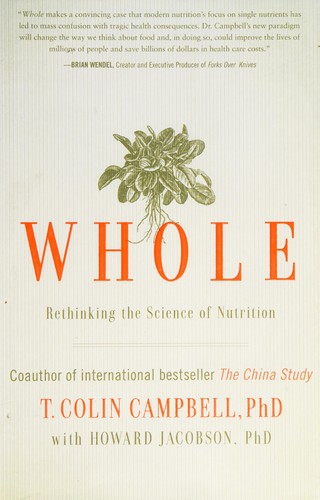
The Low-Carb Fraud
≈ From memoryLow-carbohydrate diets are fundamentally flawed because they fail to provide the essential nutrients required for human health, specifically the fiber and phytonutrients found in whole grains and fruits.
In one sentence
Low-carbohydrate diets are a nutritional "fraud" because they prioritize the reduction of calories and carbohydrates at the expense of the essential micronutrients and fiber found in whole grains, fruits, and vegetables.
Why read this (and who it's for)
This book is for anyone who has felt confused by the conflicting "dietary wars" between low-carb/keto advocates and high-carb/whole-food advocates. It solves the problem of "information overload" by providing a rigorous, science-based critique of the low-carb movement. After reading, you will be able to identify the nutritional gaps in low-carb diets, understand the physiological role of fiber and complex carbohydrates, and make informed decisions about your own plate based on nutrient density rather than just macronutrient ratios.
The Big Idea
Dr. T. Colin Campbell argues that the low-carbohydrate movement is built on a foundational misunderstanding of human physiology. He asserts that while carbohydrates are often unfairly vilified as the primary cause of weight gain, the real issue is the consumption of refined carbohydrates (like white flour and sugar) rather than complex carbohydrates (like whole grains and legumes).
The core of his argument is that by eliminating whole grains and many fruits, low-carb diets strip the body of essential nutrients—specifically fiber, B vitamins, and various phytonutrients—that are necessary for metabolic health, gut microbiome integrity, and chronic disease prevention. Campbell argues that the "fraud" lies in the marketing of low-carb as a "health" miracle while ignoring the systemic nutritional deficiencies it creates.
The logic follows a simple path: Human evolution has occurred in the presence of diverse, fiber-rich plants. To remove these from the diet is to remove the very tools the body uses to regulate insulin, maintain a healthy gut, and protect against inflammation. Therefore, a "healthy" diet must be based on the inclusion of whole, unprocessed foods, not the exclusion of a macronutrient group.
Key ideas
The Whole Grain Defense
- What it is: Whole grains are not the enemy; they are a primary source of fiber, minerals, and antioxidants that are missing from low-carb diets.
- Why it matters: Removing whole grains removes the "bulk" and nutrients that keep the digestive system running and the heart healthy.
- In the book: Campbell highlights that many low-carb proponents view grains as "empty calories," ignoring that the bran and germ of the grain contain the highest concentration of nutrients.
The Fiber Gap
- What it is: Fiber is a non-digestible carbohydrate that is essential for gut health, satiety, and blood sugar regulation.
- Why it matters: Without fiber, the gut microbiome suffers, and the body loses a key mechanism for slowing the absorption of glucose into the bloodstream.
- In the book: He points out that low-carb diets often lead to significant fiber deficiencies, which can lead to constipation and a less diverse microbiome.
The "Refined" vs. "Unrefined" Distinction
- What it is: The problem isn't carbohydrates; it's the processing of those carbohydrates.
- Why it matters: If you distinguish between a piece of whole-grain bread and a sugary soda, the "low-carb" argument loses its teeth because the soda is the problem, not the grain.
- In the book: Campbell argues that the "fear of carbs" is a marketing tactic that ignores the fact that refined carbohydrates are what drive the obesity epidemic.
The Role of Phytonutrients
- What it is: Plants contain thousands of bioactive compounds (phytonutrients) that have no known human equivalent but are vital for cellular health.
- Why it matters: These compounds are often concentrated in the fruits and grains that low-carb diets restrict.
- In the book: He explains that these compounds work synergistically to protect against chronic diseases like cancer and heart disease.
The Insulin Misunderstanding
- What it is: Insulin is a vital hormone, not a "toxin" to be suppressed at all costs.
- Why it matters: Low-carb advocates often treat insulin as an enemy, but it is necessary for transporting nutrients into cells.
- In the book: Campbell argues that insulin resistance is the problem, and it is caused by a diet of refined sugars and processed foods, not by the consumption of whole grains.
The Importance of Satiety
- What it is: A healthy diet must be sustainable and satisfying.
- Why it matters: If a diet is too restrictive (like many low-carb plans), it leads to "yo-yo" dieting and psychological stress.
- In the book: He emphasizes that whole grains and legumes provide a "slow-burn" energy that keeps people full longer than processed snacks.
Frameworks & tools
The "Whole Food" Hierarchy
When evaluating a food's place in your diet, use this hierarchy to determine its value:
- Unprocessed/Whole: (e.g., Quinoa, Oats, Apples, Lentils) - Always include.
- Minimally Processed: (e.g., Frozen vegetables, Canned beans without salt) - Generally good.
- Processed: (e.g., White bread, Pasta, Fruit juice) - Limit consumption.
- Ultra-Processed: (e.g., Sugary cereals, Fried snacks, Soda) - Avoid.
The Nutrient-Density Audit
Before adopting any new dietary restriction (like low-carb), ask these three questions:
- Fiber: Does this diet provide at least 25–30g of fiber daily?
- Micronutrients: Does this diet include a variety of colorful fruits and vegetables?
- Whole Grains: Does this diet include at least one serving of whole grains or legumes daily? If the answer to any of these is "No," the diet is likely nutritionally incomplete.
Memorable examples & stories
The "White Flour" Fallacy
Campbell discusses how the public has been conditioned to fear "white" carbohydrates while being told to consume "white" processed foods (like white bread) in the past. The lesson is that the culprit is the refinement process, which strips the grain of its protective nutrients.
The Gut Microbiome Connection
He describes the gut as a "garden" that requires diverse "fertilizer" (fiber). By removing grains and fruits, you are essentially starving the beneficial bacteria that regulate your immune system and mood. The lesson is that nutrition is about more than just calories; it's about biological harmony.
The "Low-Fat" Comparison
Campbell draws a parallel between the current "Low-Carb" craze and the "Low-Fat" craze of the 1990s. Just as the low-fat movement led to people eating more processed sugars to replace fat, the low-carb movement leads people to eat more processed meats and fats. The lesson is that "fear-based" dieting usually leads to worse health outcomes.
Key quotes
"The problem is not carbohydrates; the problem is refined carbohydrates." (Paraphrased) Why it matters: It shifts the blame from a macronutrient to a processing method.
"Low-carbohydrate diets, by their very nature, exclude many of the most nutrient-dense foods available to humans." (Paraphrased) Why it matters: It highlights the opportunity cost of low-carb—what you give up is often more valuable than what you gain.
"Fiber is not just a 'filler'; it is a critical component of human physiology." (Paraphrased) Why it matters: It elevates fiber from a side-effect of eating plants to a primary nutritional requirement.
How to apply it
This week
- The Grain Audit: Look at your current meals. Identify where you can swap a refined grain (white bread, white rice) for a whole grain (quinoa, brown rice, farro).
- The Fruit Addition: Add one piece of whole fruit to your breakfast or lunch. Do not replace a meal with it; simply add it to ensure you are getting those missing phytonutrients.
- Fiber Check: Read the labels of your snacks. Aim for at least 3g of fiber per serving.
Ongoing
- The "Whole Food" Rule: Whenever possible, choose the least processed version of a food (e.g., an orange instead of orange juice).
- Diversity of Color: Ensure your plate includes a variety of colors from fruits and vegetables to capture a wide spectrum of phytonutrients.
- Ignore the "Carb-Free" Marketing: When looking at new diet plans, ignore the "low-carb" labels and look for "whole-food" and "nutrient-dense" labels instead.
Common pitfalls
- The "Refined" Trap: People often think "low-carb" means "healthy" because they are eating low-carb foods like processed deli meats, cheese, and white-flour crackers. Campbell warns that these are still "junk" foods.
- The "All-or-Nothing" Fallacy: Some readers might think this means they can eat unlimited amounts of white bread. No—the goal is to prioritize whole grains, not to replace them with refined ones.
- Ignoring Individual Needs: While Campbell argues against low-carb as a general rule, some individuals (like those with specific medical conditions) may need to manage carbs. This book is a critique of the general low-carb movement, not a prescription for every single person's unique medical needs.
Connects to
- "How Not to Diet" by Dr. Michael Greger: Extends the focus on plant-based nutrition and the importance of whole foods.
- "The China Study" by Bill Jovanovich: Provides the foundational research on how plant-based diets affect heart disease and other chronic conditions.
- "Grain, Grain" by various authors: Explores the specific benefits of whole grains which Campbell champions.
If you remember only three things
- The problem is refined carbohydrates (sugar, white flour), not complex carbohydrates (whole grains, legumes).
- Low-carb diets often create a fiber and micronutrient deficit that can harm long-term health.
- A healthy diet should be based on whole, unprocessed foods that provide a wide spectrum of phytonutrients.
Internalize it
-
Reflection questions
- When I look at my current diet, what "refined" carbohydrates am I consuming out of habit rather than nutrition?
- If I were to remove all processed foods from my kitchen today, what would I be missing? How can I replace those items with whole-food alternatives?
- How does my current level of fiber intake compare to the recommended 25–30g? What is one easy way to increase that?
-
Flashcards Q: What is the primary "fraud" of the low-carbohydrate movement? A: It promotes the removal of whole grains and fruits, which are essential sources of fiber and phytonutrients.
Q: What is the difference between refined and complex carbohydrates? A: Refined carbs (white bread, sugar) are stripped of nutrients; complex carbs (whole grains, legumes) retain their fiber and minerals.
Q: Why is fiber important for blood sugar regulation? A: It slows the absorption of glucose into the bloodstream, preventing sharp insulin spikes.
Q: What are "phytonutrients"? A: Bioactive compounds found in plants that support cellular health and are not found in animal products.
Q: How does Campbell compare the low-carb craze to the low-fat craze? A: He argues they are similar in that both lead people to consume more processed, "junk" foods to replace the restricted macronutrient.
Fidelity note
I have a high level of confidence in the core arguments of this summary. Dr. Campbell is a well-known advocate for plant-based, whole-food nutrition, and his critique of low-carb diets centers on the loss of fiber and whole grains. I am confident in the distinction he makes between refined and complex carbohydrates. However, because I am summarizing from memory, specific percentages of certain nutrients (like the exact milligrams of a specific vitamin) should be verified against the text to ensure precision.