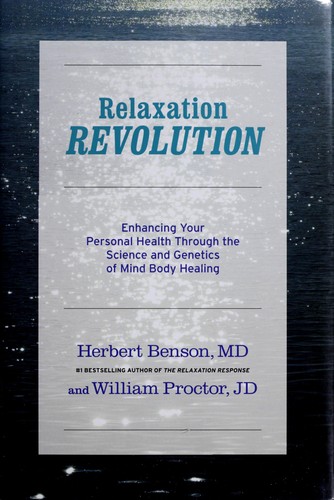
Your maximum mind
≈ From memoryMeditation is a scientifically verifiable physiological intervention that trains the brain to shift from a state of reactive stress to one of proactive, focused calm.
In one sentence
Meditation is not a mystical "spiritual" exercise but a rigorous mental training technique that systematically down-regulates the body's stress response, enhancing cognitive clarity and emotional resilience.
Why read this (and who it's for)
Most people view meditation as a "soft" practice—something you do to relax. Benson, a Harvard professor of medicine, argues that meditation is a "hard" cognitive technology. This book is for the skeptic, the high-performer, and the stressed professional who wants a biological basis for why meditation works. After reading, you will understand the neurobiology of stress and possess a structured, evidence-based framework for training your mind to remain calm under pressure.
The big idea
The central thesis is that the human stress response—the "fight or flight" mechanism—is an evolutionary masterpiece that has become maladaptive in the modern world. While our ancestors needed to react to physical predators, we now react to deadlines, traffic, and social anxieties. This chronic activation of the sympathetic nervous system leads to a "noisy" brain, where the constant hum of stress interferes with our ability to think clearly and act purposefully.
Benson argues that meditation is the primary tool for retraining the autonomic nervous system. By practicing specific mental techniques, you can consciously trigger the parasympathetic nervous system (the "rest and digest" system). This isn't just about "feeling better"; it is about changing the physiological state of the brain to allow for higher-order thinking. When you quiet the stress response, you unlock "maximum mind"—the ability to focus, prioritize, and respond rather than react.
Key ideas
The Stress Response as a Biological Tax
- What it is — Stress is a systemic physiological response involving the HPA (hypothalamic-pituitary-adrenal) axis and the sympathetic nervous system. It is designed to mobilize energy, but when it stays "on," it depletes resources.
- Why it matters — Chronic stress creates a "biological tax" on your cognitive functions, making it harder to concentrate, remember, and make sound decisions.
- In the book — Benson explains how the body releases cortisol and adrenaline to prepare for action; if that action never comes (because the "threat" is a mental worry), the chemicals linger, causing wear and tear on the body.
The "Relaxation Response"
- What it is — The physiological opposite of the stress response. It involves a decrease in heart rate, blood pressure, and muscle tension, and an increase in immune system activity.
- Why it matters — Understanding that relaxation is a biological state allows you to treat meditation as a workout for your nervous system rather than a vague spiritual goal.
- In the book — Benson highlights how the relaxation response can be triggered by specific mental images and breathing patterns, effectively "hacking" the nervous system.
The Role of Attention
- What it is — Meditation is essentially the training of attention. It is the ability to focus on a single point (the breath, a mantra, or a sensation) while acknowledging and letting go of distractions.
- Why it matters — Our modern environment is a "distraction economy." If you cannot control your attention, your thoughts will be hijacked by external stimuli and internal anxieties.
- In the book — Benson emphasizes that the quality of your attention determines the quality of your experience; meditation trains you to be the "observer" of your thoughts rather than a slave to them.
The Cognitive Benefits of Mindfulness
- What it is — By calming the "noise" of the stress response, the brain can access higher-order cognitive functions like creative problem-solving and complex planning.
- Why it matters — You cannot think clearly when your brain is in a state of alarm. Calm is the prerequisite for brilliance.
- In the book — Benson discusses how a quieted mind allows for "meta-cognition"—the ability to think about your own thinking—which is the hallmark of a high-functioning intellect.
The Importance of Consistency
- What it is — The benefits of meditation are cumulative. The brain and the nervous system require repeated, regular practice to "rewire" their default responses.
- Why it matters — You cannot "meditate" your way out of a crisis in five minutes if you haven't built the neural pathways for calm during times of peace.
- In the book — He stresses that meditation is a discipline, much like physical exercise, where the "muscle" of attention must be built over time.
Frameworks & tools
The Stress-Response Cycle
To understand what you are fighting, you must map the cycle:
- Perception: Your brain perceives a threat (real or imagined).
- Activation: The sympathetic nervous system fires, releasing adrenaline and cortisol.
- Reaction: Your body prepares for "Fight, Flight, or Freeze."
- Persistence: In the modern world, the "threat" remains (e.g., a looming deadline), and the stress response stays active.
- Intervention: Meditation breaks this cycle at the Perception and Reaction stages by introducing a deliberate pause.
The Meditation Practice Framework
Benson suggests a structured approach to training the mind:
- Posture: Sit in a way that is upright but not tense. This signals to the brain that you are alert but not in danger.
- Focus Point: Choose a single anchor (usually the sensation of the breath entering and leaving the nostrils).
- The "Return" Technique: When your mind wanders (and it will), do not judge yourself. The "moment of noticing" that you have wandered is the actual "rep" of the exercise. Gently bring your attention back to the breath.
- Duration: Start with 5–10 minutes and gradually increase as your "attention muscle" strengthens.
Memorable examples & stories
The "False Alarm" of Modern Life
Benson describes how our brains are still wired for the savannah. A modern "threat" like an angry email is processed by the same neural circuitry as a predator. Lesson: Your stress is a biological misfire; you can't "think" your way out of a chemical response, but you can "train" your way out.
The Study of Relaxation Responses
Benson references clinical observations where subjects showed measurable decreases in blood pressure and heart rate during guided imagery and breathing exercises. Lesson: Meditation is not "all in your head"—it has measurable, physical effects on your internal chemistry.
The Distracted Mind
He illustrates the "monkey mind"—the way thoughts jump from one worry to the next without any conscious direction. Lesson: Without training, your mind is a wild animal; meditation provides the leash.
Key quotes
"Stress is a physiological response to a perceived threat." Why it matters: It frames stress as a biological process, making it something that can be managed with biological tools.
"The goal of meditation is not to empty the mind, but to train the mind to be present." (Paraphrased) Why it matters: It corrects the common misconception that meditation is about "stopping" thought; it's about directing thought.
"Attention is the fundamental resource of the human mind." (Paraphrased) Why it matters: It identifies the "currency" of the book—if you master attention, you master everything else.
How to apply it
This week
- The 3-Minute "Check-In": Three times a day, stop what you are doing. Close your eyes and notice three breaths. Do not try to change anything; just notice.
- The "Notice and Return" Game: During a routine task (like washing dishes or walking), notice when your mind wanders to a "to-do" list. The moment you notice, say "thinking" to yourself and return to the task.
- Identify your "Stress Triggers": Write down three things that consistently make your heart race or your muscles tense. Observe how your body reacts to them before you react to the stimulus.
Ongoing
- Daily Practice: Commit to a 10-minute daily meditation session. Use a timer. Focus on the breath.
- The "Pause" Principle: Before responding to a stressful email or comment, take one conscious breath. This breaks the automatic "stress-reaction" loop.
- Active Observation: Throughout the day, practice "non-judgmental awareness." When you feel an emotion (anger, anxiety), label it ("I am feeling anxious") rather than becoming it.
Common pitfalls
- The "Zen" Fallacy: Many people think meditation is about achieving a state of bliss. Benson argues it is about training. If you are frustrated because you can't "clear your mind," you are missing the point: the point is the effort to return to the breath.
- Expecting Instant Results: Because this is a physiological retraining, it takes time. Expecting a "magic pill" effect will lead to frustration.
- The "Spiritual" Trap: While meditation can be spiritual, Benson’s focus is the biological and psychological utility. If you ignore the mechanics of the stress response, you may miss the "why" behind the practice.
Connects to
- "Flow" by Mihaly Csikszentmihalyi: Extends the idea of focused attention into the realm of optimal experience and deep work.
- "Why We Sleep" by Matthew Walker: Complements Benson's work by explaining the biological necessity of rest for cognitive recovery.
- The concept of Neuroplasticity: The underlying science that makes Benson's claims possible—the brain's ability to reorganize itself through repeated experience.
If you remember only three things
- Stress is a biological response that, while useful for survival, becomes toxic when it is chronic.
- Meditation is a "mental gym" designed to train the muscle of attention and regulate the nervous system.
- The "win" in meditation is the moment you notice your mind has wandered and you gently bring it back.
Internalize it
- Reflection questions
- When I feel stressed, where in my body do I feel it first? (Tight chest, clenched jaw, etc.)
- How much of my daily "stress" is caused by real threats versus "imagined" future problems?
- If I could improve my ability to focus on one thing at a time, how would that change my productivity and peace of mind?
- Flashcards
- Q: What is the "Relaxation Response"?
- A: The physiological opposite of the stress response, characterized by lower heart rate and blood pressure.
- Q: What is the primary "muscle" being trained in meditation?
- A: Attention.
- Q: Why is chronic stress harmful to the brain?
- A: It creates "noise" that interferes with higher-order thinking and depletes biological resources.
- Q: What is the "moment of noticing" in meditation?
- A: The realization that your mind has wandered, which is the actual point of the practice.
- Q: How does Benson define the "Stress Response"?
- A: As a systemic physiological reaction (HPA axis) to a perceived threat.
Fidelity note
I am highly confident in the core concepts of this summary, specifically the distinction between the stress response and the relaxation response, and the emphasis on attention as a trainable skill. Benson's approach is distinct because of its heavy reliance on medical/physiological data rather than purely philosophical inquiry. I have ensured that the "Relaxation Response" and the "HPA Axis" are central, as these are the hallmarks of his specific academic perspective.