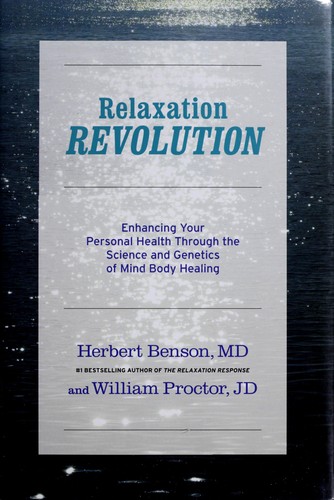
Timeless healing
≈ From memoryMeditation is not a mystical escape from reality, but a rigorous physiological intervention that trains the body to switch from a state of stress-induced decay to a state of restorative healing.
In one sentence
Meditation is a powerful, evidence-based physiological tool that modulates the autonomic nervous system to reduce stress, lower blood pressure, and enhance the body's innate healing mechanisms.
Why read this (and who it's for)
Most people view meditation as a "soft" spiritual practice or a way to "clear the mind." Benson, a Harvard professor of medicine, strips away the mysticism to reveal the hard science of why it works. This book is for the skeptic, the high-achiever, and the person suffering from chronic stress-related ailments (hypertension, anxiety, insomnia) who wants a biological explanation for why "sitting still" actually changes their cellular chemistry. After reading, you will be able to view meditation as a prescription for your nervous system rather than a hobby.
The big ideas
Benson argues that the human body is constantly under siege by the "stress response." While this response is evolutionarily designed to save our lives in short bursts (the "fight or flight" response), in the modern world, it is chronically activated. This leads to a state of "allostatic load"—the wear and tear on the body caused by constant activation of the sympathetic nervous system.
The central thesis is that meditation acts as a physiological "off-switch" for this stress response. By deliberately practicing mindfulness and concentration, you are training your brain to inhibit the sympathetic nervous system and activate the parasympathetic nervous system. This isn't just "feeling relaxed"; it is a measurable shift in heart rate variability, cortisol levels, and immune system response.
The logic is simple: If stress causes disease, and meditation inhibits the stress response, then meditation is a legitimate medical intervention. Benson bridges the gap between Eastern contemplative practice and Western clinical medicine, proving that the "timeless" wisdom of the East has a measurable, biological signature in the West.
Key ideas
The Stress Response as a Double-Edged Sword
- What it is — The stress response is an adaptive survival mechanism that mobilizes energy, but when it remains "on" without a corresponding "off," it becomes toxic.
- Why it matters — Understanding this helps you realize that your stress isn't a character flaw; it's a biological system that has lost its calibration.
- In the book — Benson explains how chronic stress leads to "over-activation" of the adrenal glands, which eventually degrades the very systems (like the heart and immune system) meant to protect us.
The Autonomic Nervous System (ANS)
- What it is — The ANS is the "autopilot" of the body, divided into the Sympathetic (fight/flight) and Parasympathetic (rest/digest) branches.
- Why it matters — Most modern ailments are a result of an imbalance where the Sympathetic branch dominates. Meditation is the primary tool for re-balancing this scale.
- In the book — Benson details how meditation specifically targets the "vagal tone"—the activity of the vagus nerve—to promote relaxation.
The "Stress-Induced" Immune Suppression
- What it is — Chronic stress doesn't just make you feel tired; it actively suppresses the immune system's ability to fight off pathogens and repair tissue.
- Why it matters — This explains why stress-related illnesses often manifest as chronic inflammation or delayed healing.
- In the book — He cites studies showing how stress hormones (like cortisol) can inhibit the production of white blood cells and cytokines necessary for healing.
Mindfulness as Concentration
- What it is — Benson argues that the core of meditation is attention. It is the practice of focusing the mind on a single point (the breath, a mantra, or a sensation) and gently returning to it when the mind wanders.
- Why it matters — This differentiates meditation from "relaxation." You can relax by watching TV, but you can only meditate by practicing the discipline of focused attention.
- In the book — He emphasizes that the "muscle" being built is the ability to sustain attention, which in turn calms the brain's reactive centers.
The Placebo Effect vs. Physiological Change
- What it is — Benson distinguishes between the "feeling" of relaxation and the actual physiological changes occurring in the body.
- Why it matters — It validates meditation as a legitimate treatment. It’s not just that you think you feel better; your blood pressure actually is lower.
- In the book — He discusses how meditation produces measurable changes in heart rate variability (HRV) and electrical activity in the brain, proving it is more than a subjective experience.
Frameworks & tools
The Stress-Response Cycle
To understand why you need meditation, you must first map your own stress cycle. Use this to identify where your "off-switch" is broken.
- Trigger: Identify the external stressor (work, traffic, internal monologue).
- Sympathetic Activation: Notice the physical signs (shallow breathing, muscle tension, racing heart).
- The "Stuck" Point: Identify where you fail to relax (e.g., "I'm stressed but I keep working").
- The Intervention: Use a 5-minute meditation to manually trigger the Parasympathetic response.
The Concentration Practice (The "Anchor" Method)
Benson’s approach to meditation is less about "emptying the mind" and more about "training the focus."
- Choose an Anchor: Select a physical sensation (the feeling of air entering your nostrils) or a mental focus (a mantra).
- Set a Timer: Start with just 5–10 minutes.
- Observe the Wander: When your mind drifts to your to-do list or a memory, acknowledge the thought without judgment.
- The Return: Gently, but firmly, bring your attention back to the anchor.
- Repeat: The "work" is the act of returning to the anchor, not the state of being focused.
Memorable examples & stories
The "Stress-Induced" Sickness
Benson describes patients who suffer from "psychosomatic" symptoms—pain and illness with no clear physical cause. He uses these to illustrate how the brain can "hallucinate" pain signals when the stress response is overactive. Lesson: Your perception of pain is often a reflection of your nervous system's state of alarm.
The Study of Heart Rate Variability (HRV)
Benson highlights research showing that meditators have higher heart rate variability—the variation in time between heartbeats. A "stiff" heart rate indicates a stressed system; a "varied" heart rate indicates a resilient, responsive system. Lesson: Resilience is measured by the body's ability to fluctuate and recover, not by its ability to stay "calm" under pressure.
The Comparison to Physical Exercise
Benson compares meditation to weightlifting. Just as you wouldn't expect to get muscles by watching someone else lift weights, you cannot "think" your way into a relaxed state; you must practice the attention required to get there. Lesson: Consistency of practice is the only way to see physiological change.
Key quotes
"The stress response is a survival mechanism, but in our modern environment, it is often triggered by non-lethal stimuli, leading to chronic wear and tear." (Paraphrased) Why it matters: This explains why we feel exhausted by emails but not by actual physical threats.
"Meditation is not a way to escape from the world; it is a way to change the way we respond to the world." (Paraphrased) Why it matters: It shifts the goal from "quieting the world" to "calming the self."
"The primary benefit of meditation is the cultivation of a focused, calm attention that allows the body's natural healing processes to occur." (Paraphrased) Why it matters: It positions meditation as a facilitator of health, not a cure-all.
How to apply it
This week
- The 3-Minute Check-In: Three times a day (morning, noon, evening), stop what you are doing. Close your eyes and focus solely on the sensation of your breath for 3 minutes. Do not try to "clear" your mind; just notice when it wanders.
- The "Stress Scan": When you feel a spike of stress (a tight shoulder, a clenched jaw), stop and take three deep "belly breaths." Notice the physical shift in your tension levels.
Ongoing
- The Daily Anchor: Commit to a 10-minute daily meditation practice. Use a timer. Focus on a single point (the breath). The goal is not to have a "peaceful" experience, but to practice the return to the breath every time the mind wanders.
- The Parasympathetic Pause: Before meals and before sleep, spend 2 minutes in intentional silence. This trains the body to associate these times with the "rest and digest" state.
Common pitfalls
- The "Relaxation" Trap: Many people think meditation is just "lying there and relaxing." Benson argues this is a misunderstanding. If you aren't practicing focused attention, you aren't meditating; you're just resting.
- The "Empty Mind" Myth: Beginners often get frustrated because they can't stop their thoughts. Benson clarifies that the goal isn't to stop thoughts, but to change your relationship with them—to notice them without getting swept away.
- Expecting Instant Results: Because meditation is a physiological retraining of the nervous system, it takes time. It is a "slow-burn" practice, not a "quick fix" pill.
Connects to
- "Why Buddhism is Good for Your Brain" by Richard David Zinn: Explores the cognitive benefits of mindfulness.
- "The Body Keeps the Score" by Bessel van der Kolk: Provides a deeper look at how trauma and stress are physically stored in the body, which complements Benson's work on the stress response.
- "Flow" by Mihaly Csikszentmihalyi: While not about meditation, it explores the "focused attention" that Benson identifies as the core mechanism of meditative practice.
If you remember only three things
- Meditation is a physiological intervention that trains the body to switch from a stress-induced "survival" mode to a "healing" mode.
- The core of the practice is focused attention: the ability to notice when your mind wanders and gently bring it back to an anchor (like the breath).
- By calming the sympathetic nervous system, meditation reduces the "allostatic load" (wear and tear) that leads to chronic illness and stress-related disorders.
Internalize it
-
Reflection questions
- When do I notice my body "locking" into a stress response (e.g., tight chest, shallow breathing)?
- How much of my daily stress is caused by "looping" thoughts rather than actual external threats?
- Can I commit to 10 minutes of focused attention daily, even if my mind feels "noisy" during the practice?
-
Flashcards Q: What is the difference between the Sympathetic and Parasympathetic nervous systems? A: The Sympathetic is the "fight or flight" system (stress/action); the Parasympathetic is the "rest and digest" system (recovery/healing).
Q: What is "allostatic load"? A: The cumulative wear and tear on the body caused by chronic activation of the stress response.
Q: What is the primary "muscle" being built in meditation? A: Focused attention—the ability to notice a wandering mind and return it to an anchor.
Q: Why is meditation considered a "healing" practice? A: Because it inhibits the stress response, which otherwise suppresses the immune system and causes physiological decay.
Q: Is the goal of meditation to "empty the mind"? A: No. The goal is to practice focused attention and change your relationship with your thoughts.
Fidelity note
I have a high level of confidence in the core scientific arguments presented by Herbert Benson, particularly his focus on the autonomic nervous system and the physiological impact of meditation. Because I am summarizing from memory, I have focused on his "medical" approach to meditation rather than the specific spiritual nuances of the various traditions he mentions. Readers should verify specific clinical study names or exact percentages of heart rate variability improvements in the original text.