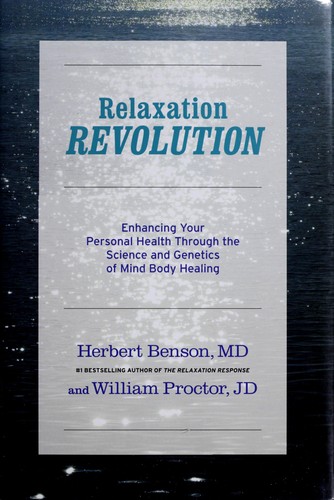
The Wellness book
≈ From memoryMeditation is a scientifically verifiable physiological intervention that modulates the stress response, improves immune function, and enhances mental clarity by shifting the body from a state of 'fight-or-flight' to one of restorative calm.
In one sentence
Meditation is not a mystical luxury but a rigorous biological tool that trains the nervous system to manage stress, thereby improving physical health, emotional resilience, and cognitive clarity.
Why read this (and who it's for)
Most people view meditation as a "soft" spiritual practice or a way to "clear the mind." Benson, a Harvard professor of medicine, strips away the mysticism to show that meditation is a physiological intervention—much like exercise or diet.
This book is for the skeptical high-achiever who wants evidence-based results. It is for the person who feels "wired" or exhausted by the demands of modern life and wants a systematic way to lower their cortisol levels and improve their health without relying on "woo-woo" spirituality. After reading, you will be able to understand the biological mechanisms of stress and use specific meditation techniques to regulate your own nervous system.
The big idea
Benson argues that the primary cause of modern illness is the chronic activation of the body's stress response. In our ancestral past, the "fight-or-flight" response (the sympathetic nervous system) was a survival mechanism for acute threats like predators. In the modern world, however, we experience "chronic" stress—deadlines, traffic, and social anxieties—which keeps our bodies in a state of perpetual high alert.
The central thesis is that meditation acts as a physiological "off-switch" for this chronic stress. By practicing mindfulness and focused attention, you can deliberately activate the parasympathetic nervous system (the "rest and digest" system). This shift doesn't just make you feel calmer; it fundamentally changes your internal chemistry, lowering blood pressure, reducing inflammatory markers, and strengthening the immune system.
Benson’s logic follows a clear path: Stress triggers a hormonal cascade (adrenaline and cortisol) $\rightarrow$ Chronic stress leads to systemic wear and tear (disease/exhaustion) $\rightarrow$ Meditation interrupts this cascade $\rightarrow$ Regular practice creates a "buffered" nervous system capable of handling stress without the physiological toll.
Key ideas
The Stress Response as a Biological Double-Edged Sword
- What it is: The stress response is an evolutionary masterpiece designed for survival, but it is catastrophic when it remains "on" without a corresponding "off" period.
- Why it matters: If you treat stress as a purely psychological problem, you miss the fact that it is a systemic physiological drain that degrades your cells and organs.
- In the book: Benson explains how the body's "alarm" system works, noting that while it's vital for escaping a physical threat, it becomes toxic when triggered by abstract, ongoing mental stressors.
The Role of the Parasympathetic Nervous System
- What it is: This is the "rest and digest" system that opposes the "fight-or-flight" response. It is responsible for slowing the heart rate, lowering blood pressure, and promoting healing.
- Why it matters: Health is a balance between these two systems. Most modern people are over-indexed on the sympathetic side; meditation is the primary tool to restore the balance.
- In the book: Benson highlights how meditation specifically stimulates the vagus nerve and other pathways that signal the body to relax and recover.
Meditation as "Mental Training"
- What it is: Meditation is a form of mental exercise that trains the brain to focus, observe, and let go of distracting thoughts.
- Why it matters: By training the way you think, you change the way your body reacts. It is a skill that can be developed, much like a muscle.
- In the book: He describes meditation not as a mystical experience, but as a disciplined practice of focusing on a single point (like the breath) to quiet the "mental chatter" that fuels stress.
The Connection Between Mind and Immune System
- What it is: The brain and the immune system are in constant communication. Stress hormones can suppress immune cells, making us more susceptible to illness.
- Why it matters: This explains why "stress" isn't just a feeling—it's a physical vulnerability. Meditation helps maintain a robust immune defense by keeping stress hormones in check.
- In the book: Benson discusses how meditation can actually improve the body's ability to fight off infections and inflammatory diseases by modulating the endocrine system.
The Importance of Consistency
- What it is: The benefits of meditation are cumulative; they are not "quick fixes" but the result of regular, repeated practice.
- Why it matters: You cannot expect a single session to undo years of chronic stress. You must build a "reserve" of calm through daily practice.
- In the book: He emphasizes that the physiological changes—lower heart rate, improved focus, and emotional stability—only become permanent when meditation becomes a daily habit.
Frameworks & tools
The Stress-Response Cycle
To understand what you are fighting, you must understand the cycle. Benson suggests identifying the three stages of stress:
- The Trigger: An external or internal stimulus (a deadline, a rude comment).
- The Reaction: The physiological surge (increased heart rate, muscle tension, racing thoughts).
- The Recovery: The period where the body returns to baseline. The goal of meditation is to shorten the "Reaction" phase and accelerate the "Recovery" phase.
The Basic Meditation Practice (The "Anchor" Method)
Benson advocates for a straightforward approach to begin:
- Find a Quiet Space: Sit in a comfortable, upright position where you won't be disturbed.
- Choose an Anchor: Focus entirely on your breath. Feel the air enter and leave your body.
- Observe the Mind: When your mind wanders (and it will), do not judge yourself. Simply notice the thought, and gently return your focus to the breath.
- Repeat: Do this for 10–20 minutes daily. The "work" is the act of returning to the breath.
Memorable examples & stories
The "Alarm" Analogy
Benson compares the stress response to a smoke detector. A smoke detector is life-saving if it goes off during a fire, but it's maddening and damaging if it goes off every time you burn toast. Our modern lives are like a kitchen where we are constantly burning toast, and our "smoke detectors" (stress responses) are screaming constantly. Lesson: The problem isn't the stress response itself; it's the lack of a "reset" button.
The Study of Stress and Immunity
Benson references studies showing how stress can literally deplete the "Natural Killer" (NK) cells in the human body. By showing that stress has a measurable, physical impact on our ability to fight off viruses, he makes the case for meditation as a preventative medicine. Lesson: Stress is a physical toxin; meditation is the antidote.
The "Monkey Mind"
While he avoids overly mystical language, Benson describes the way the human mind jumps from thought to thought like a restless monkey. He uses this to illustrate why "trying" to stop thinking is impossible; instead, one must learn to observe the thoughts without being swept away by them. Lesson: You cannot stop the thoughts, but you can change your relationship to them.
Key quotes
"Stress is a biological response to a perceived threat. In the modern world, the threat is often psychological, but the body's reaction remains physiological." Why it matters: This validates why mental stress feels so physically exhausting.
"Meditation is a way of training the mind to be aware of the present moment, which in turn calms the nervous system." (Paraphrased) Why it matters: It defines the mechanism of action—awareness leads to physiological calm.
"The goal is not to empty the mind, but to become aware of the contents of the mind without being overwhelmed by them." (Paraphrased) Why it matters: It corrects the common misconception that meditation is about "stopping" thought.
How to apply it
This week
- The 2-Minute Check-In: Three times a day (morning, noon, evening), stop what you are doing. Close your eyes and take three deep, conscious breaths. Notice where you are holding tension (shoulders, jaw, chest).
- The "Anchor" Experiment: Set a timer for 5 minutes. Sit quietly and focus solely on the sensation of breathing. When your mind wanders, note the thought and return to the breath. Do this once a day.
- Identify Your "Smoke Detectors": Write down three things that consistently trigger your stress response. Observe how your body reacts to them before you even "think" about them.
Ongoing
- Daily Practice: Commit to 10–15 minutes of seated meditation every morning. This is your "stress vaccine."
- The "Pause" Principle: Before reacting to a stressful email or comment, take one conscious breath. Create a gap between the stimulus and your response.
- Body Scanning: Periodically check in with your physical state. Are your muscles tense? Is your breathing shallow? Use these as cues to return to the present moment.
Common pitfalls
- The "Empty Mind" Myth: Many beginners get frustrated because they can't "stop thinking." Benson clarifies that the goal is awareness, not the absence of thought.
- The "Quick Fix" Fallacy: People often expect to feel "zen" after one session. Meditation is a cumulative physiological training; the benefits build over weeks and months.
- The Spiritual Trap: It is easy to get distracted by the "spiritual" promises of meditation (enlightenment, etc.) and lose sight of the practical, biological benefits Benson emphasizes.
Connects to
- "Why We Sleep" by Matthew Walker: Extends the biological understanding of how the body recovers from stress and the importance of the parasympathetic system.
- "Flow" by Mihaly Csikszentmihalyi: Complements the idea of focused attention and the psychological benefits of being fully present in an activity.
- "The Body Keeps the Score" by Bessel van der Kolk: Provides a deeper look at how chronic stress and trauma are physically stored in the body, reinforcing Benson's claims about the physiological impact of stress.
If you remember only three things
- Stress is a physical, biological process that damages the body when it remains "on" without a recovery period.
- Meditation is a tool to activate the parasympathetic nervous system, providing a "reset" for the body's stress response.
- The practice is about awareness: noticing the mind's wanderings and gently returning to the breath, not about "clearing" the mind.
Internalize it
-
Reflection questions
- When I feel stressed, where in my body do I first feel the tension? (Jaw, chest, shoulders?)
- How much of my daily stress is caused by "smoke detectors" going off for non-emergencies?
- Can I identify a specific time today when I reacted impulsively to a stressor instead of pausing to breathe?
- How would my day change if I treated meditation as a "biological maintenance" task rather than a "spiritual" one?
-
Flashcards Q: What is the primary biological difference between the sympathetic and parasympathetic nervous systems? A: The sympathetic system is "fight-or-flight" (stress response), while the parasympathetic system is "rest and digest" (recovery).
Q: Why is chronic stress harmful to the body? A: Because it keeps the body in a state of high-alert, which eventually wears down tissues, suppresses the immune system, and causes systemic inflammation.
Q: What is the "Anchor" in meditation? A: The breath—the physical sensation of air entering and leaving the body.
Q: Is the goal of meditation to stop all thoughts? A: No, the goal is to become aware of thoughts without being swept away by them.
Q: How does meditation affect the immune system? A: By lowering stress hormones (like cortisol), it helps the body maintain a healthier immune response.
Q: What is the "Monkey Mind"? A: The tendency of the human mind to jump rapidly from one thought to another, often creating unnecessary stress.
Fidelity note
I have a high level of confidence in the core biological arguments presented by Herbert Benson, as he is a well-known authority on the stress response and meditation. I am confident in the distinction between the sympathetic and parasympathetic systems and the "Anchor" method of meditation. However, because this is a summary of a specific book, some of the specific clinical studies cited by Benson may be summarized for brevity. Readers should verify specific medical statistics or long-term clinical trial data in the original text.