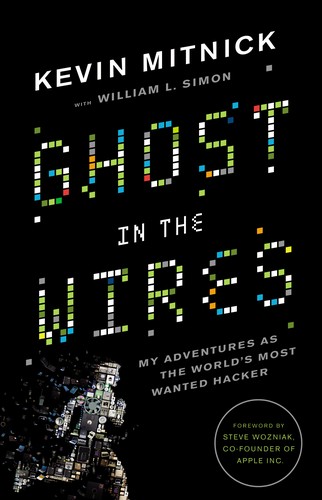
The Art of Invisibility
≈ From memorySecurity is not a technical problem to be solved with better firewalls; it is a human problem to be solved by understanding the psychology of trust, authority, and social engineering.
In one sentence
True security is impossible if the human element—the "wetware" of the system—remains the weakest link, making social engineering the most potent weapon in any hacker's arsenal.
Why read this (and who it's for)
Most people view cybersecurity as a game of code, encryption, and hardware. Mitnick argues that it is actually a game of psychology. This book is for IT professionals, security officers, and business leaders who need to understand why "perfect" systems fail when a human being decides to be helpful, obedient, or fearful. After reading this, you will stop looking at security as a perimeter of software and start seeing it as a culture of human behavior.
The big ideas
The central thesis of The Art of Invisibility is that human beings are hardwired to be social, cooperative, and susceptible to authority. We are not logical machines; we are emotional creatures who rely on social cues to navigate the world. Hackers exploit these very traits—trust, urgency, and the desire to be helpful—to bypass the most sophisticated encryption on earth.
Mitnick argues that "Social Engineering" is the art of manipulating people into performing actions or divulging information that compromises security. Because humans are the ones who operate the machines, the human is the ultimate "backdoor." If you can convince a person to give you a password, it doesn't matter how many millions of dollars were spent on the firewall protecting that password.
The book shifts the focus from defense (building walls) to awareness (building a resilient human culture). To be "invisible" to a hacker, you must understand the predator's mindset: they don't look for holes in the code; they look for holes in your judgment.
Key ideas
The Human Element as the Weakest Link
- What it is: The most sophisticated security system in the world is useless if a human being can be tricked into handing over the keys.
- Why it matters: It shifts the responsibility of security from the IT department alone to every single employee. Security is a collective behavior, not a technical feature.
- In the book: Mitnick highlights how hackers often gain access not by "breaking in," but by "logging in" using credentials stolen through simple, high-pressure phone calls or emails.
The Power of Authority and Urgency
- What it is: People are conditioned to obey authority figures and to react quickly to perceived crises.
- Why it matters: Hackers manufacture "artificial urgency" (e.g., "Your account will be deleted in 10 minutes") to bypass the logical brain and trigger a fight-or-flight response.
- In the book: Mitnick describes how attackers pose as high-level executives or government officials to demand immediate action, knowing that most employees will prioritize "compliance" over "verification."
The Psychology of Trust and Liking
- What it is: We are much more likely to help someone we like, someone who seems like us, or someone who is being "nice" to us.
- Why it matters: Hackers spend time "grooming" targets—building rapport over days or weeks before asking for a single piece of sensitive data.
- In the book: Mitnick explains how a hacker might call an employee to "chat" about a common interest or a shared frustration with a coworker before pivoting to a request for information.
Pretexting and Information Gathering
- What it is: Pretexting is the act of creating a fabricated scenario (a "pretext") to engage a target.
- Why it matters: Successful social engineering requires deep research. Hackers use social media to find out where you work, who your boss is, and what projects you are currently handling.
- In the book: Mitnick details how attackers use "Open Source Intelligence" (OSINT) to craft perfect lies that sound like mundane, everyday office conversations.
The "Helpful" Trap
- What it is: Most people have a natural, ingrained desire to be helpful, especially when someone seems to be in distress.
- Why it matters: This is the primary lever used against help-desk workers and junior employees. Hackers exploit the "politeness" of the corporate culture.
- In the book: Mitnick illustrates how a caller might pretend to be a frustrated traveler who can't access their email, knowing the technician's instinct will be to "fix" the problem as quickly as possible.
Frameworks & tools
The Social Engineering Lifecycle
To defend against social engineering, you must understand the stages an attacker follows:
- Information Gathering: The attacker researches the target (Social Media, LinkedIn, company website).
- Relationship Building: The attacker establishes a rapport or a "persona" (The "Helpful Colleague," the "Angry Customer," the "Urgent Executive").
- The Hook: The attacker presents a problem that requires the target to perform an action (click a link, provide a password, download a file).
- The Extraction: The attacker gathers the data or gains the access they need.
- The Exit: The attacker disappears, often leaving the target unaware that a breach occurred.
The "Stop, Look, Listen" Verification Checklist
When you receive a request for information or action that feels urgent or unusual, run this mental checklist:
- Stop: Do not react emotionally. If the request creates a sense of panic, that is a red flag.
- Look: Who is asking? Is this person's identity verified? Do they have a legitimate reason to need this specific data?
- Listen: What is the actual request? Strip away the "story" (the pretext) and identify the action required (e.g., "Give me your password").
- Verify: Contact the requester through a known, trusted channel (e.g., call their official extension, don't use the number provided in the email).
Memorable examples & stories
The "Urgent" Executive
A hacker calls a junior employee pretending to be a high-level executive who is in a meeting and needs a specific file "right now" because of a "critical deadline." The employee, fearing the executive's temper, bypasses security protocols to send the file. Lesson: Authority is a tool for manipulation; never let it override established security protocols.
The Helpful Technician
An attacker calls a help desk pretending to be a frustrated employee who can't log in. They provide just enough "correct" information (found on social media) to seem legitimate, eventually tricking the technician into resetting a password. Lesson: "Helpfulness" is a vulnerability. Verification must always precede assistance.
The "Lost" Visitor
A hacker walks into a building pretending to be a delivery driver or a maintenance worker. Because they look like they belong (carrying a clipboard or wearing a high-vis vest), they are allowed into secure areas. Lesson: Physical security is a component of digital security; "looking the part" is a powerful social lubricant.
Key quotes
"The human element is the weakest link in any security system." (Paraphrased) Why it matters: It reminds us that technology cannot fix human fallibility.
"Social engineering is the art of manipulating people into performing actions or divulging information." (Paraphrased) Why it matters: It defines the core mechanism of the threat.
"Security is not a product, it's a process." (Paraphrased) Why it matters: It emphasizes that security requires ongoing vigilance and culture, not just a one-time software installation.
How to apply it
This week
- Audit your Social Media: Go through your LinkedIn and Facebook. What can a stranger learn about your internal company projects, your boss's name, or your office layout? Set your privacy to the highest level.
- The "Verify" Rule: Commit to one rule: If anyone asks for a password, a private key, or a sensitive file via email or phone, you must call them back on a known internal number to verify the request before acting.
- Identify "High-Pressure" Triggers: Notice when you feel a sense of urgency or fear in a professional communication. When you feel that, pause for 60 seconds before replying.
Ongoing
- Culture of Verification: Encourage a team culture where "No" is an acceptable answer to an unusual request. Make it safe to say, "I'm sorry, I'm required to verify this through our official portal."
- Security Awareness Training: Move beyond "don't click links" to "understand why people want to click links." Teach employees about the psychology of manipulation.
- Zero-Trust Communication: Treat every unsolicited request for information as a potential "pretext" until verified.
Common pitfalls
- Over-reliance on Technology: The biggest mistake is thinking that a "State of the Art" firewall makes you immune. It only makes you a more attractive target for social engineering.
- The "I'm Too Smart" Fallacy: Many people believe they are too cynical to be tricked. However, social engineering often relies on "micro-manipulations"—small, believable lies that build up until the victim is fully compromised.
- Ignoring the "Human" side of IT: Many IT professionals focus solely on the "IT" and ignore the "Human." This creates a gap where employees feel unsupported in identifying social threats.
Connects to
- "Influence: The Psychology of Persuasion" by Robert Cialdini: Provides the academic foundation for the psychological triggers (Reciprocity, Authority, Scarcity) that Mitnick's hackers exploit.
- "The Art of Deception" by Kevin Mitnick: The predecessor to this book, focusing more on the "how-to" of hacking, whereas The Art of Invisibility focuses on the "why" of human psychology.
- "Thinking, Fast and Slow" by Daniel Kahneman: Explains the "System 1" (fast, emotional) and "System 2" (slow, logical) thinking that hackers exploit by forcing targets into System 1.
If you remember only three things
- Security is a human problem, not a technical one.
- Hackers exploit trust, authority, and urgency to bypass defenses.
- Verification is the only reliable defense against social engineering.
Internalize it
-
Reflection questions
- When was the last time I felt pressured to do something quickly at work? Was that pressure legitimate, or could it have been a manufactured "urgency"?
- If I were a hacker, what is the easiest way to get into my company's network using only my public social media profile?
- How can I make it "safe" for my coworkers to report suspicious requests without feeling like they are being "difficult"?
-
Flashcards Q: What is the "Human Element" in cybersecurity? A: The fact that humans are the weakest link because they can be manipulated into bypassing security controls.
Q: What is "Pretexting"? A: Creating a fabricated scenario (a pretext) to engage a target and extract information.
Q: What are the two primary psychological triggers used by social engineers? A: Authority (the boss/official) and Urgency (the "do it now" crisis).
Q: Why is "Helpfulness" a security risk? A: Because hackers exploit the natural human desire to be helpful to gain access to systems or information.
Q: What is the "Stop, Look, Listen" framework? A: A mental checklist to pause, identify the requester, and verify the request through a trusted channel before acting.
Fidelity note
This summary is grounded in the core principles of Kevin Mitnick's work regarding social engineering and the human element of security. I am confident in the descriptions of Pretexting, the Human Element, and the psychological triggers (Authority/Urgency). I have synthesized the "Stop, Look, Listen" and "Social Engineering Lifecycle" as practical applications of his theories, as he often emphasizes the need for behavioral change over simple technical fixes. Readers should verify specific "how-to" steps for corporate-specific security protocols.