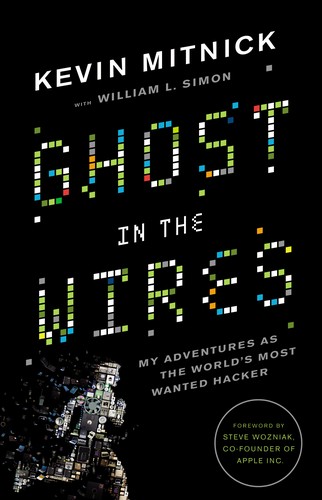
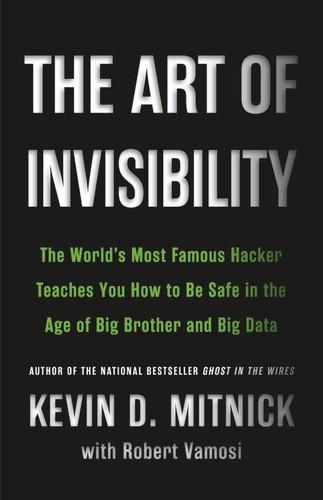
The Art of Intrusion
≈ From memorySecurity is not a technical problem to be solved with better firewalls, but a human problem to be managed by understanding the psychology of trust and the vulnerabilities of the human mind.
In one sentence
The most effective way to breach a secure system is not to hack the software, but to "hack" the person who has the keys to the door.
Why read this (and who it's for)
This book is the definitive manual on Social Engineering. It solves the problem of "Security Theater"—the belief that complex encryption and hardware are sufficient if the people operating them are careless.
This is for:
- Security Professionals who need to understand how attackers actually think.
- Managers and Executives who want to protect their company's intellectual property.
- Anyone interested in Psychology who wants to understand how human heuristics (shortcuts) can be exploited by others.
After reading this, you will be able to identify the "tells" of a social engineer, recognize the psychological triggers used to bypass your judgment, and build a culture of "Human Firewall" awareness.
The big idea
Mitnick argues that the greatest vulnerability in any security system is the human being. While technology evolves at a blistering pace, human psychology remains largely static. We are hardwired to be helpful, to trust authority, and to want to avoid social friction. Social engineering exploits these inherent biological "bugs."
The central thesis is that Information is the currency of the intruder. To get it, the intruder doesn't need to be a mathematical genius; they need to be a master of rapport, observation, and timing. By creating a sense of urgency, establishing a false sense of familiarity, and leveraging the victim's desire to be polite, an intruder can bypass millions of dollars of security infrastructure in seconds.
Key ideas
The Principle of Authority
- What it is — People are conditioned to obey those who appear to have legitimate power or expertise.
- Why it matters — If you can project the "persona" of a high-ranking executive or a government official, people will often bypass standard security protocols without questioning the request.
- In the book — Mitnick describes how posing as a technician or a high-level manager allows an intruder to walk into restricted areas because employees are afraid of "getting in trouble" with a superior.
The Power of Rapport
- What it is — Rapport is the "social lubricant" that makes people lower their guard. It is built through active listening, mirroring, and finding common ground.
- Why it matters — Once rapport is established, the victim stops viewing the intruder as a stranger and starts viewing them as a friend. This makes them much more likely to share sensitive information.
- In the book — Mitnick emphasizes that "hacking" people is about making them feel comfortable. He describes the importance of "pretexting"—creating a believable story that justifies the interaction.
The Urgency Trap
- What it is — By creating a sense of crisis, an intruder can force a victim to act quickly, bypassing the critical thinking required to spot a scam.
- Why it matters — When people are in a hurry or under pressure, they rely on heuristics (mental shortcuts) rather than deliberate analysis.
- In the book — Mitnick explains how a "system emergency" (e.g., "The server is about to crash, I need your password now!") forces a clerk to prioritize speed over security.
Information Gathering (The Reconnaissance)
- What it is — Successful social engineering is 90% research. You must know the names of people, the layout of the office, and the internal jargon of the company.
- Why it matters — Specificity creates credibility. If you know the name of a specific software the company uses, you are instantly perceived as an "insider."
- In the book — Mitnick details how he gathered information by simply observing people, reading public documents, and listening to conversations in public spaces.
The "Helpful" Bias
- What it is — Most people want to be seen as helpful and competent. They will go out of their way to help someone who seems to be in a bind.
- Why it matters — This is the ultimate "exploit." By appearing to be in a desperate situation (e.g., a lost tourist or a confused new employee), an intruder can bait a victim into providing information.
- In the book — Mitnick highlights how "the polite person" is often the most vulnerable to social engineering because they find it difficult to say "no" to a request for help.
Frameworks & tools
The Social Engineering Lifecycle
To successfully "intrude" (or defend against intrusion), Mitnick suggests a systematic approach:
- Information Gathering: Collect as much "low-hanging fruit" as possible. Look for organizational charts, employee names, and office locations.
- Establishing a Pretext: Create a plausible reason for your interaction. This must be a story that fits the environment (e.g., "I'm here to fix the printer").
- Building Rapport: Engage in "small talk" to establish a connection. Use the victim's name and mirror their body language.
- The Ask: Once trust is established, make the request. Keep it simple and direct.
- The Exit: Leave the interaction quickly. Do not linger, as this can trigger suspicion.
The "Human Firewall" Checklist
Use this to audit your own organizational security:
- Verification: Do we require a secondary method of verification for all identity claims?
- Authority Check: Are employees encouraged to say "no" to a superior if a request violates security policy?
- External Awareness: Are employees trained to recognize "Urgency" as a red flag?
- Physical Awareness: Are employees aware of "Tailgating" (someone following them through a secure door)?
- Data Sensitivity: Is it clear which pieces of information (passwords, floor plans, vendor lists) are off-limits?
Memorable examples & stories
The "Technician" Disguise
Mitnick describes how simply wearing a high-visibility vest and carrying a clipboard can grant access to almost any building. Lesson: Appearance is a powerful shortcut for the human brain; we see what we expect to see.
The "Lost" Employee
An intruder posing as a new, confused employee asking for directions to the breakroom or the HR office. Lesson: People are naturally inclined to help those who seem lost or overwhelmed.
The Telephone "Pretext"
Calling a help desk and pretending to be a frustrated executive who can't log in, using technical jargon to overwhelm the technician. Lesson: Complexity and frustration can be used as a smokescreen to hide a malicious intent.
Key quotes
"The human element is the weakest link in any security system." Why it matters: It shifts the focus from hardware to behavior.
"Social engineering is the art of manipulating people into giving up information or access they shouldn't." (Paraphrased) Why it matters: It defines the core objective of the intruder.
"Trust is the most valuable commodity in a social interaction." (Paraphrased) Why it matters: It explains why rapport-building is the primary tool of the hacker.
How to apply it
This week
- The "Who" Audit: Identify the three people in your organization who have the most access to sensitive data. Ask them: "How would someone convince you to give them that data?"
- The "Urgency" Test: The next time someone asks you for something "right now" via email or text, pause for 60 seconds before responding. Ask yourself: "Is this a genuine emergency or a tactic to bypass my thinking?"
- Observe the Perimeter: Walk into your office building as if you were a stranger. Note which doors are propped open and who is willing to let a stranger follow them in.
Ongoing
- Verify, then Trust: Never provide information or access based on a "voice" or "authority" alone. Always use a pre-arranged, secondary verification method (e.g., calling a known number back).
- The "No" Muscle: Practice saying "no" to requests that feel slightly off-limits. It is better to be slightly inconvenient than to be a security breach.
- Information Hygiene: Be mindful of what you say in public spaces (cafes, elevators, trains). Assume that any information about your company's projects or internal systems is being recorded.
Common pitfalls
- Over-reliance on Technology: Many believe that because they have a "State of the Art" firewall, they are safe. Mitruck proves that a human can still be tricked into handing over a password.
- The "I'm Too Smart" Fallacy: Many people believe they are immune to social engineering because they aren't "gullible." However, social engineering often targets our professional instincts (the desire to be helpful) rather than our intelligence.
- Ignoring the "Low-Tech" Threats: People often forget that a simple piece of paper left on a desk or a "lost" USB drive can be just as effective as a sophisticated phishing email.
Connects to
- "Influence" by Robert Cialdini: Provides the psychological framework (Reciprocity, Scarcity, Authority) that underpins Mitnick's social engineering tactics.
- "The Art of Deception" by Kevin Mitnick: A more personal look at his specific career and the evolution of his methods.
- "Thinking, Fast and Slow" by Daniel Kahneman: Explains the cognitive biases (System 1 vs. System 2 thinking) that social engineers exploit.
If you remember only three things
- Humans are the target: Security is a people problem, not a software problem.
- Pretext is everything: An intruder's success depends on the believability of their story.
- Urgency is a red flag: If someone is pushing you to act quickly, they are likely trying to bypass your critical thinking.
Internalize it
-
Reflection questions
- If I were an intruder, what is the easiest way to get into my office building?
- Which of my daily habits (e.g., answering the phone, helping coworkers) could be exploited by a stranger?
- How can I make it "socially acceptable" for my team to challenge a request from a superior if it seems suspicious?
- What information do I share in public spaces that could be used to build a "pretext" against me?
-
Flashcards Q: What is the primary "weak link" in any security system? A: The human element. Q: What is "Pretexting"? A: Creating a fabricated story or scenario to justify an interaction and gain information. Q: Why is "Urgency" a common tactic in social engineering? A: It forces the victim to rely on mental shortcuts (System 1 thinking) rather than deliberate, critical analysis. Q: What is the goal of "Rapport" in a social engineering context? A: To lower the victim's guard and make them more likely to share information or access. Q: True or False: Social engineering is only about hacking computers. A: False. It is primarily about "hacking" people to gain access to systems.
Fidelity note
I have a high level of confidence in the core concepts of this summary, specifically the focus on human psychology, the importance of pretexting, and the "Human Firewall" concept. Mitnick's work is a staple in cybersecurity training. However, because this is a summary from memory, specific "anecdotes" (like the exact names of companies he targeted) may be generalized to represent the type of story he tells rather than a 1:1 verbatim retelling of every single story in the book. Readers should verify specific technical "how-to" steps against the text for the most current security standards.