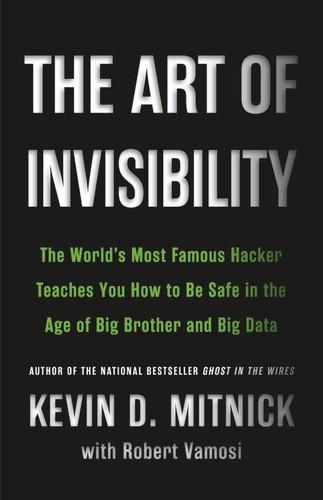
Ghost in the wires
≈ From memorySecurity is not a technical problem of code and firewalls, but a human problem of psychology and trust.
In one sentence
The greatest vulnerability in any security system is the human being behind the keyboard, who can be manipulated into handing over the keys through the simple exploitation of social norms, trust, and curiosity.
Why read this (and who it's for)
This book is the definitive manual on "Social Engineering"—the art of human hacking. It solves the misconception that cybersecurity is purely a game of "better encryption" or "stronger passwords." It is for IT professionals, security officers, and business leaders who need to understand that a person's willingness to help a "colleague" is often a bigger backdoor than a software bug. After reading, you will be able to identify social engineering tactics in real-time and build a "human firewall" that treats interpersonal interaction as a security perimeter.
The big ideas
Mitnick argues that while technology evolves at an exponential rate, human psychology remains remarkably static. We are hardwired to be helpful, to trust authority, and to want to belong to a group. Hackers exploit these evolutionary "bugs" to bypass the most sophisticated encryption on earth. If you can convince a person to give you a password, it doesn't matter how many millions of dollars were spent on the firewall protecting that password.
The central thesis is that Information is the ultimate currency, and access is the ultimate goal. To get access, you don't need to be a mathematical genius; you need to be a master of "pretexting"—creating a fabricated scenario that makes the victim feel like they are doing the right thing by helping you. Security, therefore, is not just a technical configuration; it is a cultural discipline of skepticism and verification.
Key ideas
The Human Element
- What it is — The belief that humans are the weakest link in the security chain because of their inherent social behaviors.
- Why it matters — If you only secure the "pipes" (the network) but not the "people" (the users), the system remains fundamentally broken.
- In the book — Mitnick recounts how he gained access to high-level systems not by "cracking" codes, but by posing as a representative from a trusted company to gain information from employees.
Pretexting
- What it is — The act of creating a fabricated scenario (a "pretext") to engage a target in a way that lowers their guard.
- Why it matters — It shifts the interaction from a "security check" to a "social interaction," where the victim feels they are being helpful rather than being interrogated.
- In the book — Mitnick describes how he would research a target's job title, their typical daily routine, and the specific jargon they use to make his fake persona indistinguishable from a real coworker.
Information Gathering (Reconnaissance)
- What it is — The systematic collection of data about a target—not just technical data, but personal, organizational, and social data.
- Why it matters — You cannot manipulate someone effectively without knowing their "pain points" and their "authority triggers."
- In the book — Mitnick highlights how he used public records, social interactions, and even "dumpster diving" to find out which companies used which software and who the key decision-makers were.
The Power of Authority
- What it is — The psychological tendency of individuals to comply with requests from those who appear to have higher status or official roles.
- Why it matters — By mimicking the tone and urgency of a "superior" or a "government auditor," a hacker can bypass a person's critical thinking.
- In the book — Mitnick explains how he would impersonate a technician or a high-level executive to demand immediate access to systems, leveraging the victim's fear of getting in trouble with a boss.
The "Helpful" Trap
- What it is — The social norm where people feel a moral obligation to be helpful to others, especially when they are in a position of expertise.
- Why it matters — Hackers exploit "politeness" to get people to reveal secrets they would never share with a stranger.
- In the book — He describes how he would call a help desk and act like a frustrated, confused user. Because the technician wants to help, they often reveal system details that help the hacker navigate the network.
Frameworks & tools
The Reconnaissance Framework
Before any "hack" occurs, Mitnick advocates for a deep-dive research phase. Use this checklist before attempting to secure a system:
- Identify the Target: Who owns the data? Who manages the system?
- Gather Public Data: What is listed on their website? What do their employees post on social media?
- Identify the "Gatekeepers": Who are the people with the keys? (IT staff, HR, Receptionists).
- Map the Culture: What is the internal "lingo"? How do they handle emergencies?
- Find the Friction Points: What makes the employees' jobs harder? (This is where you can offer "help").
The Social Engineering Interaction Model
When interacting with a target to gain information, follow these steps:
- Establish Rapport: Start with a non-threatening, friendly interaction to build a "baseline" of trust.
- Create a Sense of Urgency: Introduce a problem that needs solving now (e.g., "The system is crashing and I need to stop the data loss").
- The Request: Ask for a specific piece of information or access (e.g., "Can you tell me what the internal IP for the server is?").
- The Validation: Provide a reason why they must help (e.g., "I'm under a deadline from the VP").
- The Exit: Once the info is gained, thank them warmly and end the call quickly to avoid suspicion.
Memorable examples & stories
The Help Desk Hack
Mitnick describes calling a company's help desk and pretending to be a frustrated employee who couldn't log in. Because the technician's job is to be helpful, they often walked him through the very security protocols he was trying to bypass. Lesson: Kindness is a vulnerability when it isn't paired with verification.
The "Technician" Disguise
Mitnick recounts how he would physically enter buildings by wearing a high-visibility vest and carrying a clipboard. People rarely question someone who looks like they belong and are "working." Lesson: Appearance is a powerful tool for bypassing physical and social security.
The Dumpster Dive
He describes how he would literally go through trash to find discarded memos, phone lists, and organizational charts. Lesson: Information is often discarded carelessly; your "trash" is a roadmap for your enemies.
Key quotes
"The most important security system is the one that resides in the minds of the people who use the technology." (Paraphrased) Why it matters: It shifts the focus from hardware to human behavior.
"People are the weakest link in any security system." (Paraphrased) Why it matters: It identifies the primary target of any sophisticated attack.
"Social engineering is the art of manipulating people into giving up information or access." (Paraphrased) Why it matters: It defines the core methodology of the book.
How to apply it
This week
- The "Verify" Rule: The next time someone calls you asking for information or access (even if they sound like they are from your company), hang up and call them back on a known, internal number.
- Audit your "Public" Presence: Look at your LinkedIn and social media. What could a stranger learn about your office layout, your software, or your daily habits?
- The "Stranger" Test: If a stranger walked into your office today and asked for a tour or a piece of paper, would you give it to them? If not, why?
Ongoing
- Culture of Skepticism: Encourage a workplace where it is okay to say "I need to verify your identity" without feeling rude.
- Security Awareness Training: Move away from "don't click links" and toward "how to spot a social engineer" (e.g., identifying urgency, authority, and the "helper" trap).
- Information Hygiene: Treat every piece of information—even a phone number or a job title—as a potential piece of the puzzle for an attacker.
Common pitfalls
- Over-reliance on Technology: Many companies spend millions on firewalls but don't train their employees on how to spot a "phishing" call.
- The "It won't happen to us" Fallacy: Small businesses often think they aren't "important" enough to be hacked. Mitnick shows that any company with a name and a presence is a target.
- The "Politeness" Trap: Being a "nice" person can be a liability in security-sensitive roles. You must learn to be professionally skeptical.
Connects to
- The Art of Deception (various): Extends the psychological principles of lying and persuasion.
- Zero Trust Architecture: A technical framework that mirrors Mitnick's philosophy—never trust, always verify.
- Influence: The Psychology of Persuasion (Robert Cialdini): Provides the underlying psychological triggers (Authority, Scarcity, Liking) that Mitnick exploits.
If you remember only three things
- Humans are the target: Hackers hack people, not just machines.
- Pretexting is the weapon: Creating a believable story is the most effective way to bypass security.
- Verification is the shield: Never provide information or access without a secondary, out-of-band verification of the requester's identity.
Internalize it
- Reflection questions
- If I were a hacker trying to get into my own company's network, what is the first piece of information I would try to steal?
- How often do I say "yes" to requests because I want to be helpful, even when the request feels slightly unusual?
- What "public" information am I currently broadcasting that could be used to build a pretext against me?
- Flashcards Q: What is "Pretexting"? A: Creating a fabricated scenario to engage a target and lower their guard. Q: Why is the "Helpful" trap so effective? A: Because it exploits the social norm of being helpful, making the victim feel like they are doing the right thing by sharing info. Q: What is the primary goal of a social engineer? A: To gain access, information, or privileges by manipulating human behavior. Q: What is the "Human Element" in security? A: The belief that human behavior and psychology are the primary vulnerabilities in any security system. Q: How does "Authority" play into social engineering? A: By mimicking a superior or official, the hacker triggers a person's instinct to comply without questioning.
Fidelity note
I am highly confident in the core concepts of this summary, specifically the distinction between technical and social engineering, the definition of pretexting, and the "Human Element" thesis. Mitnick's career as a famous hacker provides the backbone for these arguments. However, because this is a summary of a narrative-heavy book, some of the specific, granular "heist" stories may be compressed. Readers should verify specific technical "tricks" in the book, as Mitnick's methods have evolved significantly since the 1990s.