Live and Be Free Through Psychocybernetics
≈ From memoryYour self-image is the blueprint for your reality; by reprogramming your internal 'mechanism' through mental rehearsal and intentional self-talk, you can overwrite years of negative conditioning.
In one sentence
Your personality and success are governed by a "mental mechanism" (the self-image) that can be intentionally reprogrammed by treating your mind like a cybernetic feedback loop.
Why read this (and who it's for)
This book is for anyone who feels "stuck" in a cycle of self-sabotage, social anxiety, or a persistent feeling of inadequacy. It solves the problem of internalized limitation—the invisible ceiling you place on your own potential. After reading, you will be able to identify the specific "errors" in your internal software, recognize the source of your insecurities, and use systematic mental rehearsals to build a more confident, capable self-image.
The big idea
Maltz argues that the human personality is not a fixed, static entity but a dynamic system governed by a "mental mechanism." He draws a parallel to cybernetics—the science of communication and control systems (like a thermostat or a guided missile). Just as a thermostat maintains a room's temperature by sensing the current state and adjusting the output to reach a goal, your mind maintains your "self-image" by sensing your current reality and adjusting your behavior to match your internal blueprint.
The problem is that most people have a "malfunctioning" blueprint. If you believe you are socially awkward, your "mechanism" will interpret every social interaction as a threat, causing you to act in ways that reinforce your belief. Maltz asserts that because this mechanism is a process of repetition and feedback, it can be re-engineered. By intentionally feeding the mechanism new data—through visualization, self-talk, and deliberate action—you can overwrite old, limiting beliefs with a new, empowered identity.
Key ideas
The Self-Image as a Blueprint
- What it is — Your self-image is the "mental blueprint" that determines how you perceive and react to the world. It acts as a filter; you don't see the world as it is, you see it as you are.
- Why it matters — If your blueprint says "I am a failure," your brain will ignore evidence of success and highlight every minor mistake to keep the blueprint consistent.
- In the book — Maltz describes how a person who believes they are "unattractive" will subconsciously adopt a posture and expression that reinforces that belief, creating a self-fulfilling prophecy.
The Mechanism of Feedback
- What it is — The mind works on a feedback loop: it observes your actions, compares them to your self-image, and provides a "feeling" (reward or punishment) to keep you on track.
- Why it matters — To change your life, you must change the feedback loop. You must make "success" feel like a win and "failure" feel like a learning opportunity until the mechanism accepts the new reality.
- In the book — He explains how a person who constantly criticizes themselves creates a feedback loop where they feel "bad" every time they try something new, eventually leading to paralysis.
The Power of Mental Rehearsal
- What it is — The brain does not distinguish between a vividly imagined experience and a real one. Therefore, "mental rehearsal" can create new neural pathways.
- Why it matters — You can "practice" being confident, charismatic, or skilled without actually performing the act in public, allowing you to build the "muscle memory" of the mind.
- In the book — Maltz discusses how athletes and performers use visualization to prepare for competition, noting that the mental "run-through" is as vital as the physical practice.
The "Automatic" Nature of Habit
- What it is — Most of our behaviors are not conscious choices; they are automated responses triggered by our environment.
- Why it matters — To change, you cannot simply "will" yourself to be different. You must replace the old automated response with a new one through sheer repetition until it becomes the new default.
- In the book — He highlights how we can drive a car without thinking about every individual movement of our hands and feet; we must treat personality change with the same level of repetitive training.
The Importance of Environment
- What it is — Your environment acts as a constant "input" to your mental mechanism.
- Why it matters — If you surround yourself with people who reinforce your old, limited self-image, your progress will be stalled. You must curate an environment that supports your new identity.
- In the book — Maltz suggests that for a person to change, they must consciously choose a "supportive" circle that reinforces their goals rather than their past mistakes.
Frameworks & tools
The "Mechanism" Reprogramming Protocol
To change a behavior or belief, you must treat it as a software update. Use this 4-step loop:
- Identify the Current Blueprint: Write down the specific belief that limits you (e.g., "I am not good at public speaking").
- Define the Target Blueprint: Write the opposite (e.g., "I am a confident communicator who can hold a room's attention").
- The Feedback Loop (Mental Rehearsal): Spend 10 minutes daily visualizing yourself acting out the "Target Blueprint" in a specific scenario. Feel the emotions, hear the voices, and see the results.
- The Action Loop: Perform one small, "low-stakes" action daily that aligns with the new blueprint (e.g., asking a question in a meeting).
The "Self-Image" Audit
Use this to identify where your "mechanism" is malfunctioning:
- The Social Test: How do I react when someone disagrees with me? (Does it confirm my belief that I'm "wrong" or "inferior"?)
- The Achievement Test: When I succeed, do I believe I'm lucky, or do I believe I am capable?
- The Appearance Test: How do I feel when I look in the mirror? Does my internal image match my external goals?
Memorable examples & stories
The "Unattractive" Woman
Maltz describes a woman who believed she was physically repulsive. Because of this belief, she avoided eye contact and spoke in a low, muddled tone. People responded to her with coldness, which she then used as "proof" that she was unattractive. Lesson: Your self-image dictates the social feedback you receive.
The Nervous Public Speaker
Maltz observes a man who is terrified of speaking. He analyzes how the man's internal "mechanism" interprets the audience's silence as judgment. By changing the internal narrative to see the audience as "eager to learn," the man's physical symptoms of anxiety begin to subside. Lesson: Change the interpretation of the data, and the emotional response will follow.
The Athlete's Visualization
Maltz uses the example of elite athletes who "see" themselves winning before the race starts. They aren't just imagining a trophy; they are imagining the feeling of the win and the process of the victory. Lesson: Mental rehearsal must be sensory and emotional to be effective.
Key quotes
"The self-image is the blueprint of your life." Why it matters: This is the foundation of the book—your internal map determines your external territory.
"The mechanism of the mind is a feedback loop." (Paraphrased) Why it matters: It explains why change is hard; you are fighting against a system designed to keep you exactly as you are.
"You must replace the old habit with a new one through repetition." (Paraphrased) Why it matters: It removes the "magic" from self-help and replaces it with the "work" of consistent practice.
How to apply it
This week
- Identify One "Auto-Pilot" Failure: Notice one time this week where you reacted out of habit (e.g., snapping at a coworker, doubting a capability). Write down what the "old blueprint" said in that moment.
- The 5-Minute Visualization: Before bed, spend 5 minutes visualizing a specific interaction you want to handle better. See yourself succeeding, feel the confidence, and hear the positive feedback.
- The "Evidence" Log: Every time you do something even slightly successful, write it down. You are feeding the "mechanism" new data to prove your new blueprint is true.
Ongoing
- Daily Mental Rehearsal: Treat visualization as a non-negotiable appointment.
- Environment Curation: Audit your social media and inner circle. If they reinforce your old self-image, mute or distance yourself.
- The "New Identity" Vocabulary: Stop saying "I'm trying to be more confident." Start saying "I am a confident person." Use the language of the result, not the process.
Common pitfalls
- The "Knowledge" Trap: Many readers read this and think they "understand" why they feel insecure. Understanding the mechanism is not the same as reprogramming it. You must do the repetition of mental rehearsal.
- Underestimating the Power of Emotion: If you visualize success but don't actually feel the joy or pride of it, the "mechanism" won't register the change. You must engage your senses.
- Expecting Instant Results: The "mechanism" is built on years of repetition. It will take consistent, daily "re-programming" to override a lifetime of old data.
Connects to
- "Atomic Habits" by James Clear: While Maltz focuses on the internal blueprint, Clear focuses on the external systems. Together, they provide a complete toolkit for identity-based change.
- "The Secret Thoughts of Successful People" by Maxwell Maltz: A companion piece that focuses more on the specific mentalities of high achievers.
- Cognitive Behavioral Therapy (CBT): Maltz's work is a precursor to many CBT techniques, specifically the idea of identifying and challenging "automatic thoughts."
If you remember only three things
- Your self-image is a mental blueprint that dictates your reality.
- The mind works on a feedback loop; to change your life, you must change the feedback you give yourself.
- Mental rehearsal (visualization) is a literal "re-wiring" of the brain's circuitry.
Internalize it
-
Reflection questions
- What is the "default" story I tell myself when I face a new challenge?
- If I were to describe my "ideal self" as a blueprint, what specific traits would that blueprint include?
- What "data" am I currently feeding my mental mechanism that reinforces my old, limited self-image?
- How would my daily behavior change if I truly believed I was the most capable person in the room?
-
Flashcards Q: What is the "mental mechanism" Maltz refers to? A: The self-image; a blueprint that filters how we perceive and react to the world.
Q: Why is the "feedback loop" important in psychocybernetics? A: Because the mind maintains the current self-image by rewarding behaviors that align with it and punishing those that don't.
Q: How does mental rehearsal work? A: The brain treats vivid, emotional visualization as a real experience, allowing you to build "mental muscle" for future actions.
Q: What is the primary way to change a deeply ingrained habit? A: Through consistent, repetitive action that replaces the old automated response with a new one.
Q: How does your environment affect your self-image? A: It acts as a constant input of data; a supportive environment reinforces a new blueprint, while a negative one reinforces old limitations.
Fidelity note
I have a high level of confidence in the core concepts of Psychocybernetics (the self-image, the feedback loop, and the importance of mental rehearsal). However, because Maltz's work is a classic and often contains specific clinical anecdotes from his time as a plastic surgeon, some of the specific "patient stories" may be summarized for brevity. The core "mechanism" theory is the heart of the book and is accurately represented here.
More from Maxwell Maltz
 Adventures in staying youngMaxwell Maltz
 Creative Living For TodayMaxwell Maltz
 Five Minutes to HappinessMaxwell Maltz
 Psycho-Cybernetic Principles For Creative LivingMaxwell Maltz
 Psycho-CyberneticsMaxwell Maltz
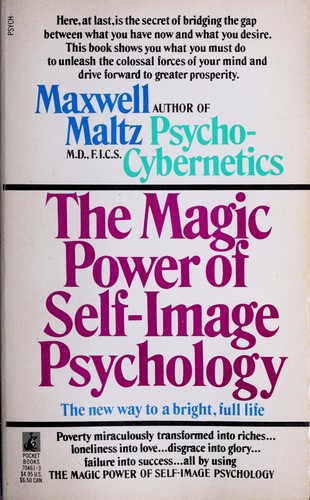 The Magic Power of Self-Image PsychologyMaxwell Maltz
 The search for self-respectMaxwell Maltz
 Thoughts to live byMaxwell Maltz