Adventures in staying young
≈ From memoryTrue youth is not a matter of biological age, but a psychological state maintained by the mastery of one's internal self-image and the refusal to let social expectations dictate your inner worth.
In one sentence
Youth is a state of mind sustained by a positive self-image, a proactive attitude toward life's challenges, and the refusal to let the "social clock" dictate your internal vitality.
Why read this (for who)
This book addresses the universal fear of aging—not just the physical decay of the body, but the psychological erosion of spirit, purpose, and confidence. It is for anyone who feels "dimmed" by the responsibilities of adulthood, for the retiree seeking a second act, and for the professional who feels their spark has been extinguished by routine. After reading, you will be able to identify the specific mental habits that cause "aging" and replace them with a psychological framework for maintaining internal vigor.
The big idea
Maxwell Maltz argues that "aging" is often a psychological surrender rather than a biological inevitability. While the body may slow down, the mind can remain vibrant, curious, and energetic indefinitely if it is nurtured correctly. The core thesis is that our internal "self-image" acts as a blueprint for our reality; if we view ourselves as old, tired, and incapable, our behavior will eventually align with that belief.
The logic follows a simple trajectory: your environment and social circle provide the "input" for your self-concept. If you allow your environment to define you as "old," you will begin to act the part. To stay young, you must deliberately curate your mental environment, choose your associations with extreme care, and cultivate a "heroic" inner narrative that views every day as an opportunity for growth rather than a slide toward the end.
Key ideas
The Self-Image as a Blueprint
- What it is — Your self-image is the subconscious blueprint that dictates how you behave, what you believe you can achieve, and how you react to stress.
- Why it matters — If your internal blueprint is "I am a tired old person," your brain will filter out opportunities for adventure and focus only on reasons to rest.
- In the book — Maltz discusses how people often "act" their way into a reality; if you want to change your life, you must first change the mental image you hold of yourself.
The Social Clock vs. The Internal Clock
- What it is — The "social clock" is the external pressure to behave a certain way based on your chronological age (e.g., "at your age, you should be retired/quiet/settled").
- Why it matters — Yielding to the social clock is the fastest way to lose your individuality. You must distinguish between what society expects of your age and what your spirit desires.
- In the book — Maltz emphasizes that many people "retire" mentally long before they retire physically because they stop seeking new information and experiences.
The Power of Association
- What it is — You are the average of the people you spend the most time with; your social circle acts as a mirror for your own vitality.
- Why it matters — If you hang out with people who complain about their aches and pains and lament the "good old days," you will adopt their perspective.
- In the book — He advocates for seeking out "young" minds—people who are still striving, learning, and creating—regardless of their actual birth dates.
The Danger of "Settling"
- What it is — The moment you decide you have "seen it all" or "done enough," your internal growth stops.
- Why it matters — Growth is the primary antidote to the feeling of aging. When you stop learning, your world shrinks, and the feeling of decay sets in.
- In the book — Maltz suggests that staying young requires a perpetual state of "becoming"—always seeking the next skill, the next book, or the next adventure.
Purpose as a Fountain of Youth
- What it is — Having a "why" provides the biological and psychological fuel to overcome physical limitations.
- Why it matters — Purpose gives your daily actions meaning, which keeps the mind sharp and the body active.
- In the book — He notes that people with a mission—whether it's a hobby, a craft, or a service to others—rarely suffer from the "lethargy of age."
Frameworks & tools
The "Inner Circle" Audit
Use this to ensure your social environment is fueling your youth rather than draining it.
- Identify your "Drainers": List people who constantly complain about aging, health, or the past.
- Identify your "Igniters": List people who are constantly learning, exploring, or creating.
- The 80/20 Rule: Aim to spend 80% of your social time with "Igniters."
- The "New Input" Rule: Ensure you are regularly exposed to new ideas (books, classes, conversations) that challenge your current worldview.
The Growth Blueprint
A daily practice to maintain a "young" self-image.
- Morning Intent: Identify one thing you want to learn or do today that is outside your comfort zone.
- Active Learning: Spend at least 30 minutes engaging with a new skill (a language, an instrument, a sport).
- Evening Reflection: Ask, "Did I grow today?" rather than "What did I get done?"
Memorable examples & stories
The "Retired" Mind
Maltz describes individuals who have retired from their jobs but have "retired" from life itself, spending their days in a sedentary loop of nostalgia. Lesson: Retirement should be a change of pace, not a cessation of purpose.
The Late-Bloomer Success
The author highlights examples of individuals who found their true calling in their 60s or 70s, achieving more than they did in their youth. Lesson: The brain's plasticity and the heart's capacity for passion are not bound by a calendar.
The Social Mirror
The concept of how a group of friends can "age" each other by constantly discussing physical ailments and the limitations of the past. Lesson: Your environment is a silent architect of your internal state.
Key quotes
"Age is not a number; it is a state of mind." (Paraphrased) Why it matters: It shifts the responsibility of aging from biology to psychology.
"The moment you stop learning, you begin to age." (Paraphrased) Why it matters: It identifies curiosity as the primary engine of vitality.
"Your self-image is the blueprint of your life." (Paraphrased) Why it matters: It reminds you that you must first change your internal narrative before your external reality will shift.
How to apply it
This week
- The "New Information" Challenge: Read one book or listen to one podcast about a topic you know absolutely nothing about (e.g., quantum physics, urban gardening, ancient history).
- The Social Audit: Identify one person in your life who makes you feel "old" or "tired" and intentionally spend less time with them this week.
- Physical Movement: Engage in 20 minutes of intentional movement (walking, stretching, dancing) specifically for the joy of movement, not just for "exercise."
Ongoing
- The Learning Habit: Dedicate 30 minutes every day to a "Growth Project" (learning a new skill).
- The Association Rule: Actively seek out communities (online or offline) where people are pursuing new goals.
- The Narrative Shift: Whenever you catch yourself saying "I'm too old for that," immediately replace it with "How can I approach this in a way that works for me now?"
Common pitfalls
- The "Physicality" Trap: Many readers might think this book is about physical fitness. It isn't. You can be in the best shape of your life and still have an "old" mind. Focus on the mental and emotional aspects.
- Over-Reliance on "Youthful" Activities: Doing "young" things (like going to a club) won't work if your internal self-image is still rooted in the past. You must change the internal belief first.
- The "Easy" Way Out: It is easy to stay in a comfortable, sedentary routine. Staying "young" requires the discipline of constant growth, which can be uncomfortable.
Connects to
- "The Subtle Art of Not Giving a F*ck" (Mark Manson): For the idea of choosing what to care about (choosing to care about growth rather than social expectations).
- "Mindset" (Carol Dweck): For the foundational theory of the "Growth Mindset" which mirrors Maltz's insistence on perpetual learning.
- "Flow" (Mihaly Csikszentmihalyi): For the psychological state of being fully immersed in a challenging activity, which Maltz identifies as a key to staying vibrant.
If you remember only three things
- Self-Image is Reality: Your internal belief about your capabilities dictates your external results.
- Growth is the Antidote: The only way to stop the feeling of aging is to remain a perpetual student of life.
- Curate Your Circle: Your social environment is a powerful force that can either accelerate your decline or fuel your vitality.
Internalize it
-
Reflection questions
- In what ways have I allowed "the social clock" to dictate my goals or my sense of what is possible?
- If I were to ignore my age entirely, what is the one thing I would start doing today?
- Who are the people in my life who make me feel inspired and "young," and how can I spend more time with them?
- What is one area of my life where I have "retired" mentally? How can I re-engage?
-
Flashcards Q: What is the "Social Clock"? A: The external societal pressure to behave, think, and act in certain ways based solely on your chronological age.
Q: What is the primary "blueprint" for our lives according to Maltz? A: Our self-image—the internal belief we hold about who we are and what we can do.
Q: How does "settling" affect the aging process? A: Settling occurs when you decide you've seen enough or done enough; it stops the growth required to keep the mind vibrant.
Q: What is the most effective way to stay mentally young? A: By remaining a perpetual student—constantly seeking new information, skills, and experiences.
Q: Why is social association so important in staying young? A: Because our social circle acts as a mirror; if you associate with people who lament the past, you will adopt their perspective.
Fidelity note
This summary is based on the core psychological principles of Maxwell Maltz's work regarding self-image and the maintenance of a youthful spirit. Because Maltz's work often blends psychology with self-help, some of the specific "how-to" steps are synthesized from his overarching philosophy of self-actualization. Readers should verify the specific anecdotes of "late-bloomers" in the text to see the full range of examples Maltz provides.
More from Maxwell Maltz
 Creative Living For TodayMaxwell Maltz
 Five Minutes to HappinessMaxwell Maltz
 Live and Be Free Through PsychocyberneticsMaxwell Maltz
 Psycho-Cybernetic Principles For Creative LivingMaxwell Maltz
 Psycho-CyberneticsMaxwell Maltz
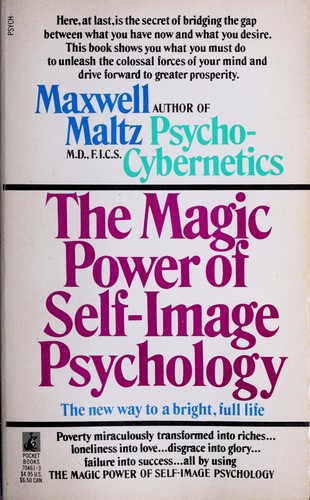 The Magic Power of Self-Image PsychologyMaxwell Maltz
 The search for self-respectMaxwell Maltz
 Thoughts to live byMaxwell Maltz