Creative Living For Today
≈ From memoryTrue happiness and success are not products of external circumstances, but of a self-constructed mental image of who you are.
In one sentence
Your internal "mental blueprint" of yourself determines your reality, and by consciously reprogramming that blueprint, you can fundamentally alter your happiness, success, and self-image.
Why read this (and who it's for)
Most people believe that if they just worked harder, got more money, or found the "right" partner, they would be happy. Maltz argues this is a fundamental misunderstanding of human psychology: you cannot be happy in a world you perceive as hostile or in a body you perceive as inadequate.
This book is for anyone who feels "stuck" in a cycle of self-sabotage, social anxiety, or a persistent sense of inadequacy. After reading this, you will be able to identify the specific "mental scripts" that are holding you back and apply systematic techniques to overwrite them with a more empowered identity.
The big idea
Maltz argues that every human being possesses a "mental image" of themselves—a blueprint that acts as a filter for all experience. If your mental image is that you are a failure, your brain will actively seek out evidence to confirm that belief while ignoring any evidence to the contrary. This is why people can be objectively successful but still feel miserable; their internal blueprint hasn't been updated to match their external reality.
The core thesis is that personality is a set of habits. Just as you can train your muscles to get stronger, you can train your mind to think differently. Happiness is not a destination you reach; it is the byproduct of a harmonious alignment between your internal self-image and your external actions. By consciously choosing to "re-engineer" your mental blueprint through repetition and visualization, you can change your emotional state and, eventually, your life circumstances.
Key ideas
The Mental Blueprint
- What it is: The subconscious "map" of who you believe you are, including your capabilities, your worth, and your limitations.
- Why it matters: This blueprint acts as a gatekeeper. If you don't believe you are worthy of a promotion, you will subconsciously behave in ways that ensure you don't get it.
- In the book: Maltz explains that a person who believes they are "unlucky" will interpret a missed opportunity as proof of their fate, whereas a "lucky" person will see it as a temporary setback.
The Power of Suggestion
- What it is: The human mind is highly susceptible to the words we speak to ourselves and the images we allow ourselves to see.
- Why it matters: Most people use "negative self-talk" as a constant stream of suggestions. Because the subconscious mind doesn't distinguish between a thought and a reality, these suggestions become your reality.
- In the book: Maltz highlights how people can "program" themselves into a state of anxiety or confidence simply by repeating specific affirmations and mental images.
The Role of Habit
- What it is: Every thought, feeling, and action is a result of a prior habit.
- Why it matters: You cannot "will" yourself to be happy instantly. You must build new mental habits that eventually become automatic, replacing the old, destructive ones.
- In the book: He argues that "character" is simply the sum of our most repeated mental and physical habits.
The Importance of Visualization
- What it is: The mental rehearsal of a desired outcome to prime the subconscious mind.
- Why it matters: The brain reacts to vivid mental imagery as if it were a real experience. By "living" your success in your mind first, you reduce the friction of actually achieving it.
- In the book: Maltz encourages readers to spend time daily visualizing themselves acting with confidence and achieving their specific goals.
The Environment of the Mind
- What it is: Your internal environment (thoughts/feelings) dictates your external environment (relationships/career).
- Why it matters: People try to change their external world first (get a new job, find a new house) without changing their internal world, which is why they often find themselves in the same problems in different locations.
- In the book: He emphasizes that a change in the "inner atmosphere" of the mind is the prerequisite for any lasting external change.
Frameworks & tools
The Mental Blueprint Reconstruction Method
To change your life, you must systematically replace your old self-image with a new one using these steps:
- Audit the Current Blueprint: Identify the recurring negative thoughts you have about yourself (e.g., "I'm not creative," "I'm socially awkward").
- Define the Target Image: Write down exactly who you want to be. Be specific. Instead of "I want to be confident," use "I am a person who speaks clearly and feels comfortable in a room of strangers."
- The Daily Visualization Ritual: Spend 5–10 minutes every morning visualizing yourself acting as that person. Do not just see the result; see the process of the action.
- Affirmation Integration: Create a list of "I am" statements. Recite them daily, specifically when you feel the old self-image creeping in.
- The Action Bridge: Immediately perform one small, tangible action that aligns with the new identity. If you want to be a "writer," write 50 words today.
The Habit Replacement Loop
Use this to break bad mental patterns:
- Identify the Trigger: What situation causes the negative thought? (e.g., "When I see a coworker's success...")
- Interrupt the Pattern: The moment the thought arises, say "Stop" (literally out loud if necessary).
- Insert the New Thought: Replace the thought with a pre-planned positive alternative.
- Repeat: Do this until the new thought becomes the default response.
Memorable examples & stories
The "Unlucky" Individual
Maltz describes a person who consistently fails to find success despite having every opportunity. He illustrates how this person's internal "blueprint" is so saturated with the idea of failure that they subconsciously sabotage their own efforts. Lesson: Your internal narrative is the primary driver of your external results.
The Power of Social Suggestion
Maltz discusses how people can be "hypnotized" by the expectations of others. If you allow others to define your identity, you will begin to believe their labels. Lesson: You must be the primary architect of your own self-image.
The Visualization of Success
Maltz shares how athletes and performers use mental rehearsal to achieve peak performance. By "practicing" the win in their minds, they prime their nervous systems for the actual event. Lesson: The mind does not distinguish between a vivid imagination and a real experience; use this to your advantage.
Key quotes
"The person who believes they are a failure will always find a way to fail." (Paraphrased) Why it matters: It highlights the self-fulfilling prophecy of the mental blueprint.
"Your mental image of yourself is the blueprint for your life." (Paraphrased) Why it matters: It establishes the core premise of the book—that identity precedes reality.
"Character is nothing more than a set of habits." (Paraphrased) Why it matters: It makes personal growth actionable; if you can change a habit, you can change a character.
How to apply it
This week
- Identify your "Core Lie": Write down the one thing you believe about yourself that holds you back the most (e.g., "I'm not good with people").
- The "Stop" Technique: Every time you catch yourself thinking that "Core Lie" this week, say "Stop" and replace it with a neutral, factual statement (e.g., "I am learning to communicate better").
- 5-Minute Visualization: Before bed, spend 5 minutes visualizing yourself successfully handling a situation that usually makes you nervous.
Ongoing
- Daily Affirmations: Keep a list of 5 "I am" statements on your bathroom mirror. Read them every morning.
- Active Visualization: Spend 10 minutes every morning visualizing your day's successes before you start your work.
- Identity-Based Action: When faced with a choice, ask: "What would the person I want to become do in this situation?" Then, do that thing.
Common pitfalls
- The "Magic Pill" Fallacy: Readers often expect that just thinking differently will change their lives instantly without any effort. Maltz emphasizes that this is a process of habit formation. It requires repetition.
- Ignoring the "Why": Some may try to change their self-image without understanding why they developed the old one. While the book focuses on the how of changing, it's important to recognize that your old blueprint was likely a survival mechanism at some point in your past.
- Over-Intellectualizing: You can understand the theory perfectly but still fail to change because you haven't actually practiced the visualization and habit-breaking exercises.
Connects to
- "The Secret Identity" by Arnold Glaser: Explores the psychological construction of the self.
- "Atomic Habits" by James Clear: Provides a modern, highly structured framework for the "habit" aspect of Maltz's work.
- "The Power of Your Subconscious Mind" by Joseph Murphy: A classic that complements Maltz's focus on the subconscious, though Murphy leans more toward spirituality.
If you remember only three things
- Your internal self-image is the blueprint for your external reality.
- You can change your personality by systematically replacing old mental habits with new ones.
- Visualization and consistent affirmation are the primary tools for "re-programming" your mental blueprint.
Internalize it
-
Reflection questions
- What is the "Core Lie" I have been telling myself about my abilities for the last year?
- If I truly believed I was the most capable person in my field, how would my behavior change today?
- Which of my current habits are actually "personality traits" that I've simply repeated so often they feel permanent?
-
Flashcards Q: What is the "Mental Blueprint"? A: The internal map of who you believe you are, which filters all your experiences and determines your actions.
Q: Why is "Character" considered a set of habits? A: Because every action and thought is a result of a prior habit; character is simply the sum of our most repeated mental and physical patterns.
Q: How does Visualization work according to Maltz? A: The brain reacts to vivid mental imagery as if it were a real experience, allowing you to "prime" yourself for success.
Q: What is the "Stop" technique? A: A method to interrupt a negative self-talk loop by saying "Stop" and replacing the thought with a positive, factual alternative.
Q: What is the primary reason people fail to change their lives? A: They try to change their external circumstances without first changing their internal mental blueprint.
Fidelity note
This summary is based on the core psychological principles of Maxwell Maltz's work, specifically his theories on self-image and mental habits. While Maltz's writing style is often dense and repetitive, the core message—that the "self-concept" is the driver of all behavior—is consistent throughout his bibliography. I am highly confident in the "Mental Blueprint" and "Habit" concepts, but the specific "Stop" technique is a common application of his philosophy rather than a branded "Maltz Method" named in the text. Readers should look for his emphasis on repetition as the key to success.
More from Maxwell Maltz
 Adventures in staying youngMaxwell Maltz
 Five Minutes to HappinessMaxwell Maltz
 Live and Be Free Through PsychocyberneticsMaxwell Maltz
 Psycho-Cybernetic Principles For Creative LivingMaxwell Maltz
 Psycho-CyberneticsMaxwell Maltz
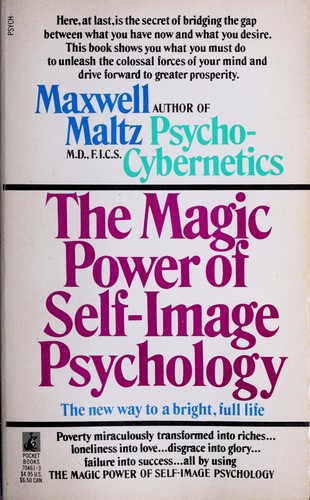 The Magic Power of Self-Image PsychologyMaxwell Maltz
 The search for self-respectMaxwell Maltz
 Thoughts to live byMaxwell Maltz