On Food and Cooking The Science and Lore of the Kitchen
≈ From memoryCooking is a series of predictable chemical and physical transformations; by understanding the science of ingredients, you can move from following recipes to mastering the art of creation.
In one sentence
To master cooking, you must stop viewing recipes as sacred instructions and start viewing them as specific applications of universal chemical and physical principles.
Why read this (and who it's for)
Most home cooks suffer from "Recipe Dependency"—the inability to cook a meal if the instructions are missing or if an ingredient is unavailable. This book solves that by providing the "Why" behind the "How."
It is for the serious home cook, the culinary student, and the curious foodie who wants to understand why a steak sears, why bread rises, and why certain flavors clash. After reading this, you will be able to troubleshoot any dish, substitute ingredients with confidence, and understand the fundamental behavior of every ingredient in your pantry.
The big idea
The central thesis of Harold McGee’s work is that cooking is chemistry in a pot. Every culinary action—searing a steak, whisking a sauce, kneading dough, or boiling an egg—is a manipulation of molecules (proteins, carbohydrates, fats, and water). When you understand the underlying science, the "rules" of cooking become logical rather than arbitrary.
McGee argues that the secret to culinary mastery is predictability. If you know how heat affects protein fibers, you don't need a timer to tell you when a chicken is done; you understand the structural changes occurring in the meat. If you understand how starch gelatinizes, you don't need a specific brand of thickener; you understand the mechanism of viscosity. By mastering these principles, you gain the freedom to innovate, improvise, and troubleshoot without a guidebook.
Key ideas
The Maillard Reaction (The Science of Browning)
What it is: A chemical reaction between amino acids (proteins) and reducing sugars when heated, creating hundreds of different flavor compounds and a brown color. Why it matters: This is the difference between a boiled piece of meat and a seared steak. It is the foundation of "savory" flavor in almost all cooked foods, including toasted bread, roasted coffee, and browned butter. In the book: McGee explains that the Maillard reaction is distinct from caramelization (which is the browning of sugars alone). He illustrates how controlling the temperature and moisture level is the key to achieving a deep, mahogany crust without burning the interior.
Protein Denaturation and Coagulation
What it is: The process where heat, acid, or mechanical action causes protein molecules to unfold (denature) and then bond together (coagulate) into a solid structure. Why it matters: This explains why eggs turn from liquid to solid, why meat becomes firm when cooked, and why yogurt becomes thick. Understanding this allows you to control the texture of everything from custards to roasts. In the book: McGee uses the example of egg whites to show how they transition from a translucent liquid to an opaque solid as the proteins "tangle" together, creating a mesh that traps water.
Starch Gelatinization and Retrogradation
What it is: The process where starch granules (from flour, potatoes, or rice) absorb water and swell when heated, eventually bursting to create a thick, viscous gel. Why it matters: This is the fundamental mechanism of thickening sauces, gravies, and puddings. It also explains why leftover pasta becomes firm (retrogradation) as the starch molecules realign and expel water. In the book: McGee explains how the ratio of starch to water determines the thickness of a sauce and how "cooking out" a roux involves evaporating water to concentrate the starch.
The Role of Emulsification
What it is: The process of forcing two liquids that normally don't mix (like oil and water) into a stable mixture using an emulsifying agent. Why it matters: This is the secret to mayonnaise, vinaigrettes, and creamy sauces. If you understand the role of the emulsifier (like egg yolk or mustard), you can stabilize any dressing. In the book: He explains the "hydrophilic" (water-loving) and "lipophilic" (fat-loving) nature of molecules, showing how they act as a bridge between oil and water.
The Importance of Acid
What it is: Acid (like lemon juice or vinegar) doesn't just provide a "tang"; it chemically alters the texture and flavor of food by breaking down connective tissues and balancing fats. Why it matters: Acid acts as a "brightener." It cuts through richness, balances sweetness, and can even "cook" proteins (like ceviche). In the book: McGee highlights how a splash of vinegar can "lift" a heavy stew, making it taste more vibrant and less dull.
The Role of Fat as a Flavor Carrier
What it is: Fat is not just a source of calories; it is a medium for flavor. Many flavor molecules are fat-soluble, meaning they need fat to be transported to our taste buds. Why it matters: This is why sautéing in butter or oil creates a richer experience than steaming. Fat coats the palate and lingers, allowing flavors to persist. In the book: He explains how fat acts as a "solvent" for aromatic compounds in spices and herbs.
The Chemistry of Leavening
What it is: The production of carbon dioxide gas within a dough or batter, which creates pores and allows for rise. Why it matters: Understanding the difference between chemical leavening (baking soda/powder) and biological leavening (yeast) allows you to control the crumb and height of your bread. In the book: McGee breaks down the specific reactions of yeast—how it consumes sugars and releases CO2—and how baking powder reacts with moisture and heat.
Water as a Cooking Medium
What it is: Water is the primary ingredient in most cooking (boiling, steaming, braising). Its properties—boiling point, evaporation, and heat capacity—dictate the speed and style of cooking. Why it matters: Knowing how much water evaporates during a reduction or how steam conducts heat allows you to master braising and poaching. In the book: He explains how the surface area of a pot affects evaporation rates and how to use steam to cook vegetables without losing their nutrients.
Frameworks & tools
The Heat Transfer Trinity
To understand how food cooks, you must identify which of the three types of heat transfer is occurring:
- Conduction: Heat transfer through direct contact (e.g., a steak hitting a hot cast-iron skillet).
- Convection: Heat transfer through the movement of fluids (e.g., water boiling in a pot, air circulating in an oven).
- Radiation: Heat transfer via electromagnetic waves (e.g., a grill, a toaster, or a microwave).
The Flavor Balance Framework
When a dish tastes "off," it is usually a lack of balance in one of these four categories:
- Fat: Does it need more richness or a "mouthfeel"? (Butter, oil, cream).
- Acid: Does it need "brightness" or to cut through heaviness? (Lemon, vinegar, wine).
- Salt: Does it need to enhance the existing flavors? (Sea salt, soy sauce).
- Heat/Spice: Does it need a kick or a lingering tingle? (Chili, ginger, pepper).
The Emulsification Checklist
When creating a sauce or dressing, use this mental checklist to ensure stability:
- Identify the two liquids: (e.g., Oil and Vinegar).
- Identify the Emulsifier: (e.g., Egg yolk, mustard, honey).
- Determine the Ratio: Start with a high ratio of liquid to emulsifier and slowly incorporate the second liquid.
- Add Agitation: Whisking or blending is required to break the liquids into microscopic droplets.
Memorable examples & stories
The Difference Between Boiling and Simmering
McGee explains that boiling is a violent, turbulent state where large bubbles of steam break the surface, while simmering is a gentle, steady state where small bubbles rise slowly. The Lesson: Simmering allows for even heat distribution and prevents ingredients from breaking apart, which is essential for stocks and stews.
The "Cooked" Egg White
He describes the transformation of an egg white from a clear, viscous liquid to a white, opaque solid. The Lesson: This is a physical change in protein structure (denaturation), not a chemical change in the ingredients themselves.
The History of Salt
McGee explores how salt was once a currency and a vital preservative because of its ability to dehydrate bacteria. The Lesson: Salt is a tool for preservation and flavor enhancement, working by drawing moisture out of cells.
The Chemistry of Chocolate
He explains how cocoa butter and cocoa solids interact to create the unique "snap" and melt-in-the-mouth texture of chocolate. The Lesson: Texture in food is often a result of specific fat-to-solid ratios.
Key quotes
"Cooking is a series of chemical and physical transformations." (Paraphrased) Why it matters: It shifts the focus from "following a recipe" to "understanding a process."
"The Maillard reaction is what gives us the brown, savory crust on a loaf of bread or a piece of roasted meat." (Paraphrased) Why it matters: It identifies the primary source of flavor in cooked foods.
"Understanding the role of acid is often the missing piece in a dish that feels 'flat' or 'heavy'." (Paraphrased) Why it matters: It provides a simple tool for troubleshooting flavor.
How to apply it
This week
- The "Why" Audit: Pick one dish you cook regularly (e.g., scrambled eggs). Instead of just following the recipe, research why the eggs firm up (denaturation) and try to adjust the heat to control that process.
- The Acid Test: The next time you make a soup, sauce, or salad that tastes "boring," add a teaspoon of lemon juice or vinegar. Notice how it "brightens" the flavor without making it sour.
- The Searing Experiment: Cook a piece of meat in a dry pan, then in a pan with a small amount of oil. Observe the difference in browning (Maillard reaction) and flavor.
Ongoing
- The Substitution Rule: Before swapping an ingredient, ask: "Does this substitute have the same chemical property?" (e.g., If replacing a thickener, does it also gelatinize?)
- The Flavor Balance Check: Before serving any dish, run through the Flavor Balance Framework (Fat, Acid, Salt, Heat). If it feels flat, identify which of the four is missing.
- The Heat Transfer Awareness: When choosing a cooking method, identify if you need Conduction (searing), Convection (roasting), or Radiation (grilling).
Common pitfalls
- The "Over-Intellectualizing" Trap: Knowing the chemistry of a sauce doesn't automatically make you a better cook. You still need to develop "palate memory"—the ability to taste and feel when a dish is done.
- The Recipe Trap: Many people read McGee and think they no longer need recipes. You still need recipes for specific flavor combinations (like "how much cumin goes with coriander"), but you no longer need them to understand the mechanics of the dish.
- Ignoring Moisture: A common mistake is forgetting how much water is in ingredients (like onions or tomatoes). McGee emphasizes that moisture is a major factor in how things brown and boil.
Connects to
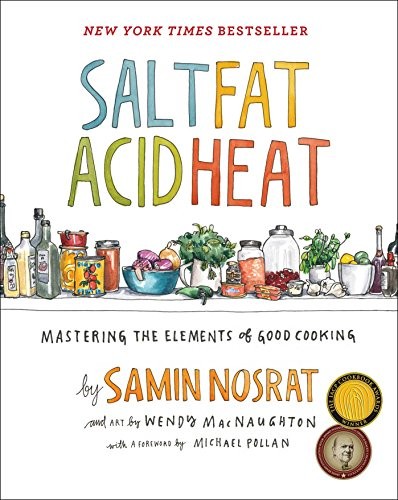
- "Salt, Fat, Acid, Heat" by Samin Nosrat: While McGee explains the science of these four elements, Nosrat focuses on the art of balancing them.
- "The Food Lab" by Jiko: A more modern, experiment-heavy approach to the same scientific principles McGee lays out.
- "On Food and Cooking" (The Original Text): For the full, exhaustive encyclopedia of every ingredient imaginable.
If you remember only three things
- Cooking is Chemistry: Every ingredient reacts to heat, moisture, and acid in predictable ways.
- The Maillard Reaction: This is the source of the "brown" flavor we love in roasted and toasted foods.
- The Flavor Balance: If a dish is missing something, it’s usually a lack of Acid, Fat, Salt, or Heat.
Internalize it
-
Reflection questions
- When I cook a meal and it fails, do I know why it failed (e.g., was it a moisture issue, a heat issue, or a seasoning issue)?
- How can I use the "Acid Test" to improve my current repertoire of sauces and salads?
- Can I explain the difference between the Maillard Reaction and Caramelization to a friend?
-
Flashcards Q: What is the Maillard Reaction? A: A chemical reaction between amino acids and reducing sugars that creates brown color and savory flavors during cooking.
Q: What is protein denaturation? A: The unfolding of protein molecules due to heat, acid, or mechanical action, leading to coagulation (solidification).
Q: What is the primary role of acid in cooking? A: To "brighten" flavors, break down connective tissues, and balance fats.
Q: What is the difference between conduction and convection? A: Conduction is heat transfer through direct contact; convection is heat transfer through the movement of a fluid (liquid or gas).
Q: What is starch gelatinization? A: The process where starch granules absorb water and swell when heated, creating a thick, gel-like consistency.
Fidelity note
I have a high-confidence understanding of the core scientific principles presented in On Food and Cooking. The book is a massive reference work, and while I can summarize the core pillars (Maillard, Denaturation, Emulsification, etc.) with high fidelity, the sheer volume of specific ingredient data (e.g., the exact boiling point of every obscure berry) is too vast to include in a summary. Readers should verify specific ingredient-by-ingredient data (like the exact moisture content of specific vegetables) in the text.