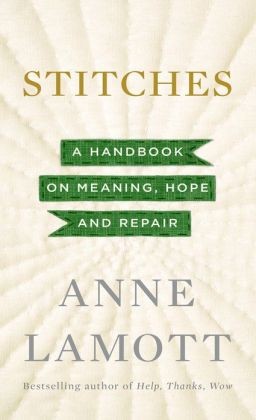
Plan B
≈ From memoryTrue creative mastery is not found in the pursuit of a perfect, singular 'Plan A,' but in the humble, messy, and persistent practice of the 'Plan B'—the daily work of showing up, making mistakes, and refining your craft.
In one sentence
The "Plan B" is the realization that the "Plan A" (the perfect, effortless masterpiece) is a myth; true success is found in the grit of the process, the willingness to be a beginner, and the courage to be imperfect.
Why read this (and who it's for)
This book is for the perfectionist, the procrastinator, and the "gifted" individual who is paralyzed by the gap between their vision and their current ability. It solves the problem of analysis paralysis—the fear that if your first attempt isn't brilliant, you've failed. After reading this, you will be able to silence your inner critic, embrace the "shitty first draft," and view the act of writing (or creating) as a marathon of endurance rather than a sprint of inspiration.
The big idea
Anne Lamott argues that our greatest obstacle to creativity is our own ego. We want to be "authors" (the finished product) before we have actually done the work of "writing" (the messy process). We want the "Plan A"—the effortless, brilliant, polished result—without the grueling, unglamorous labor required to get there.
The logic of the book is rooted in the distinction between inspiration and discipline. Inspiration is a fickle friend; it shows up when it wants. Discipline, however, is the ability to sit in the chair when inspiration is absent. Lamott posits that the "Plan B" is the actual work: the revisions, the deletions, the restarts, and the willingness to be "bad" at something until you are eventually good at it. It is a call to move from a "perfectionist" mindset to a "practitioner" mindset.
Key ideas
The Myth of the "Perfect" Plan A
- What it is — The "Plan A" is the idealized version of our goals where everything happens perfectly and we appear effortlessly brilliant.
- Why it matters — When we obsess over Plan A, we become terrified of anything that doesn't look like perfection, leading to paralysis.
- In the book — Lamott discusses how we often wait for the "perfect" idea before we start, which is a form of procrastination.
The Necessity of the "Shitty First Draft"
- What it is — The permission to write, create, or act without any regard for quality in the initial phase.
- Why it matters — It lowers the stakes. If you give yourself permission to be terrible, you actually get words on the page, which is the only way to eventually get to "good."
- In the book — This is a cornerstone of her philosophy: you cannot edit a blank page. You must get the "trash" out so you have something to work with.
The "Work" of Writing (and Creating)
- What it is — The understanding that creativity is a craft involving specific, often boring, technical skills.
- Why it matters — It shifts the focus from "waiting for a muse" to "practicing the craft." It turns creativity into a muscle.
- In the book — She emphasizes that writing is a series of choices: word choices, sentence structures, and structural pivots.
The Importance of "The Messy Middle"
- What it is — The recognition that the hardest part of any project is the middle, where the initial excitement has faded and the finish line is nowhere in sight.
- Why it matters — Most people quit here. Recognizing this as a standard part of the process helps you endure it.
- In the book — Lamott describes the "middle" as the place where the real transformation happens, where you have to wrestle with the material.
The Role of Failure as Data
- What it is — Viewing mistakes and "bad" outputs not as failures of character, but as necessary data points for improvement.
- Why it matters — It removes the emotional sting of a bad draft and turns it into a navigational tool.
- In the book — She encourages readers to see their "failures" as the very things that allow them to find the right path forward.
Frameworks & tools
The "Shitty First Draft" Protocol
When you feel paralyzed by the need for perfection, use this sequence:
- Lower the Bar: Explicitly state, "I am going to write something terrible right now."
- The "No-Editing" Rule: Do not allow yourself to hit the backspace key or look back at previous paragraphs until the first draft is finished.
- The "Get it Out" Phase: Focus entirely on quantity and completion. The goal is to move from "nothing" to "something."
- The "Cooling Off" Period: Step away from the work for at least 24 hours before looking at it again.
- The Revision Phase: Only now do you allow yourself to be a critic.
The "Process over Product" Audit
When you feel stuck, ask yourself these three questions:
- Is my current fear based on the result? (e.g., "What if people think this is bad?")
- What is the immediate next step of the process? (e.g., "I just need to write 200 words about this one scene.")
- Can I do that one small thing right now? (Focus on the smallest possible unit of progress.)
Memorable examples & stories
The "Waiting for the Muse" Trap
Lamott describes the trap of waiting for a lightning bolt of inspiration. She argues that if you wait for the "perfect" idea, you will spend your life waiting. Lesson: Inspiration is a byproduct of work, not a prerequisite for it.
The "Messy Middle" of a Novel
She speaks about the experience of being deep in a manuscript where the plot is tangled and the characters aren't behaving. Lesson: The "mess" is not a sign of failure; it is the evidence of active creation.
The "Gifted" Child Syndrome
She touches on how being told you are "good" at something can actually become a burden, as it makes you afraid to try things where you might not be naturally gifted. Lesson: You must be willing to be a "beginner" again and again.
Key quotes
"The only way to get to the good stuff is through the shitty stuff." (Paraphrased) Why it matters: It validates the struggle as a necessary bridge to success.
"Writing is a process of discovery, not a process of recording." (Paraphrased) Why it matters: It reminds us that we don't know what we think until we write it down.
"Your first draft is just you telling yourself the story." (Paraphrased) Why it matters: It removes the pressure of the audience and puts the focus on personal exploration.
How to apply it
This week
- The 15-Minute "Trash" Write: Set a timer for 15 minutes. Write about a topic you're struggling with. You are forbidden from deleting or correcting anything. The goal is purely volume.
- Identify your "Plan A" Fear: Write down the one thing you are afraid to start because you're afraid of doing it poorly. Then, write down the smallest possible first step (e.g., "Open a blank document").
Ongoing
- The "Shitty First Draft" Mantra: Every time you start a new project, say out loud: "This is going to be a mess, and that's okay."
- Process Tracking: Instead of tracking "completion" (e.g., "Finished Chapter 1"), track "effort" (e.g., "Spent 1 hour in the chair").
Common pitfalls
- Confusing "Shitty" with "Lazy": A "shitty first draft" still requires showing up. You cannot skip the work by claiming you're just "letting it be messy."
- The Editing Trap: Many people think they are "writing" when they are actually just "editing" what they've already written. This is a form of procrastination.
- Over-reliance on "Tools": You can have the best notebooks and software, but they won't do the work for you. The "Plan B" is a mindset, not a set of products.
Connects to
- "Bird by Bird" by Anne Lamott: This is her foundational work on the discipline of writing. Plan B serves as a more philosophical expansion of those practical techniques.
- "The War of Art" by Steven Pressfield: Both books deal with the internal resistance to creativity, though Pressfield focuses more on the "Resistance" as an external enemy, while Lamott focuses on the "Process" as a internal discipline.
If you remember only three things
- The "Plan A" (perfection) is a myth; the "Plan B" (the messy process) is the reality.
- You must give yourself permission to be bad before you can be good.
- Writing/Creating is a craft of discipline, not a gift of inspiration.
Internalize it
-
Reflection questions
- Where am I currently waiting for "perfection" before I start a project?
- What would happen if I gave myself permission to produce a "shitty" first draft today?
- How can I shift my focus from the result (the finished book/project) to the process (the daily word count/action)?
-
Flashcards Q: What is the "Plan A" in Lamott's philosophy? A: The idealized, perfect, and effortless version of a goal that often leads to paralysis.
Q: What is the "Shitty First Draft"? A: A writing technique where the author allows themselves to write without editing or worrying about quality to get ideas onto the page.
Q: Why is the "Messy Middle" important? A: Because it is where the actual work of transformation and discovery happens, even though it feels difficult.
Q: How does Lamott view "inspiration"? A: As a byproduct of work and discipline, not a prerequisite for starting.
Q: What is the primary enemy of creativity according to the book? A: The ego's demand for perfection and the fear of being a beginner.
Fidelity note
This summary captures the core philosophy of Anne Lamott's "Plan B." Because Lamott is a stylistic writer, her "voice" is often found in the nuances of her descriptions of the writing life. While the concepts (Shitty First Drafts, the Messy Middle) are accurately represented, the specific "flavor" of her prose—the humor and the specific metaphors she uses for the "writer's life"—are summarized here for brevity. Readers should look for her specific anecdotes about the "writing life" to get the full emotional weight of her arguments.