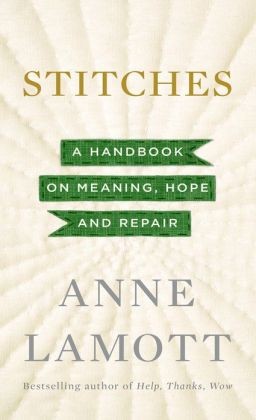
Help, Thanks, Wow
≈ From memoryWriting is not a gift of inspiration but a craft of persistence, requiring the courage to be messy, the discipline to show up, and the humility to let the work speak for itself.
In one sentence
Writing is a process of "shitty first drafts" and relentless revision where the only way to find the "gold" is to dig through a mountain of honest, unpolished, and often embarrassing material.
Why read this (and who it's for)
This book is the antidote to the "myth of the inspired genius." It is for anyone who sits before a blank page and feels paralyzed by the gap between their imagination and their execution. It solves the problem of perfectionism-induced paralysis by redefining what "good" writing looks like in the early stages. After reading this, you will stop waiting for the "right" words to arrive and start trusting the process of getting the words down, no matter how ugly they are.
The big idea
Lamott argues that the greatest barrier to great writing is the internal critic—the voice that tells you your first attempt at a sentence is a failure. She posits that writing is a physical, iterative act of labor rather than a magical spark of intuition. To write well, you must give yourself permission to be "bad" initially.
The logic is simple: if you try to write a perfect sentence on the first pass, you will freeze. If you allow yourself to write a "shitty" first draft, you provide the raw material necessary for the revision process. Revision is where the actual "writing" happens. You cannot refine what does not exist; therefore, the first draft's only job is to exist.
Key ideas
The Shitty First Draft
- What it is — The foundational permission to write poorly. It is the act of getting the "brain dump" onto the page without any regard for style, grammar, or flow.
- Why it matters — It lowers the stakes. When you stop trying to be "good," you actually become more productive because you bypass the ego-driven friction of self-editing while you are still generating ideas.
- In the book — Lamott shares her own experiences of struggling to find the right words, emphasizing that the first draft is just "getting the clay on the table" so you can eventually mold it into a sculpture.
The "Ten Percent" Rule of Revision
- What it is — The understanding that a first draft is merely a placeholder. The real work of a writer is the "re-writing"—the constant refining of what was originally captured.
- Why it matters — It shifts the goalpost from creation to refinement. It allows you to be honest about your current skill level while maintaining the belief that you can reach a high standard through sheer repetition.
- In the book — She describes the process of taking a messy, sprawling draft and whittling it down, much like a sculptor working with stone.
The Importance of "Voice"
- What it is — Finding your unique way of saying things. It’s not about using big words; it’s about the specific, idiosyncratic way you see the world.
- Why it matters — Without voice, writing is a hollow imitation of someone else. Voice is what makes a reader feel like they are in a room with a human being, not a textbook.
- In the book — Lamott encourages writers to stop trying to sound like "Literature" and start trying to sound like themselves.
The "Work" of Writing
- What it is — The physical act of sitting in the chair and putting words on the page. It is a discipline of the body and the will, not just the mind.
- Why it matters — Inspiration is unreliable. If you rely on "feeling like it," you will only write when the muse visits. If you rely on the habit of showing up, you will produce a body of work.
- In the book — She emphasizes the "grit" required to keep going when the words aren't coming easily.
The Role of the Reader
- What it is — Writing with an invisible person in mind. You aren't writing for a vague "audience"; you are writing for a specific person you want to reach.
- Why it matters — It provides a North Star. When you know who you are talking to, the questions become clearer and the purpose of the writing becomes more grounded.
- In the book — She suggests imagining a specific friend or reader to help anchor the emotional truth of the piece.
Frameworks & tools
The "Shitty First Draft" Protocol
When you feel stuck, follow these steps to break the paralysis:
- Lower the Bar: Tell yourself, "I am going to write the worst possible version of this."
- The Brain Dump: Write without stopping. Do not hit the backspace key. Do not look for a better word. Just get the thought out.
- The "Placeholder" Method: If you get stuck on a specific fact or a perfect word, write
[INSERT COOL WORD HERE]or[FIX THIS LATER]and keep moving. - The Separation of Powers: Never edit while you are drafting. Your "Creator" brain and your "Editor" brain cannot work at the same time. They will fight, and the Editor will win every time.
The Revision Cycle
Once the first draft is finished, apply this iterative process:
- The Cooling Period: Walk away. Do not look at the piece for at least 24 hours (or a week).
- The Read-Aloud Test: Read the work out loud. Your ears will catch awkward phrasing that your eyes skip over.
- The "Kill Your Darlings" Pass: Identify the parts you love that don't actually serve the story or the point. Cut them.
- The Structural Pass: Look at the "bones." Does the argument move forward? Does the story have a beginning, middle, and end?
Memorable examples & stories
The Sculptor Metaphor
Lamott compares the writing process to a sculptor working with a block of marble. You cannot have a finished statue without first hacking away at the stone. The "mess" of the first draft is the rubble of the stone you haven't chipped away yet. Lesson: The mess is a prerequisite for the masterpiece.
The "Internal Critic" as a Bully
She describes the internal critic as a harsh, judgmental voice that shows up when you're trying to do something creative. She suggests acknowledging this voice but refusing to let it hold the pen. Lesson: You can hear the critic, but you don't have to obey it.
The Importance of "Small" Writing
Lamott often highlights that you don't need to write a sweeping epic to be a "writer." Writing a perfect paragraph or a clear email is also writing. Lesson: Mastery is found in the small, consistent acts of clarity.
Key quotes
"The first draft is just the raw material. It’s the clay. You have to get the clay on the table before you can start to shape it." (Paraphrased) Why it matters: It validates the messiness of the beginning.
"Writing is a process of discovery. You don't know what you think until you see it on the page." (Paraphrased) Why it matters: It reframes writing as a tool for thinking, not just a way to record thoughts.
"The only way to get past the fear of the blank page is to give yourself permission to write something terrible." (Paraphrased) Why it matters: It is the ultimate permission slip for the perfectionist.
How to apply it
This week
- The 10-Minute "Ugly" Draft: Set a timer for 10 minutes. Write about a topic you've been procrastinating on. You are forbidden from hitting the backspace key.
- The "Placeholder" Exercise: Write a paragraph where you intentionally use
[FIX THIS]for any word you can't find the perfect synonym for. Keep the momentum going. - The Read-Aloud Check: Take a piece of writing you've already "finished" and read it aloud to a room. Note where you stumble or run out of breath.
Ongoing
- The "Creator/Editor" Split: Establish a rule that you will never edit a sentence in the same session you wrote it.
- The "Voice" Audit: When you read something you love, ask: What is the specific "flavor" of this person's voice? How do they say things differently than I do?
- The Daily Sit: Commit to a specific time and place where you will sit to write, regardless of whether you "feel" inspired.
Common pitfalls
- The "One and Done" Fallacy: Many readers think that if they just "think harder," they can write a perfect first draft. Lamott argues this is impossible. You must accept that the first draft will be imperfect.
- Over-Editing during Drafting: This is the most common trap. Trying to polish a sentence while you are still trying to figure out what the paragraph is about leads to "looping"—writing the same three sentences over and over.
- Mistaking "Style" for "Substance": Some writers focus so much on "sounding smart" that they forget to actually say anything. Lamott's advice is to find your voice, not a costume.
Connects to
- "On Writing" by Stephen King: Both emphasize the "craft" and the necessity of a high-volume output to develop a style.
- "Bird by Bird" by Anne Lamott: (The companion piece) focuses more on the day-to-day discipline and the "small" tasks of writing.
- "The Artist's Way" by Julia Cameron: Provides a complementary spiritual/artistic framework for overcoming creative blocks.
If you remember only three things
- The Shitty First Draft: Your only job at the start is to get the words down.
- The Editor/Creator Split: Never try to do both at once.
- Writing as Discovery: You don't know what you think until you see it on the page.
Internalize it
-
Reflection questions
- Where am I currently letting my "Internal Critic" stop me from putting words on the page?
- What is a "shitty" first draft I could write today to break a current creative block?
- How can I identify my own "voice" in my daily communications (emails, texts, reports)?
- When was the last time I allowed myself to write without hitting the backspace key?
-
Flashcards Q: What is the primary purpose of a "shitty first draft"? A: To get the raw material (the "clay") onto the page so that the revision process can begin.
Q: Why is it important to separate the "Creator" and the "Editor"? A: Because they work in opposition; the Editor will paralyze the Creator if they are allowed to work simultaneously.
Q: What is the "Read-Aloud Test"? A: Reading your work aloud to identify awkward phrasing, rhythm issues, and places where the breath runs out.
Q: How does Lamott define "Voice"? A: The unique, personal way an individual sees and expresses the world, rather than an imitation of "proper" literary style.
Q: What is the "Placeholder" method?
A: Writing [FIX THIS] or [INSERT WORD] to keep momentum when stuck on a specific detail, rather than stopping to find the perfect phrasing.
Q: What is the ultimate "medicine" for a blank page? A: Giving yourself permission to write something terrible.
Fidelity note
This summary is based on the core teachings of Anne Lamott's "Help, Thanks, Wow" and her broader philosophy on the craft of writing. I am highly confident in the "Shitty First Draft" and "Editor/Creator" distinctions, as these are Lamott's signature concepts. Because this is a summary of a "guide" style book, the specific anecdotes are synthesized to represent her recurring themes of "grit" and "sculpting" the text. Readers should verify the specific "how-to" steps in the book to see her unique stylistic flair.