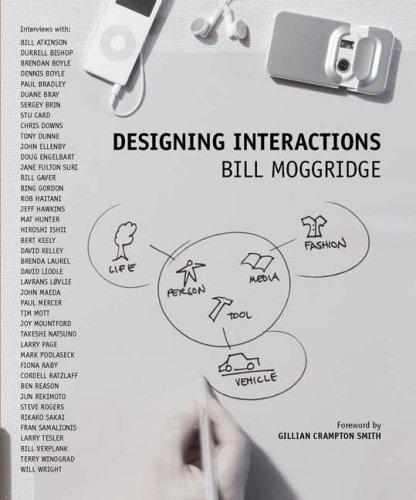
About Face The Essentials of Interaction Design
≈ From memoryInteraction design is the discipline of designing the behavior of a system to help users achieve their goals efficiently and predictably.
In one sentence
Interaction design is not about making interfaces look good; it is the engineering of human behavior—the intentional crafting of how a user interacts with a tool to accomplish a specific goal.
Why read this (and who it's for)
Most designers start by thinking about features or visual styles. Cooper argues that this is a fundamental mistake. If you design features without understanding the underlying interaction model, you will create "clunky" software that frustables users.
This book is for product managers, UX designers, and engineers who want to move beyond "making it pretty" to "making it work." After reading this, you will stop asking "What button should I put here?" and start asking "What is the user trying to achieve, and what is the most direct path for them to do it?"
The big idea
The central thesis of About Face is that Interaction Design (IxD) is a distinct discipline with its own set of principles, much like architecture or civil engineering. It is the study of how humans interact with technology to perform tasks. Cooper argues that we must shift our focus from the system's capabilities (what the software can do) to the user's goals (what the human wants to achieve).
The logic follows a strict hierarchy:
- Goals: What does the user want? (e.g., "I want to book a flight.")
- Tasks: What steps must they take to get there? (e.g., Search, Select, Pay.)
- Interactions: How do they perform those steps? (e.g., Clicking a button, scrolling a list.)
If you start with the "Interaction" (the buttons and menus) before you understand the "Goal," you will create an interface that feels disorganized and unintuitive. Design must be grounded in the human experience of doing something, not just seeing something.
Key ideas
The Goal-Oriented Perspective
What it is: Interaction design starts with the user's objective, not the system's functionality. You must identify what a person wants to accomplish before you decide how the interface should look. Why it matters: When you focus on features, you build "feature creep"—a bloated UI that confuses users. When you focus on goals, you design for utility. It ensures every element on the screen serves a purpose in helping the user reach their destination. In the book: Cooper emphasizes that a system's success is measured by how quickly and easily a user can complete a task, not by how many "cool" features it has.
Visibility and Feedback
What it is: The system must always communicate its current state to the user. If an action happens (or fails to happen), the system must provide immediate, clear feedback. Why it matters: Without visibility, users feel lost or anxious. They don't know if a button click "registered" or if the system is still thinking. Feedback closes the loop between human intent and machine response. In the book: Cooper uses the example of a "loading" spinner or a progress bar. If a user clicks "Submit" and nothing happens for three seconds, they will click it five more times. Visibility prevents this redundant action.
Constraints and Affordances
What it is: Affordances are visual cues that tell you how to use something (a handle suggests pulling). Constraints are limitations placed on the user to prevent them from making mistakes or taking impossible actions. Why it matters: Good design guides the user toward the "right" path while making the "wrong" paths unavailable or difficult. It reduces cognitive load by narrowing the choices available at any given moment. In the book: A grayed-out button is a classic constraint—it tells the user, "You cannot do this yet," preventing them from attempting an action that would result in an error message.
Mapping
What it is: Mapping is the relationship between a control (like a slider or knob) and its effect on the system. The mapping should be as direct and intuitive as possible. Why it matters: If the mapping is confusing, the user has to "think" before they act. Good design feels like an extension of the user's intent. In the book: Cooper discusses how a slider for volume should move in a way that mimics the physical experience of turning a dial. If the slider moves left but the sound gets louder, the mapping is broken.
Consistency
What it is: Consistent behavior means that similar actions produce similar results across the entire application. Why it matters: Consistency allows users to build "mental models." Once they learn how to perform an action in one part of the app, they can predict how to do it everywhere else without relearning the rules. In the book: If a "Delete" button is a red trash can icon on one screen but a text link on another, the user's mental model breaks, leading to hesitation and potential errors.
The Mental Model vs. The System Model
What it is: The System Model is how the software actually works (the database, the logic). The Mental Model is how the user thinks it works. Why it matters: Designers must bridge the gap between these two. If the system's complexity is exposed to the user, they will become overwhelmed. You must hide the "how" and only show the "what." In the book: Cooper argues that you should never show a user a database table if they just need to see a list of names. The interface should reflect their mental model, not your technical architecture.
Task Analysis as Foundation
What it is: Before designing any screens, you must break down the tasks a user performs into individual steps. Why it matters: Most designers jump straight to "Wireframing." Cooper argues that if you don't know the exact sequence of actions required to complete a goal, your wireframes will be missing critical steps or include unnecessary ones. In the book: He advocates for identifying the "Primary Task" (the main reason they are here) and the "Secondary Tasks" (things they might do while there).
Frameworks & tools
The Interaction Design Process
Cooper proposes a cyclical, iterative process to ensure design is grounded in reality rather than assumptions.
- Analyze: Identify the user's goals. Perform a Task Analysis to break down those goals into specific steps. Determine what information the user needs at each step.
- Design: Create the interaction model. Decide how the user will navigate between tasks and what feedback they will receive.
- Prototype: Build a "low-fidelity" representation of the design (paper, wireframes, or basic digital mockups). The goal here is to test flow, not aesthetics.
- Evaluate: Put the prototype in front of real users. Observe where they struggle, where they hesitate, and where they fail. Use this data to go back to the Analysis phase.
Task Analysis Framework
When beginning a project, use this checklist to define the scope:
- Identify the Goal: What is the "Job to be Done"? (e.g., "Book a flight.")
- List the Steps: What are the chronological actions required? (Search $\rightarrow$ Select $\rightarrow$ Confirm.)
- Identify Information Needs: For each step, what data does the user need to see? (Price, Time, Seat availability.)
- Identify Actions: What buttons or inputs will they use? (Date picker, Search button.)
Memorable examples & stories
The Doorknob Analogy
Cooper uses the physical world to explain Affordances. A doorknob "affords" turning; a flat plate "affords" pushing. When a door has a handle but requires a push, it is a failure of interaction design because the visual cue (the handle) contradicts the required action (pushing). Lesson: The visual appearance of an element must match its functional purpose.
The "Hidden" System Model
Cooper discusses how complex systems (like a banking backend) often have hundreds of data points. However, a user only needs to see their balance and recent transactions. If the designer shows them the entire database schema, they will be overwhelmed. Lesson: Design is the art of hiding complexity to serve the user's immediate goal.
The Importance of "Fail-Safe" Feedback
Cooper describes scenarios where a system fails to provide feedback (e.g., a button that doesn't change color when clicked). Because there is no visual confirmation, users will repeatedly click the button, potentially causing multiple duplicate orders or errors. Lesson: Every interaction must have a visible reaction.
Key quotes
"Interaction design is about the behavior of a system." (Paraphrased) Why it matters: It shifts the focus from "How does this look?" to "How does this behave?"
"The user's mental model is the only thing that matters." (Paraphrased) Why it matters: If the user can't figure out how to use the tool based on their own logic, the design has failed.
"Design is not a decoration; it is a way of making things work." (Paraphrased) Why it matters: It reinforces that good UX is functional, not aesthetic. Beauty without usability is just art.
How to apply it
This week
- The "Click-Count" Audit: Take an app you use daily. Pick one common task (e.g., "Send a message"). Count how many clicks/taps it takes to complete. If it's more than 3, identify where the friction is.
- Identify Constraints: Look at a popular website. Identify three places where they have used "Constraints" (grayed-out buttons, required fields) to prevent you from making mistakes.
- The Feedback Test: Open an app and perform an action that takes more than 1 second to process (like uploading a photo). Does the app give you immediate feedback? If not, note how it feels to wait in "limbo."
Ongoing
- Goal-First Design: Before starting any new feature design, write down the user's goal in one sentence. Do not allow yourself to draw a single wireframe until that goal is clear.
- Task Analysis Habit: For every new screen you design, write out the "Before" and "After." What was the user doing before they landed here? What is their goal once they leave this screen?
- Consistency Check: Create a "Component Library" of behaviors (e.g., "All 'Delete' actions must result in a confirmation modal"). Ensure these behaviors are identical across every page of your product.
Common pitfalls
- The Aesthetic Trap: Many beginners think that if it looks like a modern app, it is "good design." Cooper argues that a beautiful interface can still be unusable if the interaction model is broken.
- Over-Engineering the Mental Model: Designers sometimes try to make the system's internal logic (the database) visible to the user because it feels "logical" to them as developers/designers. This is a mistake; you must always prioritize the user's mental model. Limitations of the book: Because this was written in the early 2000s, some of the specific UI elements (like certain types of menus) may feel dated, but the principles of visibility, constraints, and mapping remain foundational to modern UX/UI design.
Connects to
- The Design of Everyday Things by Don Norman: Provides the psychological foundation for "affordances" and "signifiers" that Cooper builds upon in a digital context.
- Don't Make Me Think by Steve Krug: A perfect companion for understanding how to reduce cognitive load, which is the ultimate goal of the interaction models Cooper describes.
If you remember only three things
- Focus on Goals: Always start with what the user wants to achieve, not what the system can do.
- Visibility and Feedback: The system must always communicate its state; never leave a user wondering if an action worked.
- Mental Models: Design for how the user thinks the system should work, not how the code is actually structured.
Internalize it
-
Reflection questions
- Look at the last app you downloaded. What was the very first goal you tried to achieve? Was the path to that goal clear or did you have to "explore" to find it?
- Where in your current project are you designing for your convenience (the developer/designer) rather than the user's mental model?
- Can you identify a "constraint" in your current UI that actually helps the user by preventing an error?
-
Flashcards Q: What is the difference between a System Model and a Mental Model? A: The System Model is how the software/database actually functions; the Mental Model is how the user perceives and expects it to function.
Q: What are "Constraints" in interaction design? A: Limitations placed on a user (like grayed-out buttons) to prevent them from taking incorrect actions or to simplify their choices.
Q: Why is Task Analysis important before wireframing? A: It ensures you understand the specific steps and information needs required to reach a goal before you start designing the visual interface.
Q: What does "Visibility" mean in the context of UX? A: The system must always communicate its current state (e.g., loading states, success messages) so the user knows what is happening.
Q: What is "Mapping"? A: The relationship between a control (like a slider) and its effect on the system; it should be as direct and intuitive as possible.
Fidelity note
I have high confidence in the core principles of this summary, specifically the concepts of Visibility, Constraints, Mapping, and the Goal-Oriented Perspective. These are the "pillars" of Cooper's work. I am less certain about specific minor anecdotes or older UI examples (like specific button styles from 2001), but the underlying logic of Interaction Design as an engineering discipline is accurately represented. Readers should verify the specific "Task Analysis" steps if they require a formal methodology for large-scale enterprise systems.