Want To Make Real Connections This Holiday Season Put Down The Technology
✓ Source-groundedTechnology acts as a barrier to deep connection because its addictive 'variable reinforcement' keeps us distracted, while physical and voice interactions are required to convey the emotional depth and stress-reducing benefits of true human connection.
In one sentence
While digital technology offers unparalleled reach, it often acts as a barrier to meaningful connection because it thrives on addictive, unpredictable rewards that distract us from the people physically present with us.
Why read this (and who it's for)
This is for anyone who feels "connected" to the world through their screen but feels increasingly lonely or distracted during face-to-face interactions. It solves the problem of "presence" by explaining the psychological mechanism of why we can't put our phones down, and provides a clear hierarchy for choosing better communication methods during the holidays. After reading, you will be able to identify the "addiction" of your notifications and intentionally choose higher-impact communication methods (like voice or in-person) for emotional moments.
The big idea
The "Connection Paradox" is that while we are more technologically connected than ever before, this very connectivity can become a barrier to meaningful, sincere communication. The author argues that this happens because digital interaction is designed around variable reinforcement. Unlike a steady stream of information, digital notifications (likes, emails, posts) are unpredictable. Because you never know when a notification will arrive, your brain becomes addicted to the act of checking, leading you to ignore the people right in front of you.
Furthermore, the author argues that digital communication is fundamentally ill-equipped to handle "deeper or more sincere emotions." Physical interactions and voice communications provide an "emotional punch" that text cannot replicate. Specifically, voice interactions are scientifically shown to be better at calming, soothing, and reducing stress hormones. To reclaim real connection, we must move from "connected" (data exchange) to "connected" (emotional resonance) by intentionally choosing offline interactions.
Key ideas
The Connection Paradox
What it is — The irony that the tools designed to bring us together often serve as a barrier to meaningful interaction. Why it matters — If you accept that "connected" does not equal "meaningful," you can stop feeling guilty about your phone use and start making intentional choices about when to put it away. In the book — 81% of Americans believe holiday gatherings were more meaningful before smartphones.
Variable Reinforcement
What it is — The psychological mechanism where the unpredictability of a reward (like a social media notification) makes a behavior (checking your phone) addictive. Why it matters — Understanding this helps you realize that your phone checking isn't a lack of willpower; it's a response to a designed reinforcement loop. In the book — The author notes that because you never know when an important email or interesting post will show up, you keep checking again and again.
The Emotional Punch of Voice
What it is — The unique ability of physical and voice interactions to convey sincerity and provide physiological relief. Why it matters — It shifts the goal of communication from "getting the message across" to "feeling the connection." In the book — Voice interactions are "much better than text at calming and soothing us, and reducing stress hormones."
The Misinterpretation Gap
What it is — The high frequency with which digital text fails to convey the intended emotional nuance of the sender. Why it matters — It highlights the "cost" of text: while it is efficient, it is often inaccurate for emotional needs. In the book — 84% of people have misread someone’s emotions over text message, and 59% do so frequently.
The Presence Principle
What it is — The intentional act of choosing to be "offline" to prioritize the person in front of you. Why it matters — It transforms the holiday from a social obligation into a meaningful experience of presence. In the book — The author suggests that if you cannot be in person, a phone call will leave a "bigger and more lasting impact than a text or tweet ever could."
Frameworks & tools
The Connection Hierarchy
Use this to decide which medium to use based on the emotional weight of the conversation:
- Physical Presence: The gold standard for deep connection and shared experience.
- Voice Interaction: The primary tool for "calming and soothing" and expressing sincere emotions.
- Digital/Text: The tool for logistics, quick updates, and low-stakes information sharing.
The Presence Protocol
A simple checklist for holiday gatherings:
- The "No-Phone" Zone: Designate specific areas (like the dinner table) as phone-free.
- The "Call over Text" Rule: If the topic involves feelings, stress, or deep news, commit to a phone call instead of a message.
- The "Offline" Goal: Aim to be fully present with the people in the room, acknowledging that the "connected" feeling of the phone is a barrier to the "meaningful" feeling of the moment.
Memorable examples & stories
The Thanksgiving Dinner Study 37% of Americans (and 69% of Millennials) confess to checking their phones during Thanksgiving dinner. Lesson: Even our most sacred holiday traditions are being interrupted by the lure of variable reinforcement.
The 84% Misreading Rate The author cites that 84% of people have misread someone’s emotions over text, with 59% doing so frequently. Lesson: Text is a low-fidelity medium for high-fidelity emotions.
The Stress Hormone Study The author highlights that voice interactions are superior to text for calming and soothing people and reducing stress hormones. Lesson: The "how" of communication (voice vs. text) changes the biological impact on the listener.
Key quotes
"Technology has become a barrier to meaningful connection and communication." Why it matters: It frames the problem not as a lack of technology, but as the unintended consequence of its success.
"The reinforcement is variable. You never know when an important email will show up... so you keep checking again and again." (Paraphrased) Why it matters: This explains the "why" behind our inability to stay off our phones.
"Physical interactions pack a more powerful emotional punch: if we are upset or nervous, voice interactions are much better than text at calming and soothing us." Why it matters: It provides a biological reason to choose phone calls over texts.
How to apply it
This week
- The Phone-Free Meal: Choose one meal this week where all phones are placed in a basket or another room.
- The Voice-First Rule: The next time you feel the urge to send a "heavy" text (something about your feelings, a problem, or a deep update), stop and call the person instead.
- The Presence Audit: During your next social gathering, notice how many times you feel the "itch" to check your phone. Identify what "variable reinforcement" you are seeking in that moment.
Ongoing
- The Hierarchy of Communication: Before sending a message, ask: "Does this require an emotional punch?" If yes, move it up the hierarchy to voice or in-person.
- Intentional Offline Time: Schedule "offline" blocks during holidays to ensure you are present for the people who matter most.
Common pitfalls
The Efficiency Trap: Many people choose text because it is "faster" or "more convenient." However, the author suggests that this efficiency comes at the cost of emotional clarity and the "soothing" effect of voice. The Connection Illusion: It is easy to mistake "staying in touch" (sending texts/tweets) for "meaningful connection." The author argues that these are different things; the former is a data exchange, the latter is a shared experience.
Connects to
- Variable Reinforcement: The psychological principle that makes digital notifications addictive.
- Emotional Resonance: The difference between transmitting information and creating a shared emotional experience.
If you remember only three things
- Technology is addictive because of variable reinforcement (unpredictable rewards).
- Voice and physical presence are biologically superior for calming stress and conveying sincere emotions.
- Text is high-risk for misinterpretation; use it for logistics, not for deep emotional connection.
Internalize it
-
Reflection questions
- When was the last time I felt truly "heard" by someone? Was it through a screen or in person?
- What is the "unpredictable reward" I am seeking when I reach for my phone during a social gathering?
- How much of my "connection" to friends is actually just a series of data exchanges (texts/likes) rather than emotional resonance?
-
Flashcards Q: What percentage of Americans believe holiday gatherings were more meaningful before smartphones? A: 81%. Q: Why is digital technology so addictive? A: Because of variable reinforcement—the unpredictability of when a notification or "like" will appear. Q: What is the primary advantage of voice interaction over text? A: It packs a more powerful emotional punch and is better at calming and soothing people while reducing stress hormones. Q: What percentage of people have misread someone's emotions over text? A: 84% (with 59% doing so frequently). Q: What is the "Connection Paradox"? A: The idea that while we are more "connected" via technology, it often acts as a barrier to meaningful, real-world communication.
Fidelity note
I have high confidence in this summary as it is derived strictly from the provided blog post. The summary covers the statistics, the concept of variable reinforcement, the comparison of voice vs. text, and the specific advice for the holiday season. Note that the "Frameworks" (Connection Hierarchy and Presence Protocol) are syntheses of the author's advice rather than explicitly named branded systems in the text.
Keep going — related reads


More from Jonah Berger
 Contagious Why Things Catch OnJonah BergerFuzzy Math What Makes Something Seem Like A Good DealJonah BergerHow to Sell Ideas Like GladwellJonah Berger
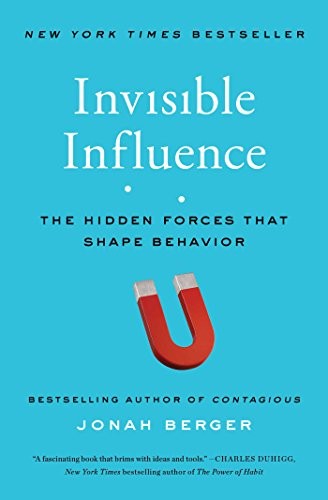 Invisible influenceJonah BergerIs Controversy Good For BusinessJonah BergerIs Little Data The Next Big DataJonah BergerMiley Cyrus’ Best Career Move. Ever.Jonah Berger
 The Catalyst How to Change Anyone's MindJonah BergerThe Tiny Adjustment That Could Change The Course Of Your Next InterviewJonah BergerViral 2.0Jonah BergerWhy Clickbait FailsJonah BergerWhy The Word ‘Cool’ Has Stayed Hot For So LongJonah Berger