Miley Cyrus’ Best Career Move. Ever.
✓ Source-groundedNegative publicity can be a powerful marketing tool because it forces a product or person into the consumer's 'top-of-mind' space, driving consideration even when the sentiment is unfavorable.
In one sentence
Negative publicity can be a strategic win because it generates the "top-of-mind" attention required to move a product or person into the consumer's consideration set.
Why read this (and who it's for)
This piece challenges the conventional wisdom that "bad press is always bad." It explains the psychological mechanics of why people buy what they buy: they buy what they are thinking about. It is essential for marketers, publicists, and creators who need to understand how to navigate high-visibility, high-controversy environments to ensure their brand remains relevant in a crowded marketplace. After reading this, you will be able to distinguish between sentiment (how people feel) and consideration (whether people are thinking about you), and use that distinction to evaluate the success of a PR campaign.
The big idea
The central thesis of Berger’s argument is that attention is the precursor to consideration. In a world of infinite choices, the primary barrier to a sale isn't always a lack of quality; it is a lack of awareness. If a consumer isn't thinking about your product, they cannot possibly choose to buy it.
Berger argues that negative publicity, while often distasteful, serves the same fundamental purpose as positive publicity: it puts the subject "top-of-mind." Because the human brain is often overwhelmed by choice, we rely on a mental shortlist of options. By generating a "trainwreck" of a moment—like Miley Cyrus' 2013 VMAs performance—a person can move from being "one of a zillion pop-stars" to being the "it-girl of the moment."
Crucially, Berger notes that the impact of negative publicity depends on the context of the subject's fame. For established icons, negative press can be damaging. However, for unknown entities or products that are not currently "top-of-mind," the sheer volume of attention generated by a negative review or scandal can actually increase sales by making the product a viable option in the consumer's mind.
Key ideas
The Psychology of Attention
- What it is — Purchase depends not only on whether people like something, but also whether they are triggered to think about it.
- Why it matters — If you aren't in the consumer's mental "shortlist," you don't exist in the marketplace. You must first win the battle for attention before you can win the battle for sales.
- In the book — Berger notes that if something doesn't come to mind when choosing a restaurant or movie, there is "no way you’re going to pick it."
The "Top-of-Mind" Effect
- What it is — Negative publicity can help in the same way positive publicity can: by making a product or idea more top-of-mind.
- Why it matters — The "mere fact that it is top-of-mind is enough to boost consideration." Even if the content of the news is negative, the sheer volume of attention keeps the brand in the conversation.
- In the book — Negative attention to Michael Jackson reminded consumers of all the great music he put out, keeping him relevant despite his legal troubles.
The Context of Fame (The "Unknown" Advantage)
- What it is — The effect of negative reviews depends on how well-known the author or product already is.
- Why it matters — For unknown authors, negative reviews actually increased sales by a whopping 45%. For established authors, the effect is more complex and often negative.
- In the book — Berger cites research on New York Times book reviews to show that for people releasing their first book, negative attention can be a massive sales driver.
The "Zillion Pop-Stars" Problem
- What it is — In a saturated market, the hardest thing to achieve is standing out from a crowded field.
- Why it matters — For a celebrity or brand to survive, they must move from being "one of a zillion" to being the "it-girl of the moment."
- In the book — Miley Cyrus’ performance became the "most tweeted event ever," moving her from a crowded space to a singular, unavoidable conversation.
Frameworks & tools
The Consideration Funnel
To understand why negative publicity can work, you must map the consumer's journey from awareness to purchase:
- Awareness (Top-of-Mind): The consumer is thinking about the product/person.
- Consideration: The consumer adds the product/person to their mental "shortlist."
- Purchase: The consumer takes action.
Application: Use this to audit your current marketing. If your "Awareness" (Top-of-Mind) is low, no amount of "Quality" (Product features) will result in a purchase.
Memorable examples & stories
Michael Jackson’s Legal Troubles
Despite frequent legal troubles, including child abuse investigations and financial mismanagement, Michael Jackson’s album sales actually went up during periods of intense negative media attention. Lesson: Negative attention can keep a legacy artist top-of-mind, driving sales despite the controversy.
The NYT Book Review Study
Research showed that for unknown authors, negative reviews actually increased sales by 45%. For well-known authors, the effect was different. Lesson: If you are a new entrant in a market, your primary goal is to be noticed, even if the initial feedback is mixed.
Miley Cyrus’ 2013 VMAs
Miley Cyrus performed a "lewd" and "outlandish" routine that became the most tweeted event ever, with over 360,000 tweets a minute. Lesson: A "trainwreck" performance can be a brilliant career move if it successfully moves you from "one of a zillion" to the "it-girl of the moment."
Key quotes
"Purchase depends not only on whether people like something, but also whether they are triggered to think about it." Why it matters: This is the fundamental rule of marketing—attention is the prerequisite for consideration.
"For unknown authors, or people releasing their first book, negative reviews actually increased sales... by a whopping 45%." Why it matters: For new brands, the goal is visibility; the "cost" of negative sentiment is often outweighed by the "gain" of being noticed.
"She moved from one of a zillion pop-stars competing for attention to the it-girl of the moment." Why it matters: In a crowded market, the winner is the one who can command the most attention.
How to apply it
This week
- Identify your "Zillion" competitors: List the brands or people in your space who are currently competing for the same "top-of-mind" space as you.
- Audit your "Top-of-Mind" status: Ask yourself: "If I didn't tell anyone about my product today, would they still think of me?" If the answer is no, your awareness is too low.
Ongoing
- Prioritize Awareness over Sentiment: When launching a new product, focus on getting people to talk about it. Even "messy" conversation is better than silence.
- The "Unknown" Strategy: If you are a new entrant, do not fear a "mixed" reception. Focus on the fact that a mixed review is still a review that puts you on the map.
Common pitfalls
- The "Safe" Trap: Many brands try to be so "safe" that they become invisible. In a crowded market, being ignored is a greater risk than being criticized.
- The "Established" Exception: Do not apply the "Miley Cyrus" or "Unknown Author" rule to a brand that is already a household name with a pristine reputation. For established giants, negative publicity can still be genuinely damaging.
- Confusing Attention with Conversion: Remember that attention is only the first step. You still need a product that people actually want to buy once they are thinking about it.
Connects to
- Contagious: Why Things Catch On (by Jonah Berger) — This blog post serves as a practical application of the "Social Currency" and "Attention" concepts found in his broader work.
- Word of Mouth Marketing — This concept relates to how "top-of-mind" awareness is fueled by others talking about you.
If you remember only three things
- Attention is the prerequisite for consideration.
- Negative publicity works by making a product "top-of-mind."
- For unknown brands, being noticed is often more important than being liked.
Internalize it
- Reflection questions
- Is my current marketing strategy focused on being "liked" or on being "top-of-mind"?
- If I were a consumer, what is the first thing I would think of when I hear my industry's name? Am I on that list?
- How can I create a "moment" that forces people to talk about my brand?
- Flashcards Q: What is the primary reason people purchase a product according to Berger? A: Because they are "triggered to think about it" (it is top-of-mind). Q: How did negative reviews affect sales for unknown authors? A: They increased sales by 45%. Q: Why does negative publicity work? A: It functions like positive publicity by increasing the amount of attention a product receives. Q: What was the "Zillion Pop-Stars" problem? A: The difficulty of standing out in a crowded market where everyone is competing for the same attention. Q: What was the result of Miley Cyrus' VMAs performance in terms of social media? A: It became the most tweeted event ever, with over 360,000 tweets a minute.
Fidelity note
This summary is based entirely on the provided blog post. Because the source is a short-form article rather than a full-length book, the "book" covers a specific case study (Miley Cyrus/Michael Jackson/NYT reviews) rather than a broad, multi-chapter methodology. The "Contagious" references in the text are mentioned as the source of his broader theories, but the specific details of those books are not contained in this text.
Keep going — related reads


More from Jonah Berger
 Contagious Why Things Catch OnJonah BergerFuzzy Math What Makes Something Seem Like A Good DealJonah BergerHow to Sell Ideas Like GladwellJonah Berger
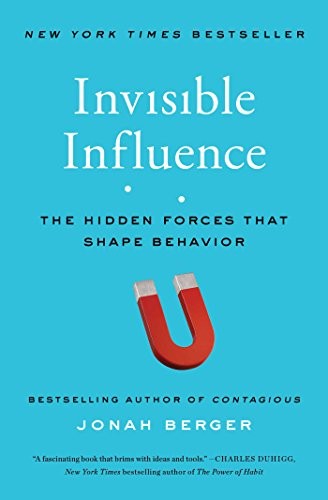 Invisible influenceJonah BergerIs Controversy Good For BusinessJonah BergerIs Little Data The Next Big DataJonah Berger
 The Catalyst How to Change Anyone's MindJonah BergerThe Tiny Adjustment That Could Change The Course Of Your Next InterviewJonah BergerViral 2.0Jonah BergerWant To Make Real Connections This Holiday Season Put Down The TechnologyJonah BergerWhy Clickbait FailsJonah BergerWhy The Word ‘Cool’ Has Stayed Hot For So LongJonah Berger