SuperFreakonomics
≈ From memoryHuman behavior is almost entirely driven by incentives; to understand why people do what they do, you must look past their stated intentions and identify the hidden rewards and penalties shaping their choices.
In one sentence
The world is governed by incentives, and if you want to understand any human behavior—from why people get obese to why they get divorced—you must look for the hidden rewards and penalties that drive those actions.
Why read this (and who it's for)
Most people view human behavior through the lens of morality, willpower, or "common sense." This book argues that such views are often superficial. If you want to understand why people make "bad" choices, why social trends emerge, or why certain policies fail, you need a better lens: Incentives.
This book is for:
- Leaders and Managers who want to design systems that actually motivate employees rather than just "hoping" they'll work harder.
- Policy Makers and Entrepreneurs who need to predict the unintended consequences of new rules or products.
- The Curious Individual who wants a mental model to decode the "why" behind the headlines of daily life.
After reading this, you will be able to look at any social phenomenon—a spike in crime, a change in consumer habits, or a corporate culture issue—and immediately ask: "What is the incentive structure here?"
The big idea
The central thesis of SuperFreakonomics is that humans are essentially "incentive-driven" creatures. We like to believe we make decisions based on complex internal values, but the authors argue that our behavior is largely a response to the rewards and penalties we face. If you change the incentives, you change the behavior.
The authors argue that most social problems are not caused by "bad" people, but by "bad" incentives. For example, if a school rewards students for high test scores, students will find ways to "game" the test rather than actually learning the material. The behavior (cheating) is a logical response to the incentive (the grade).
To master this, you must stop looking at the result (the behavior) and start looking at the mechanism (the incentive). When you do this, you begin to see the world as a series of interconnected systems. You realize that "freakish" behaviors—like the sudden explosion of alcohol consumption in the 18th century or the rise of the suburbs—are actually perfectly rational responses to new incentives created by technology, law, and social shifts.
Key ideas
The Incentive Lens
- What it is: The belief that every action—from a toddler's tantrum to a CEO's merger—is a response to a reward or a penalty.
- Why it matters: It shifts your perspective from judgment to analysis. Instead of asking "Why is this person being lazy?", you ask "What is the reward system currently encouraging laziness?"
- In the book: The authors use the example of "the hidden incentives" of the internet. People didn't just "decide" to spend more time online; the platform was designed to provide immediate, low-cost rewards (likes, notifications, infinite scrolls) that compete with real-world rewards.
Unintended Consequences (The "Side Effect" Rule)
- What it is: When you change an incentive to achieve one goal, you almost always create a new incentive for a different, often undesirable, behavior.
- Why it matters: It teaches you to be a "systems thinker." You can no longer look at a policy in a vacuum; you must ask, "What else will this change?"
- In the book: The authors discuss how the invention of the car was intended to provide mobility, but it created a massive incentive for suburban sprawl, which in turn created a new problem: the loss of walkable communities and the rise of sedentary lifestyles.
The Cost of Opportunity
- What it is: Every choice involves a trade-off. The "cost" of an action isn't just the money spent; it's the value of what you didn't do because you chose the other option.
- Why it matters: People often make "irrational" choices because they aren't accounting for the hidden opportunity costs.
- In the book: The authors explain the rise of the "no-fault divorce" laws. By lowering the legal "cost" of ending a marriage, the incentive structure shifted, leading to a massive increase in the number of divorces. The behavior changed because the cost of the alternative (staying married) became higher relative to the cost of leaving.
The Power of Information
- What it is: Information is a tool that changes the incentive landscape. When people know more about the rewards and penalties of an action, their behavior changes.
- Why it matters: You can influence behavior without forcing it by simply changing what people know about the incentives.
- In the book: The authors point out how the invention of birth control changed the "cost" of having children. By providing information and a method to prevent pregnancy, the "cost" of a child (the risk of permanent infertility) was lowered, which actually led to more children being born in the long run because people felt safer having them.
The Role of Infrastructure
- What it is: Physical and social environments (infrastructure) create "default" incentives.
- Why it matters: It is often easier to change the environment than to change the person. If you want people to eat healthier, change the cafeteria layout rather than just telling them to eat better.
- In the book: The authors discuss how the construction of suburbs and the design of highways created a "default" of car dependency. The infrastructure itself became the incentive for a specific lifestyle.
Frameworks & tools
The Incentive Audit
Use this framework whenever you encounter a behavior you want to change or a problem you want to solve.
- Identify the Desired Outcome: What is the specific behavior you want to see? (e.g., "I want my team to be more proactive.")
- Map the Current Incentives: What are they currently being rewarded for? What are they being punished for? (e.g., "They are rewarded for staying late at the office, not for the actual output of their work.")
- Identify the "Hidden" Incentives: What are they getting that they aren't telling anyone? (e.g., "They get to look like 'hard workers' to the boss by staying late.")
- Identify the Side Effects: If you change the current incentive, what new, unintended behavior might emerge?
- Redesign the Incentive Structure: Create a new reward/penalty system that aligns the desired outcome with the easiest, most natural path for the individual.
The "Why" Chain
When you see a "freakish" social trend, ask "Why?" three times to get to the incentive.
- Trend: "Why is everyone suddenly buying this specific product?"
- Why 1 (The Surface): "Because it's trendy/cool."
- Why 2 (The Incentive): "Because it signals status to their peers."
- Why 3 (The Root): "Because the social cost of being seen as 'out of touch' has increased due to social media visibility."
Memorable examples & stories
The 18th-Century Tavern
The authors explore why alcohol consumption skyrocketed in the 1700s. It wasn't just a "moral failing" of the era; it was the creation of the "public house." The tavern became a social hub where the "cost" of socializing was lower than in a private home. Lesson: When you create a new space for a behavior, you create a new incentive for that behavior.
The 19th-Century Toilet
The explosion of indoor plumbing and the modern toilet changed the way humans interact with their own bodies and waste. It turned a private, messy necessity into a standardized, "invisible" utility. Lesson: Infrastructure can fundamentally change human habits by making them easier and more private.
The Birth Control Revolution
One of the most counter-intuitive points: the invention of the birth control pill actually led to an increase in the number of children born. Why? Because it removed the "risk" of permanent infertility, which acted as a massive deterrent for many people. Lesson: Lowering the "cost" of a behavior often leads to an increase in that behavior.
The Suburban Car Culture
The authors argue that the "obesity epidemic" isn't just about calories; it's about the invention of the car and the design of the suburbs. By making the car the only viable way to get around, the "cost" of walking (time, effort) became too high, and the "reward" of the car (convenience) became too high. Lesson: Environment dictates behavior by making certain actions much easier than others.
Key quotes
"The world is a place of incentives." (Paraphrased) Why it matters: This is the foundational rule of the book. If you can't find the incentive, you haven't looked hard enough.
"People are not as irrational as we think; they are simply responding to incentives we haven't identified yet." (Paraphrased) Why it matters: This removes the "blame" from individuals and puts the focus on the system.
"When you change the incentives, you change the behavior." (Paraphrased) Why it matters: This is the "how-to" of the book. It's the actionable takeaway for anyone in a position of influence.
How to apply it
This week
- The Incentive Audit: Pick one recurring problem in your personal life (e.g., "I can't stop scrolling on my phone at night"). Apply the Incentive Audit framework. What is the reward? (Instant dopamine, low effort). How can you make the "cost" of scrolling higher? (Put the phone in a different room).
- The "Why" Chain: The next time you see a news story about a social trend (e.g., "Why is everyone buying X?"), run the Why Chain three times to find the underlying incentive.
Ongoing
- Systemic Thinking: Before launching any new project or policy, write down a "Side Effects" list. What are the 3 unintended incentives this will create?
- Reward Alignment: When delegating a task, don't just tell someone what to do. Ask yourself: "What is the incentive for them to do this well? Is it aligned with the goal?"
Common pitfalls
- The "Moral" Fallacy: The biggest mistake is assuming that because a behavior is "bad" (like cheating or laziness), the person is "bad." The book argues that people are usually just responding to the incentives currently in place.
- Over-simplification: While incentives are powerful, they aren't the only thing that matters. Human emotions, biology, and sheer luck still play roles. Don't ignore the "human" element entirely.
- The "Good Intentions" Trap: Just because a policy is "good" doesn't mean it will work. If the incentive structure is flawed, the outcome will be flawed regardless of how noble the intention was.
Connects to
- "Nudge" by Richard Thaler and Cass Sunstein: While SuperFreakonomics looks at the "why" of incentives, Nudge provides the "how" of designing choice architectures to influence those incentives.
- "Thinking, Fast and Slow" by Daniel Kahneman: Kahneman explores the cognitive biases that make us susceptible to certain incentives, providing the psychological "why" behind the behavioral economics.
If you remember only three things
- Incentives are everything: Every human action is a response to a reward or a penalty.
- Look for the "Why": When you see a behavior, look for the hidden incentive structure behind it.
- Side Effects are inevitable: Changing any incentive will create new, unintended incentives. Always plan for the "side effects."
Internalize it
-
Reflection questions
- Look at your most consistent bad habit. What is the immediate "reward" you get from it? How can you make that reward harder to obtain?
- Think of a time a project at work failed. What was the incentive structure of that project? Did it accidentally reward the wrong behavior (e.g., "completing the task" vs. "doing it well")?
- If you were to redesign your household's "infrastructure" to encourage a healthier lifestyle, what one physical change would you make?
-
Flashcards Q: What is the core principle of SuperFreakonomics? A: Human behavior is driven by incentives (rewards and penalties).
Q: What is the "Side Effect" rule? A: Changing an incentive to achieve one goal will almost always create a new, unintended incentive for a different behavior.
Q: Why did the birth control pill lead to more children? A: Because it lowered the "cost" of having children by removing the risk of permanent infertility.
Q: What is the difference between "judgment" and "analysis" in this book? A: Judgment asks "Why is this person bad?" Analysis asks "What is the incentive structure causing this behavior?"
Q: How does "Infrastructure" affect incentives? A: Physical and social environments create "defaults." For example, car-centric suburbs make driving the easiest option, creating a permanent incentive for car ownership.
Q: What is the "Incentive Audit"? A: A 5-step framework to identify the desired outcome, current incentives, hidden incentives, side effects, and a redesigned incentive structure.
Keep going — related reads


More from Steven D. Levitt and Stephen J. Dubner
 135. What Should You Do on Your BirthdayNo Stupid Questions16. What’s the Downside to Being Goal-OrientedNo Stupid Questions
 445. Why Do We Seek Comfort in the FamiliarFreakonomics Radio
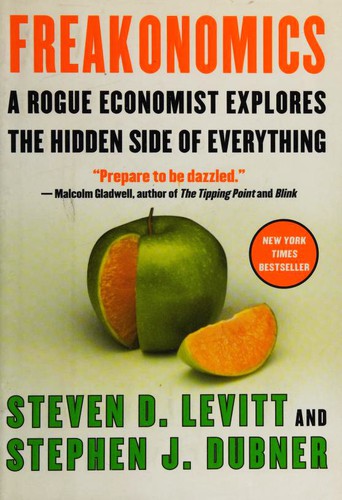 FreakonomicsSteven D. Levitt
 SuperfreakonomicsStephen J. Dubner
 The Best American Crime Reporting 2010Stephen J. Dubner
 Think Like a FreakSteven D. Levitt