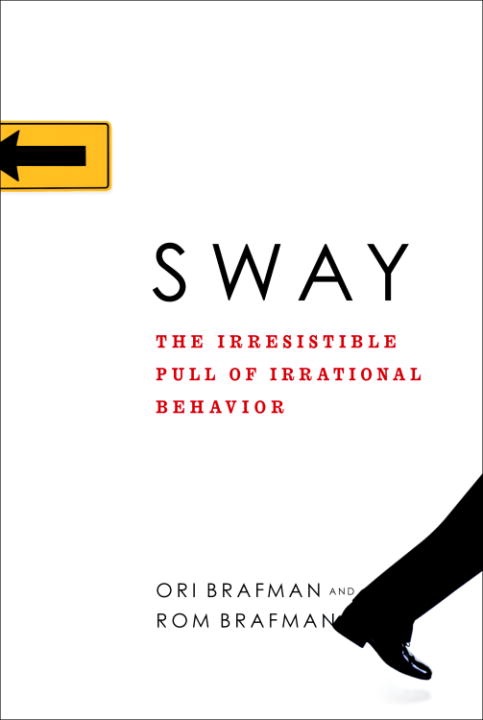
The Upside of Irrationality
≈ From memoryHuman behavior is driven by systematic, predictable irrationalities rooted in our social and evolutionary history, and by understanding these biases, we can design better environments for decision-making.
In one sentence
Human beings are not the "Econs" of classical economics; we are predictably irrational creatures whose decisions are governed by social norms, emotional triggers, and cognitive shortcuts that can be understood and leveraged to improve our lives.
Why read this (and who it's for)
Most people believe they make decisions based on logic, data, and personal preference. Dan Ariely proves that our "logic" is often an after-the-fact justification for decisions made by a much messier, more impulsive brain.
This book is for:
- Decision-makers who want to understand why customers (or employees) behave the way they do.
- Designers and Architects looking to build products that align with human psychology.
- Anyone who feels "guilty" for their lack of willpower—this book proves that your "failings" are actually predictable biological features of the human brain.
After reading this, you will be able to identify the invisible "nudges" that influence your spending, your productivity, and your social interactions, and you will gain the tools to design "choice architectures" that make it easier to succeed.
The big idea
The central thesis of The Upside of Irrationality is that human behavior is not random. While we are often "irrational" (meaning we don't always act in our own best interest), we are predictably irrational. Our mistakes are not glitches in the system; they are features of a human brain that evolved to navigate a social world, not a spreadsheet of pure utility.
Ariely argues that we cannot simply "think" our way out of these biases because the biases are baked into our cognitive hardware. For example, we struggle to judge the value of something in a vacuum; we require a reference point (Relativity). We feel the pain of loss more than the joy of gain (Loss Aversion). We are heavily influenced by what others are doing (Social Norms).
The "Upside" of this realization is profound: If our irrationality is predictable, it can be managed. By understanding the hidden forces that drive our choices—like the power of "Free," the weight of "Defaults," and the influence of "Context"—we can design environments (Choice Architectures) that help us make better decisions, save money, and achieve our long-term goals.
Key ideas
Relativity
What it is — Humans do not judge things in isolation; we judge them by comparing them to something else. We lack an internal "absolute" scale for value. Why it matters — If you understand relativity, you realize that the "value" of a product is often determined by the other options presented to you, not by the product's inherent utility. In the book — Ariely describes how the presence of a "decoy" (an option that is clearly inferior to another) can make the superior option look like a much better deal. For example, if you offer a small, medium, and large popcorn, the "medium" serves as a reference point to make the "large" look like a bargain.
The Power of Free
What it is — "Free" is not just a low price; it is a different category of existence. When something is free, the "cost" of the transaction is removed, which changes our entire psychological relationship with the item. Why it matters — People will often choose a "free" item even if they don't actually want it, simply because the psychological hurdle of "paying" has been removed. In the book — Ariely shares an experiment where people were asked to choose between a chocolate bar for $0.01 and a chocolate bar for $0.00. Even though the difference is a penny, people overwhelmingly chose the free one, showing that "free" triggers a unique emotional response that overrides logic.
Loss Aversion
What it is — The pain of losing something is psychologically twice as powerful as the joy of gaining the exact same thing. Why it matters — This explains why we hold onto "sunk costs" (bad investments, failing relationships) and why we are so afraid to take risks even when the potential reward is high. In the book — Ariely illustrates this by showing how people are more willing to accept a "sure thing" (a small, guaranteed gain) than a gamble that offers a much larger potential gain, because the fear of the loss outweighs the excitement of the win.
The Power of Defaults
What it is — Humans have a profound tendency to stick with the "status quo." We rarely change the default option because it requires mental effort and carries a perceived risk of making a "wrong" choice. Why it matters — The "default" is often the most powerful tool in behavioral design. If you want someone to do something, make it the default. In the book — Ariely points to the massive difference in organ donation rates between countries where you have to "opt-in" versus countries where you have to "opt-out." In "opt-out" countries, participation is nearly universal, proving that the default is the strongest driver of behavior.
Social Norms
What it is — We are social animals who derive our identity and sense of "correctness" from the behavior of others. We often do things not because they are logical, but because they are "normal." Why it matters — Understanding social norms allows you to use "social proof" to influence behavior. If you want someone to save more for retirement, show them that their neighbors are doing it. In the book — Ariely discusses how social norms can be used to encourage positive behaviors, such as recycling or energy conservation, by highlighting what the "majority" of the community is doing.
The Endowment Effect
What it is — We value things more highly simply because we own them. Once we possess something, it becomes part of our identity, and giving it up feels like a loss of self. Why it matters — This is why "free trials" are so effective. Once you have the product in your house, the psychological cost of giving it up feels higher than the cost of buying it. In the book — Ariely explores how people who were given a mug were less willing to sell it for a certain price than people who were asked to buy that same mug for a price. Ownership creates an emotional bond that overrides objective value.
Context and Framing
What it is — The environment in which a choice is made (the "Choice Architecture") significantly influences the outcome. Why it matters — You can change someone's behavior without changing their preferences by simply changing the way the options are presented. In the book — Ariely shows how the same amount of money can feel like a "gift" or a "penalty" depending on how it is framed, and how the physical layout of a store can influence what people buy.
Frameworks & tools
The Choice Architecture Framework
Use this to design environments (websites, offices, homes) that encourage better decisions.
- Identify the Goal: What is the specific behavior you want to change? (e.g., "Eat healthier," "Save more money").
- Analyze the Friction: What is stopping the person? (e.g., "It's hard to find healthy snacks," "The default is to spend").
- Set the Default: Make the desired behavior the "automatic" path. (e.g., "Pre-pack healthy snacks," "Set automatic savings transfers").
- Remove the Decoys: Ensure the "good" choice is the most obvious and easiest to see.
- Leverage Social Proof: Show that others are already doing the desired behavior.
The Relativity Audit
Use this before making a significant purchase to ensure you aren't being manipulated by "decoy" pricing.
- Isolate the Item: Look at the product alone. Does it actually solve a problem for you?
- Identify the Comparison: Ask yourself, "Am I buying this because it's a good deal compared to the other options, or because it's actually a good product?"
- The "Zero" Test: If this were the only option available in the store, would you still buy it at this price?
- Remove the Context: If the answer is "no," you are being influenced by the relativity of the other options.
Memorable examples & stories
The $0.01 vs. $0.00 Chocolate Bar
In a study, participants were asked to choose between a chocolate bar for $0.01 and one for $0.00. The vast majority chose the free one, even though the difference was negligible. The Lesson: "Free" isn't a price; it's a psychological state. It removes the "pain of paying" entirely, making it a powerful tool for marketing and persuasion.
The "Wine" Comparison Study
Ariely showed how people's perception of a bottle of wine changes based on what other bottles are placed next to it. By adding a "decoy" (a bottle that is clearly inferior to the one you want people to buy), the "premium" bottle suddenly looks like a much better value. The Lesson: Value is relative. To make something look like a bargain, you must provide a reference point.
The Organ Donation Default
Ariely compares countries where you must "opt-in" to be an organ donor with countries where you must "opt-out." In opt-out countries, the vast majority of the population becomes donors. The Lesson: The "Default" is the most powerful lever in behavioral design. If you want a behavior to happen, make it the "path of least resistance."
The "Lost" Money Experiment
Researchers found that people feel the pain of losing $100 much more intensely than the joy of gaining $100. This explains why we are often "risk-averse" even when the math says we should take a risk. The Lesson: To motivate someone, frame the loss of not acting rather than the gain of acting.
Key quotes
"The human brain is not a calculator; it is a social organ that evolved to navigate a complex world of social cues and emotional signals." (Paraphrased) Why it matters: This explains why we can't just "logic" our way out of bad habits.
"Free is not a price. It is a different category of existence." (Paraphrased) Why it matters: This is the core of why "free" offers are so incredibly effective at driving behavior.
"Our irrationality is not a bug in the system; it is a feature of our evolution." (Paraphrased) Why it matters: This removes the shame of human error and turns it into a data point we can use to design better systems.
How to apply it
This week
- Audit your Defaults: Look at your recurring subscriptions, your 401k contributions, and your savings. Are they set to the "default" you actually want? If not, change them today.
- The "Free" Audit: Look at your "free" apps or services. Are you using them because you need them, or because they were "free" to acquire? Delete the ones that don't add value.
- The Relativity Check: Before your next big purchase (electronics, clothes, etc.), look at the item in isolation. Ask: "If this was the only option available, would I still buy it?"
Ongoing
- Design your Choice Architecture: When you want to build a habit (like working out), make the gym bag the "default" (put it by the door). When you want to avoid a habit (like snacking), make the junk food "hard" to get (put it in a high, inconvenient cupboard).
- Frame for Loss: When you find yourself procrastinating, stop thinking about what you will gain by finishing the task. Instead, visualize what you will lose (time, money, opportunity) by continuing to wait.
- Social Proofing: When trying to start a new habit, find a "tribe" or a partner. Our brains are wired to follow the norms of the group.
Common pitfalls
- The "Perfect Logic" Fallacy: Do not try to become a perfectly rational robot. You cannot "cure" your irrationality because it is part of your biology. Instead, you must engineer your environment to work with your irrationality, not against it.
- Over-Engineering: Don't over-complicate your "Choice Architecture." Sometimes the simplest change—like putting the fruit bowl in the center of the table—is more effective than a complex system of rules.
- Ignoring the "Why": Don't just look at what people do; look at the social norm driving it. If you ignore the social reason for a behavior, your "nudge" will fail.
Connects to
- "Thinking, Fast and Slow" by Daniel Kahneman: Explores the cognitive systems (System 1 and System 2) that underlie the irrationalities Ariely describes.
- "Nudge" by Richard Thaler and Cass Sunstein: The foundational text on "Choice Architecture," which provides the practical framework for applying Ariely's insights.
- "Predictably Irrational" by Dan Ariely: A companion book that explores more specific behavioral quirks (like the "Oddity Effect" and "Equilibrium Pricing").
If you remember only three things
- Relativity: We judge everything by comparison. Control the comparison to control the perception of value.
- The Power of Defaults: The easiest path is the one people will take. Make the "right" choice the "default" choice.
- Free is a Category: "Free" removes the psychological barrier of cost. Use it wisely to lower friction, but be aware of its power to override logic.
Internalize it
-
Reflection questions
- Where in my daily routine am I currently following a "default" that doesn't actually serve my long-term goals?
- How can I "re-frame" my current biggest procrastination hurdle as a "loss" rather than a "gain"?
- If I were to design my kitchen/office to be a "Choice Architecture" for my best self, what is the first physical change I would make?
-
Flashcards Q: What is the "Decoy Effect"? A: Adding a third, inferior option to a choice set to make one of the other options look more attractive by comparison.
Q: Why is "Free" so powerful in behavioral economics? A: Because "Free" isn't just a low price; it's a different category of existence that removes the psychological "pain of paying."
Q: What is the difference between "Opt-in" and "Opt-out" in social systems? A: Opt-out systems rely on the "Status Quo Bias," where people tend to stick with the default choice (the default being the action).
Q: What is "Loss Aversion"? A: The principle that the pain of losing something is psychologically twice as powerful as the joy of gaining the same thing.
Q: How does the "Endowment Effect" influence consumer behavior? A: People value things more highly simply because they own them; this is why free trials are so effective at creating a sense of ownership.
Q: What is "Choice Architecture"? A: The practice of organizing the context in which people make decisions to influence their behavior without restricting their options.